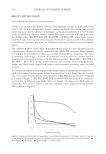
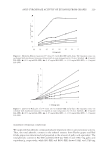
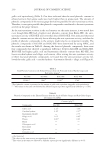
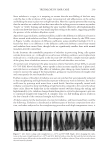
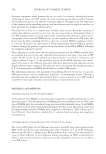
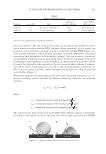
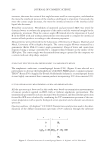
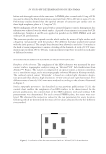
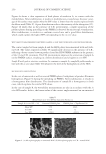
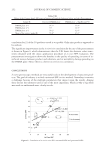
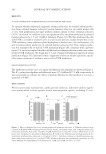
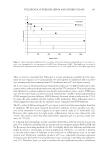
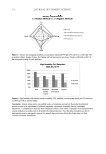
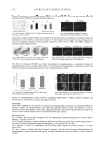
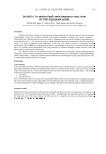
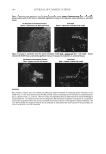
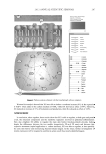
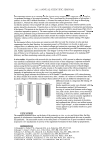
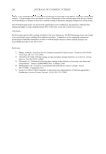
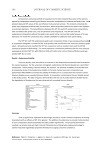
JOURNAL OF COSMETIC SCIENCE 262 RESULTS IN VITRO SUPPRESSION OF SEBUM PRODUCTION IN HAMSTER SEBOCYTES To examine whether fullerenol suppresses sebum production, we assayed sebum produc- tion from cultured hamster sebocytes because hamster sebocytes are useful model cells in vitro, with proliferation and lipid synthesis abilities similar to those of human sebocytes (30,31). As a result, we could not detect any signifi cant effect on sebum production in cultured hamster sebocytes by 1.5 and 15 μM of fullerenol (Figure 1A). We then irradiated the cells with UVB as a model of oxidative stress in acne because previous studies showed that in vivo UVB irradiation causes sebaceous gland hyperplasia of hairless mice (32) and hamsters (33) and stimulates sebum production in cultured hamster sebocytes (34). Then, sebum produc- tion was stimulated by 10 mJ/cm2 UVB irradiation (Figure 1B), consistent with a previous report (34), and so we studied the effect of fullerenol on sebum production in sebocytes stimu- lated by UVB irradiation. We found that 1.5 and 15 μmol/l of fullerenol suppressed sebum production (Figure 1C) fullerenol is thus a suppressor of sebocyte sebum expression, specifi - cally under conditions of oxidative stress such as UVB irradiation. LIPASE-INHIBITORY ACTIVITY The inhibitory activities on P. acnes lipase by fullerenol and adapalene are shown in Figure 2. The IC50 values for adapalene and fullerenol were 197.6 μM and 837.1 μM, respectively. It was not possible to evaluate the effects of pristine fullerene by this method, as it acts as a quencher of 4-MU. DISCUSSION We have previously reported that, unlike pristine fullerene, fullerenol exhibits signifi - cant antimicrobial activity against several microorganism species, including P. acnes. Figure 1. Effect of fullrenol on in vitro sebum production in hamster sebocytes. A. Hamster sebocytes were cultured in HuMedia-BB containing 8% fetal bovine serum, 2% human serum, and 10 μg/ml insulin (dif- ferentiation medium), with either 1.5 μM or 15 μM of fullerenol or control for 14 days. Sebum levels in cell lysate were determined as described in Experimental. B. Cells in the differentiation medium produced ele- vated levels of sebum when subjected to 10 mJ/cm2 UVB. C. Cells were cultured in the differentiation me- dium while being subjected to 10 mJ/cm2 UVB. Sebum production was signifi cantly attenuated in cells whose medium was supplemented with fullerenol (1.5 μM and 15 μM, 14 days). * p 0.05.

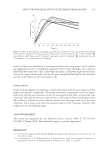
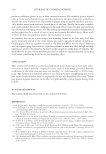
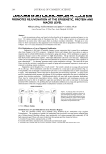
FULLERENOL SUPPRESSES SEBUM AND INHIBITS LIPASE 263 Thus, it may be concluded that fullerenol is a more promising candidate for the treat- ment of acne vulgaris (25). Consequently, we investigated its inhibitory effect on sebo- cyte sebum production resulting from UV irradiation and on P. acnes lipase activity. An in vitro assay of sebum production demonstrated that just 1.5 μM of fullerenol is suffi - cient to reduce sebocyte sebum production induced by UV irradiation. This result indicates that fullerenol is a sebum suppressor specifi cally under oxidative stress, such as UVB expo- sure. On the other hand, our previous study reported that 75 μM of polyvinylpyrrolidone (PVP)-wrapped pristine fullerene (PVP-fullerene) decreased sebum production by 27.4% by using the same method (22) but without UVB irradiation. Thus, fullerenol can be a sebum suppressor more specifi c for oxidative stress, compared with PVP-fullerene. The IC50 value of fullerenol against P. acnes lipase activity was four times higher than that of adapalene. We previously reported that pristine fullerene in olive squalane was effec- tive in the treatment of acne vulgaris in an open clinical study of 11 individuals (22). However, after application for eight weeks, infl ammatory lesions were reduced by only 37.8% this value is lower than that observed for adapalene gel in a previous study (me- dian, 63.7%) (35). It is known that antioxidant activity correlates well with a reduced severity of acne vul- garis (36). Fullerene and fullerenol are potent radical scavengers against ROS by ESR and the β-carotene breaching method (26–28). It is highly likely that fullerene and fullerenol might be effective antioxidants in clinical application. Therefore, we consider it prudent to test the effectiveness of fullerene in the reduction of infl ammatory acne in an open clinical trial. Porphyrins, metabolic products of P. acnes, reportedly stimulate expression of keratinocyte-derived IL-8 in pilosebaceous tissue, resulting in perifollicular infl amma- tion (37). Therefore, there is a need to evaluate the anti-infl ammatory effects of fullerene Figure 2. Dose-dependent inhibition of P. acnes lipase activity by fullerenol and adapalene. P. acnes lipase ac- tivity was determined by its conversion of 4-MUO into (fl uorescent) 4-MU. The inhibitory activities of fullerenol and adapalene were measured at concentrations of 1.9–484.8 μM and 66.5–1050 μM, respectively.
Purchased for the exclusive use of nofirst nolast (unknown)
From: SCC Media Library & Resource Center (library.scconline.org)