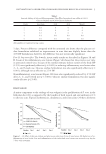
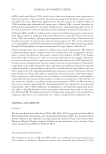
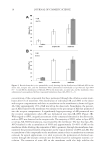
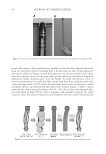
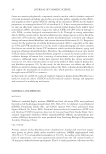
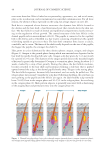
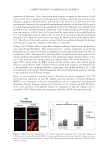
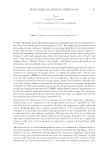
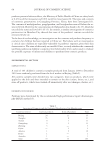
JOURNAL OF COSMETIC SCIENCE 24 The same fi bers were tested before and after treatment for consistency. Data were exported in the .csv format for analysis in spreadsheet and graphing software. NANOINDENTATION AND FORCE MAPPING BY AFM Untreated virgin root, untreated damaged curly, control treatment–treated damaged curly, and GG treatment–treated damaged curly hair were set in parallel, at approxi- mately 1-mm spacing from each other, in a mold and embedded in Epon 812 resin. Five samples of each type were embedded. After curing, the blocks were removed from the mold, trimmed, and cut with a diamond knife to reveal mirror-fi nish cross sections of the hair. The parameters used for these measurements are given in Table II. The instruments used were Nanoscope V and Dimension 3100 (both Veeco Instruments Ltd., Santa Barbara, CA). Areas exhibiting components of the hair fi ber of interest [exocuticle, endocuticle, bulk cortex, and cortex cell membrane complex (CMC)] were selected, and measurements were performed on 4× 4 μm regions (at 64 × 64 pixels). The number of fi ber samples tested was between three and fi ve and, typically, around 20 force curves were obtained for each fi ber component ( 300 in the case of the bulk cortex). Values of the reduced Young’s modulus were then calculated using a simulation (10) adapted from the Hertz Model. All AFM measurements were performed under approximately constant conditions of 24°C and 50% RH. RESULTS AND DISCUSSION EFFECT OF DAMAGE ON ALIGNMENT AND SOFTNESS PERCEPTION The generation of unruly and irregular hair samples through common hair treatments is shown in Figure 1 an otherwise healthy tress (Figure 1A) subjected to the model damage process, consisting of a single perm treatment and bleached fi ve times (with 15 shampoo- ing and conditioning cycles after each step), becomes unruly, while individual hair fi bers adopt an irregular form that causes visual misalignment of the bundle (Figure 1B). Al- though misalignment from such damage may, in some cases, be attributed to the altered surface properties of the hair (11), the fact that individual fi bers adopt such irregular shapes must be related to some, as yet undetermined, internal changes. To elucidate how such irregular fi bers and misaligned hair bundles can affect the perception of softness, Table II AFM Experimental Parameters Parameter Setting Cantilever (TESP type), Spring constant, k 24.3 N m-1 Z-scan rate 1 Hz (600 nm s-1) Ramp size 300 nm Trigger defl ection 10–15 nm

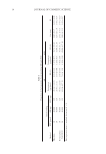
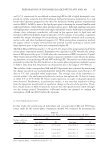
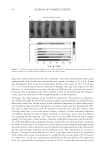
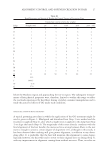
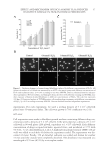
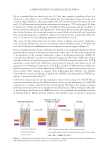
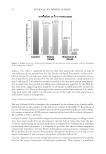
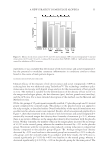
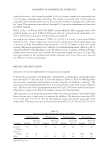
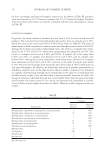
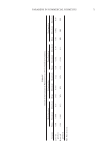
ALIGNMENT CONTROL AND SOFTNESS CREATION IN HAIR 25 naturally curly hair collected from a Japanese female were incorporated into straight tresses to various levels and each tress was assessed by blindfolded volunteers (Figure 2A). Clear changes in the alignment of the tresses can be observed as the level of unruly curly hair increases. Figure 2B shows the results of the softness perception test a clear trend in the rating for these tresses was observed, with the tress containing 20% unruly hair assessed as having the lowest softness. This result clearly shows the effect that even a small number of ir- regular hair can have on the overall perception of hair softness and also shows how impor- tant fi ber alignment is to the feeling of softness. Figure 2B also includes the assessment of a tress containing 20% unruly hair (low softness feeling) after treatment with GG. The softness perception for this tress was much higher than that for the untreated 20% tress, with the treated tress being judged somewhat similar to the 5% unruly hair-containing tress. To support this assessment, a Kendall’s coeffi cient of concordance test was per- formed (see the Appendix). Table III shows the rank order evaluations from each judge and the results of the coeffi cient of concordance test, as calculated from equations (1–3). A value of the coeffi cient of concordance, W, of 0.76 was obtained, which indicates good agreement between the judges. Using this value of W, and since both the number of judges, p, and the number of variables, n, were large (15 and 6, respectively), a Friedman distribution factor, χ2, of 57.0 was calculated [equation (3)] at (n − 1) degrees of freedom, it was thus established that this result was statistically signifi cant (p 0.001). Close ob- servation of the treated tress in Figure 2A also showed that the hair bundle was visually well aligned and had fewer hairs projecting from the bunch, further indicating that the fi ber Figure 1. The generation of misaligned hair in an otherwise healthy tress by repeated damage treatments: (A) healthy Japanese tress and (B) same tress after 1× perm and 5× bleaching/shampooing/conditioning cycles.
Purchased for the exclusive use of nofirst nolast (unknown)
From: SCC Media Library & Resource Center (library.scconline.org)