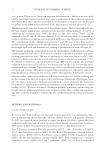
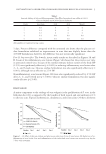
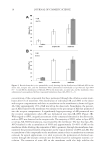
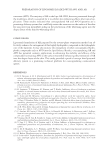
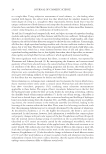
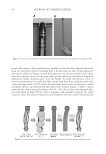
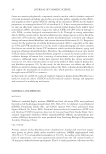
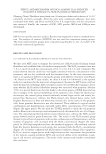
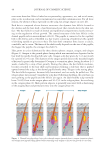
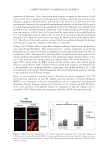
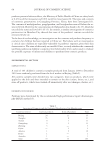
JOURNAL OF COSMETIC SCIENCE 46 even more than that. Hair is linked to our personality, appearance, sex, and social status plays a role in seduction and is instrumental to nonverbal communication. For all these reasons, the absence of hair, especially on the scalp, has a huge impact on one’s life. Each hair is composed of two distinct structures: the dynamic hair follicle located in the dermis and the hair shaft, a hard keratinized part that extends above the skin sur- face. The hair follicle is made of dermal and epidermal compartments closely interact- ing in the regulation of hair growth. The central structure of the hair follicle is the dermal papilla rich in mesenchymal cells (2). The papilla is connected to the capillary bed in the dermis and is embedded in a hair matrix consisting of epidermal cells capable of dividing rapidly to give rise to hair. The hair shaft comprises three layers: a cuticle, a medulla, and a cortex. Thickness of the shaft totally depends on the size of the papilla the bigger the papilla, the stronger the shaft (3). Hair grows in cycles delimitated by three distinct phases: anagen, catagen, and telogen (Figure 1). Anagen is the growth phase during which new materials are deposited in the hair shaft by rapidly dividing follicular cells. Anagen scalp hair grows by 1 cm per month for a period of 2–6 years. The duration of the anagen period dictates the maximal length of hair and is genetically determined. Catagen is a transition phase, lasting for about 2–3 weeks, marked by a stop of hair growth. During this phase, the hair follicle involutes, becomes attached to the hair shaft and keratinizes forming a club hair that is pushed upward toward the scalp, as the dermal papilla breaks away. Telogen is the resting phase. The hair follicle regresses, becomes fully keratinized, and can easily be pulled out. The telogen phase lasts around 3 months for scalp hair. Following shedding, the next hair can start growing as the papilla and the follicle join again. An adult healthy scalp normally bears 70–85% hair in the anagen phase and 10–15% in the telogen phase, the rest being in the catagen phase (4). Male pattern alopecia is generally associated with a shortening of the anagen phase and premature entry into the catagen phase (5). Figure 1. Normal hair physiology: hair cycles through anagen (growth phase), catagen (transition phase), and telogen (resting and falling phase) before reentering early anagen to initiate the growth of a new hair.

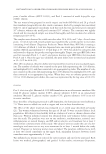
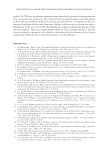
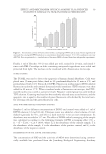
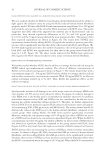
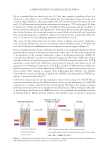
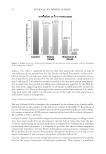
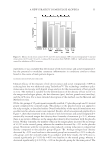
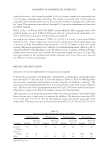
A NEW STRATEGY TO MODULATE ALOPECIA 47 Up to a hundred hair are shed every day (6). Over that number, pathological hair loss (alopecia) is most likely to occur. Male pattern hair loss (androgenic alopecia) is the most common type of baldness, affecting roughly 50% of Caucasian men by the age of 50 years and 13% of Caucasian women before menopause increasing to 75% by the age of 65 years in women (5). Asians and African are less affected than Caucasians and the incidence is lowest in Native Americans and Eskimos (6). Patterns of hair loss may vary among gen- ders. Indeed in men, the crown and temples are more likely to be fi rst affected, a pattern that eventually progresses to baldness, whereas in women hair loss is generally rather dif- fuse (7). In most cases, hair thinning appears to precede hair loss (8). The causes of male pattern hair loss are still a matter of debate, but genetic predisposi- tion, hormonal dysfunction, loss of extracellular matrix (ECM) proteins in the follicular bed, and localized microinfl ammation are recognized as major triggers (Figure 2). From a hormonal point of view, androgens are known to be important regulators of hair growth and the enzyme 5-α-reductase is pivotal to their effect. In the scalp, testosterone is metabolized to the stronger androgenic signal 5-α-dihydrotestosterone (DHT) by 5-α-reductase. Besides its action on androgen receptors in the follicle, DHT also stimu- lates the synthesis of transforming growth factor (TGF)-β in dermal papilla cells. TGF-β signaling is associated with inhibition of keratinocyte growth and induction of cell apoptosis (9). Pathological expression of TGF-β is a source of infl ammation and fi brotic matrix deposition (10). In hair physiology, TGF-β is a catagen inducer that also pre- vents reentry from telogen to anagen, thus suppressing hair growth (11). Higher 5-α-reductase activity, resulting in high levels of DHT and dysregulated TGF-β sig- naling, is found in bald scalp (12). Cell–matrix interactions are also key regulatory steps in hair cycling (13). The ECM is in constant remodeling during the different phases of hair growth. Maintenance of the ECM composition is mainly assumed by the dermal papilla fi broblasts, but proper exchange with hair matrix keratinocytes is mandatory for this function. These exchanges take place at the basement membrane zone (BMZ) located at the epithelial–mesenchymal interface of the hair follicle. Matrix proteins found at this interface serve as anchors to maintain Figure 2. Pathological mechanisms involved in recessing hair: combined effects of hormones, infl ammation, and ECM dysfunction alter the hair growth cycle and lead to hair loss.
Purchased for the exclusive use of nofirst nolast (unknown)
From: SCC Media Library & Resource Center (library.scconline.org)