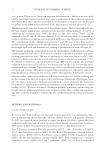
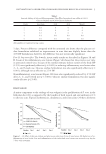
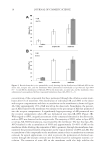
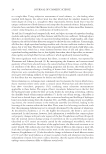
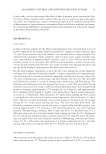
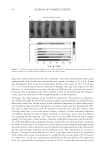
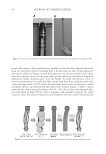
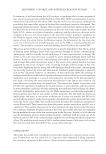
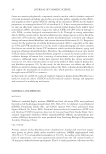
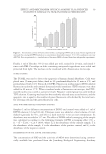
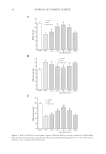
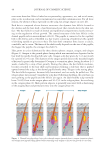
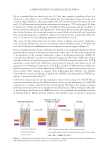
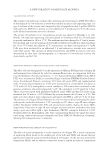
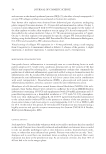
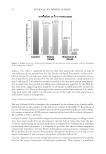
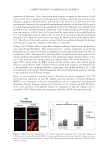
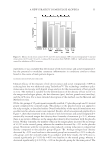
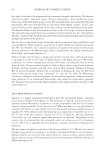
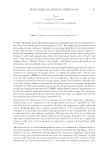
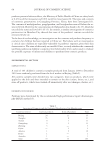
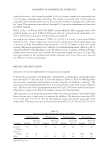
JOURNAL OF COSMETIC SCIENCE 54 The potential effect of acetyl tetrapeptide-3 on protein expression levels of collagen VII at a mesenchymal–epithelial junction was documented using human skin explants. Skin atrophy was fi rst induced through corticoid application in an effort to mimic the atrophic state of a defi cient hair follicle. The explants were then treated with acetyl tetrapeptide-3, and collagen VII expression at the DEJ was revealed semiquantitatively by immunohistological staining. Microscopic observations of normal untreated skin revealed a strong labeling of collagen VII along the DEJ. Corticoid treatment resulted in a drastic and signifi cant diminution (−70% on visual scoring) of collagen VII stain- ing but baseline expression was completely restored in the presence of acetyl tetrapep- tide-3 (Figure 5). Given the importance of collagen III, collagen VII, and laminins for hair morphogenesis and growth, the positive impact that acetyl tetrapeptide-3 had on their expression in vitro and ex vivo supports the use of the peptide to help maintain an adequate ECM bed for optimized hair anchorage. INHIBITION OF INFLAMMATORY SIGNALS As mentioned in the Introduction section, microinfl ammation in the vicinity of the der- mal papilla appears to precipitate or at least contribute to male pattern alopecia. To mimic infl ammatory events that may prevail in this context, NHDFs were stimulated with IL-1α in the presence or absence of red clover extract alone, or a mixture of red clover extract and acetyl tetrapeptide-3, at two different concentrations (0.5% and 1%). DMS, a glucocorticoid with anti-infl ammatory properties, served as positive control for inhibition of IL-8 secretion. As was expected, within 24 h of IL-1α stimulation of NHDF cells, a massive release of IL-8 was observed in the culture media, an effect that was partially blocked by DMS (−17%). The production of IL-8 was also slightly inhibited in the presence of increasing concentrations (0.5% and 1%) of red clover extract alone (−11% and −20%, respec- tively). However, the mixture of red clover extract and acetyl tetrapeptide-3 was much more potent and showed a dose–effect relationship, inhibiting IL-8 release by −33% and −48%, at the lowest and the highest concentrations, respectively (Figure 6). From this Figure 5. Effects of acetyl tetrapeptide-3 on protein expression levels of collagen VII at the DEJ, as mea- sured by immunohistological labeling of human skin explants: (A) normal skin (B) corticoid-treated (0.05%) skin (C) corticoid-treated (0.05%) skin, cultured in the presence of acetyl tetrapeptide-3 and (D) visual scoring of collagen VII expression.

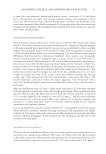
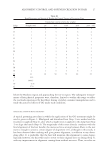
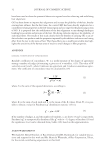
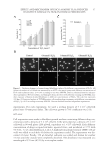
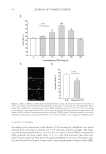
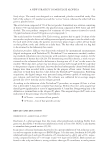
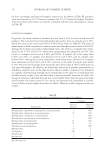
A NEW STRATEGY TO MODULATE ALOPECIA 55 experiment, it was concluded that the mixture of red clover extract and acetyl tetrapeptide-3 has the potential to modulate cutaneous infl ammation in conditions similar to those found in the course of male pattern alopecia. CLINICAL REDUCTION IN HAIR LOSS Clinical effi cacy of the mixture of red clover extract and acetyl tetrapeptide-3 (TP) in reducing hair loss was addressed using TrichoScan™. The technology combines epilu- minescence microscopy with digital image analysis for the measurement of hair growth in vivo. The method is suitable for the determination of the density of hair (n/cm2) in the anagen and telogen phases, the hair diameter (μm), the hair growth rate (mm/day), and the A/T ratio. For a more detailed description of the method, see the Material and Methods section. Of the two groups of 15 participants originally enrolled, 15 placebo people and 14 treated people completed the 4-month study. The product or the placebo lotion was applied to the scalp at night, as described earlier. Overall tolerability of the topical formulations was excellent and no adverse events were reported. Results, which are expressed graphically in Figure 7, show that treatment with a mixture of red clover extract and acetyl tetrapeptide-3 statistically increased anagen hair density after 4 months of treatment (p 0.1), whereas there is no statistic difference in the anagen hair density after treatment with the placebo lotion. Within 4 months, the number of hair in the anagen phase increased by an average of +13% in the treated group, whereas the number decreased by −2% in the placebo group. Treatment with the test product also induced a strong reduction in telogen hair density compared to the placebo group (Figure 7B). Average telogen hair density decreased by −29% over baseline in the treated group but increased by +23% in the pla- cebo group, over the 4-month study. In accordance with these results, the A/T ratio in- creased signifi cantly (p ≤ 0.05) by +46% over baseline in the treated group, whereas it decreased signifi cantly (p ≤ 0.05) by −33% in the placebo group for the same period. The Figure 6. Effects of red clover extract (0.5% and 1%) and a mixture (TP) of acetyl tetrapeptide-3 and red clover extract (0.5% and 1%) on IL-1-induced IL-8 secretion from NHDFs. DMS at 1 μM served as positive control for inhibition of IL-8 secretion.
Purchased for the exclusive use of nofirst nolast (unknown)
From: SCC Media Library & Resource Center (library.scconline.org)