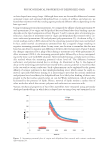
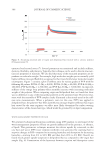
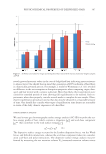
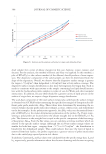
JOURNAL OF COSMETIC SCIENCE 326 used in the development of cosmetic formulations. However, based on the DSC results alone, an interaction was suspected between avobenzone and few of the excipients cetearyl alcohol, isopropyl myristate, propylparaben, diethylhexyl syringylidene malonate, ca- prylic capric triglyceride, BHT, glycerin, cetearyl alcohol/ceteareth 20, cetearyl alcohol/ sodium lauryl sulfate/sodium cetearyl sulfate, and paraffi num liquidum, bearing in mind that the presence of solid–solid interaction does not necessarily indicate incompatibility other analytical techniques were also used, such as IST/HPLC and FT-IR, which can gen- erally help in the interpretation of thermal results. The interaction of caprylic capric tri- glyceride, propylparaben, and BHT with avobenzone was confi rmed by IST/HPLC and FT-IR results. These results are in accordance with our accelerated stability studies in which avobenzone seemed to be less stable in the presence of caprylic capric triglyceride (36). The FT-IR technique did not indicate any incompatibility of avobenzone with ce- tearyl alcohol, isopropyl myristate, diethylhexyl syringylidene malonate, glycerin, cetea- ryl alcohol/ceteareth 20, cetearyl alcohol/sodium lauryl sulfate/sodium cetearyl sulfate, and paraffi num liquidum, considering that the absorption bands of avobenzone remained unchanged in the physical mixtures. ACKNOWLEDGMENTS This work was supported by grant B072 and 20020100100816 to A. I. Segall from UBA. The authors also thank Merck Química Argentina S.A.I.C. and Flamaquímica S.R.L. (Argentina) for the donation of an UV fi lter and reagents. REFERENCES 1. T. A. Júlio, I. F. Zâmara, J. S. Garcia, and M. G. Trevisan, Compatibility of sildenafi l citrate and phar- maceutical excipients by thermal analysis and LC–UV, J. Therm. Anal. Cal., 111, 2037–2044 (2012). DOI: 10.1007/s10973-012-2292-8. 2. B. Tita, A. Fulias, G. Bandur, E. Marian, and D. Tita, Compatibility study between ketoprofen and pharmaceutical excipients used in solid dosage forms, J. Pharm. Biomed. Anal., 56, 221–227 (2011). 3. K. Liltorp, T. Gorm Larsen, B. Willumsen, and R. Holm, Solid state compatibility studies with tablet excipients using non thermal methods, J. Pharm. Biomed. Anal., 55, 424–428 (2011). 4. F. Pires Maximiano, K. Monteiro Novack, M. T. Bahia, L. L. de Sá-Barreto, and M. S. Soares da Cunha- Filho, Polymorphic screen and drug–excipient compatibility studies of the antichagasic benznidazole, J. Therm. Anal. Cal., 106, 819–824 (2011). 5. M. J. Peres-Filho, M. Pedroso Nogueira Gaeti, S. Ramirez de Oliveira, R. Neves Marreto, and E. Martins Lima, Thermoanalytical investigation of olanzapine compatibility with excipients used in solid oral dosage forms, J. Therm. Anal. Cal., 104, 255–260 (2011). 6. Z. Aigner, R. Heinrich, E. Sipos, G. Farkas, A. Ciurba, O. Berkesi, and P. Szabó-Révész, Compatibility studies of aceclofenac with retard tablet excipients by means of thermal and FT-IR spectroscopic meth- ods, J. Therm. Anal. Cal., 104, 265–271 (2011). 7. M. A. Moyano, A. M. Broussalis, and A. I. Segall, Thermal analysis of lipoic acid and evaluation of the compatibility with excipients, J. Therm. Anal. Cal., 99, 631–637 (2010). 8. F. Monajjemzadeh, D. Hassanzadeh, H. Valizadeh, M. R. Siahi-Shadbad, J. Shahbazi Mojarrad, T. A. Robertson, and M. S. Roberts, Compatibility studies of acyclovir and lactose in physical mixtures and commercial tablets, Eur. J. Pharm. Biopharm., 73, 404–413 (2009). 9. L. Harding, S. Qi, G. Hill, M. Reading, and D. Q. M. Craig, The development of microthermal analy- sis and photothermal microspectroscopy as novel approaches to drug–excipient compatibility studies, Int. J. Pharm., 354, 149–157 (2008). 10. S. Agatonovic-Kustrin, N. Markovic, M. Ginic-Markovic, M. Mangan, and B. D. Glass, Compatibility studies between mannitol and omeprazole sodium isomers, J. Pharm. Biomed. Anal., 48, 356–360 (2008).

COMPATIBILITY STUDIES IN BINARY MIXTURES OF AVOBENZONE 327 11. A. F. Oliveira Santos, I. D. Basilio Jr., F. S. de Souza, A. F. D. Medeiros, M. Ferraz Pinto, D. P. de Santana, and R. O. Macêdo, Application of thermal analysis in study of binary mixtures with metformin, J. Therm. Anal. Cal., 93, 361–364 (2008). 12. D. Abbas, J. Kaloustian, C. Orneto, P. Piccerelle, H. Portugal, and A. Nicolay, DSC and physico- chemical properties of a substituted pyridoquinoline and its interaction study with excipients, J. Therm. Anal. Cal., 93, 353–360 (2008). 13. H. K. Stulzer, P. O. Rodrigues, T. M. Cardoso, J. S. R. Matos, and M. A. S. Silva, Compatibility studies between captopril and pharmaceutical excipients used in tablets formulations, J. Therm. Anal. Cal., 91, 323–328 (2008). 14. Y. P. Chou, J. Y. Huang, J. M. Tseng., S. Y. Cheng, and C. M. Shu, Reaction hazard analysis for the thermal decomposition of cumene hydroperoxide in the presence of sodium hydroxide, J. Therm. Anal. Cal., 93, 275–280 (2008). 15. J. Lu, X. J. Wang, Y. X. Liu, and C. B. Ching, Thermal and FTIR investigation of freeze-dried protein- excipient mixtures, J. Therm. Anal. Cal., 89, 913–919 (2007). 16. E. S. Sashina, G. Janowska, M. Zaborski, and A. V. Vnuchkin, Compatibility of fi broin/chitosan and fi broin/cellulose blends studied by thermal analysis, J. Therm. Anal. Cal., 89, 887–891 (2007). 17. A. F. D. Medeiros, A. F. O. Santos, F. S. de Souza, I. D. B. Jùnior, J. Valdilânio, J. V. V. Procópio, D. P. de Santana, and R. O. Macêdo, Thermal studies of pre-formulates of metronidazole obtained by spray drying technique, J. Therm. Anal. Cal., 89, 775–781 (2007). 18. S. Y. Jung, G. Zhang, and H. Yoshida, Evaluation of compatibility in polymer blend systems by simul- taneous DSC-FTIR measurement, J. Therm. Anal. Cal., 89, 675–680 (2007). 19. M. Laszcz, B. Kosmacinska, K. Korczak, B. Smigielska, M. Glice, W. Maruszak, A. Groman, H. Beczkowicz, and L. Zelazko, Study on compatibility of imatinib mesylate with pharmaceutical excipients, J. Therm. Anal. Cal., 88, 305–310 (2007). 20. M. A. S. Silva., R. G. Kelmann, T. Foppa, A. P. Cruz, C. D. Bertol, T. Sartori, A. Granada, F. Carmignan, and F. S. Murakami, Thermoanalytical study of fl uoxetine hydrochloride, J. Therm. Anal. Cal., 87, 463–467 (2007). 21. A. M. Lira, A. A. S. Araújo, I. D. J. Basílio, B. L. L. Santos, D. P. Santana, and R. O. Macedo, Compat- ibility studies of lapachol with pharmaceutical excipients for the development of topical formulations, Thermochim. Acta, 457, 1–6 (2007). 22. R. K. Verma and S. Garg, Selection of excipients for extended release formulations of glipizide through drug–excipient compatibility testing, J. Pharm. Biomed. Anal., 38, 633–644 (2005). 23. P. Mura, S. Furlanetto, M. Cirri, F. Maestrelli, A. M. Marras, and S. Pinzauti, Optimization of gliben- clamide tablet composition through the combined use of differential scanning calorimetry and D -optimal mixture experimental design, J. Pharm. Biomed. Anal., 37, 65–71 (2005). 24. R. K. Verma and S. Garg, Compatibility studies between isosorbide mononitrate and selected ex- cipients used in the development of extended release formulations, J. Pharm. Biomed. Anal., 35, 449– 458 (2004). 25. G. C. Ceschel, R. Badiello, C. Ronchi, and P. Maffei, Degradation of components in drug formulations: a comparison between HPLC and DSC methods, J. Pharm. Biomed. Anal., 32, 1067–1072 (2003). 26. A. A. S. Araújo, S. Storpirtis, L. P. Mercuri, F. M. S. Carvalho, M. dos Santos Filho, and J. R. Matos, Thermal analysis of the antiretroviral zidovudine (AZT) and evaluation of the compatibility with ex- cipients used in solid dosage forms, Int. J. Pharm., 260, 303–314 (2003). 27. F. M. McDaid, S. A. Barker, S. Fitzpatrick, C. R. Petts, and D. Q. M. Craig, Further investigations into the use of high sensitivity differential scanning calorimetry as a means of predicting drug–excipient interactions, Int. J. Pharm., 252, 235–240 (2003). 28. S. Wissing, D. Q. M. Craig, S. A. Barker, and W. D. Moore, An investigation into the use of stepwise isothermal high sensitivity DSC as a means of detecting drug–excipient incompatibility, Int. J. Pharm., 199, 141–150 (2000). 29. P. Mura, M. T. Faucci, A. Manderioli, G. Bramanti, and L. Ceccarelli, Compatibility study between ibuproxam and pharmaceutical excipients using differential scanning calorimetry, hot-stage microscopy and scanning electron microscopy, J. Pharm. Biomed. Anal., 18, 151–163 (1998). 30. P. Mura, G. P. Bettinetti, M. T. Faucci, A. Manderioli, and P. L. Parrini, Differential scanning calorim- etry in compatibility testing of picotamide with pharmaceutical excipients, Thermochim. Acta, 321, 59–65 (1998). 31. C. E. P. Malan, M. M. de Villiers, and A. P. Lötter, Application of differential scanning calorimetry and high performance liquid chromatography to determine the effects of mixture composition and
Purchased for the exclusive use of nofirst nolast (unknown)
From: SCC Media Library & Resource Center (library.scconline.org)