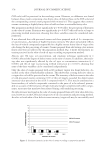
JOURNAL OF COSMETIC SCIENCE 330 in the collagen contained in the dermis to increase. Furthermore, the abnormal prolifera- tion and differentiation of keratinocytes in the epidermis can be assumed to have effects on the function of the stratum corneum (SC) in patients with DM. The response to me- chanical stresses is plantar SC hypertrophying such stresses potentially being a high-risk factor for ulcerations to develop in persons suffering from DM (6–15). A number of pub- lications dedicated to skin changes in DM exist (16–24). For patients with DM, the skin suffers from the lack of lipids supporting skin hydration, with injuries caused due to dry skin potentially leading to infections or even diabetic foot syndrome. Caring for dry skin on the foot is one of the basic recommendations of educa- tional activities conducted for people with diabetes. Feet should be inspected and bathed on a daily basis, carefully dried after a bath, especially between the toes, and oiled using a greasy ointment or moisturizer (5,20,21,25–28). The purpose of this basic foot care is to improve or preserve the skin’s elasticity. A rule of thumb for diabetic foot states that pre- venting defects is better than healing them subsequently. Ideal skin moisturizers not only soften the skin, but also create a protective fi lm on its surface and in terms of physiology, limit transepidermal water loss (TEWL). The extent of such an effect depends on the overall composition of the applied preparation (29,30). Substances possessing these properties may include, for instance, urea or glycerol. According to some authors (31–37), glycerol- containing creams dispose of similar clinical effect as urea-based creams. Glycerol and urea easily penetrate into SC and enhance its capacity of water uptake. These studies also suggest that suitable urea-containing formulations can favor more barrier properties. This study deals with monitoring the declared hydration effects of six commercial cos- metic products (CPs) designed for the care of diabetic foot, the same employing corneo- metric methods and determining TEWL. It has been declared by the producers of the moisturizers under test that the CPs were designed especially for people with diabetes to take daily care of dry and cracked skin of the foot, for skin regeneration and intense mois- turizing, softening, and restoring, or enhancing the skin’s barrier function. The humec- tants that all the preparations chiefl y utilize are glycerol and urea, in varying proportions. For Eucerin® (cream) and Allpresan® (foam), the producer declared a 10% urea content. The moisturizing effects of the tested products were compared with a prepared ointment base, lacking the active substances mentioned earlier. EX PERIMENTAL PART GROUP OF VOLUNTEERS The process of selecting volunteers and the testing procedure followed the principles enshrined in the International Ethical Guidelines for Biomedical Research Involving Hu- man Participants (38). The study included 22 women (N = 22) aged 45 ± 8 years. All the female volunteers met the criteria for inclusion in the study, completed a study participa- tion questionnaire and signed an informed consent form to participate in the study. None of the persons withdrew from the study before its completion. The female volunteers were instructed to avoid applying any CPs to any application area 12 h before and throughout the test only an evening shower with water was permitted. Measurements were taken in an air-conditioned room (temperature 24 ± 2 °C, relative humidity of 60 ± 4%) tem- perature of the skin of volunteers was 33.2 ± 0.7°C.

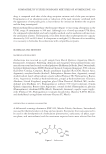
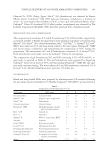
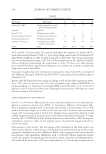
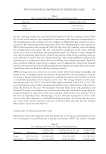
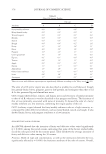
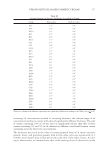
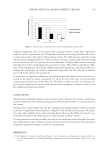
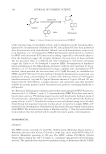
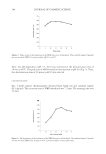
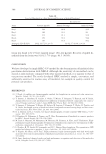
MOISTURIZING EFFECT OF TOPICAL COSMETIC PRODUCTS 331 INSTRUMENTAL TECHNIQUES The procedure for SC hydration measurement involved the CORNEOMETR® CM 825 (Courage & Kazaka Electronic GmbH, Cologne, Germany). In principle, the instrument assesses changes in the electrical capacity of the skin’s surface that indicates SC hydration. The parameter depends on the value of the dielectric water constant, relative to other ele- ments of the skin. The Corneometer gives only a relative assessment of skin hydration (39). For TEWL (40), as an indicator of successful skin barrier function, the authors used the TEWAMETER® TM 300 (Courage & Kazaka Electronic GmbH). One of the most accu- rate procedures, this method can detect even the slightest disruption of skin barrier func- tion. It is based on the diffusion of water into the area of an open chamber of cylindrical shape while determining the density gradient between two pairs of sensors (temperature and relative humidity). Digital imaging was used to evaluate physiological changes in the skin and to obtain photographic documentation, employing a VISIOSCOPE COLOR® (Courage & Kazaka Electronic GmbH) video magnifi er. MATERIALS AND METHODS A total of six cosmetic moisturizers (fi ve creams and one foam, n = 6) designed for diabetic foot were tested along with the prepared ointment base without effective moisturizing agents (Table I). The tested CPs for diabetics indicate composition according to the Inter- national Nomenclature of Cosmetic Ingredients (INCI). It was claimed that the Beline® balm would oil dry skin, bind moisture, improve blood circulation, and prevent skin in- fl ammation, in addition to having nourishing and regenerative properties. Beline is a spe- cial caring CP for strong-stressed legs and feet with a strong healing effect. It is made on herbal base containing urea, panthenol, allantoin, chamommila, and other fl ower extracts. Nourishing and regenerating properties were declared for the Ziaja® cream, including sup- porting the strengthening of the skin structure and preventing cracks in the same. Active substances include hydroxyproline to fi rm the skin and other additives for conditioning and regenerating the skin such as hydrolyzed lupine protein, oligopeptides (collagen), and oligosaccharides. Eucerin® cream was designed for extra dry and cracked skin on both legs and feet and is recommended by the manufacturer for complementary care in the dermato- logical treatment of not only the skin of the feet of diabetics but also atopic eczema, psoria- sis, and ichthyosis. Along with 10% urea, which helps accelerate the elimination of a thickened horny layer and regeneration of the skin, an additional active moisturizing ingre- dient was used, specifi cally lactic acid that effectively binds water in skin cells. For Allpresan® foam, the moisturizing effect of 10% urea was supported by Pentavitin® (a commercial name of carbohydrate complex) and panthenol. The foam contained no aromatics and pre- servatives. DiabeCare® was a product specially developed for the dry and sensitive skin of diabetics. It contains a combination of selected active substances with a fully ranging action on hydration and regeneration of the skin. The Scholl® cream is declared to stimulate the skin by renewing cells in rough, dry, and cracked skin. Before actually applying the cosmetics to the skin, pretreatment of the skin was per- formed on eight areas of the left and right hands on the sides of the volar forearms using a 0.5% solution of sodium laurylsulfate (SLS) in saline solution for 4 h. SLS solution of 0.5% was used to clean and degrease the skin with the view to eliminate individual factors.
Purchased for the exclusive use of nofirst nolast (unknown)
From: SCC Media Library & Resource Center (library.scconline.org)