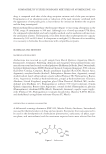
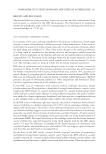
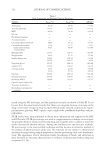
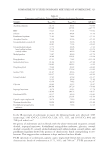
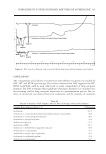
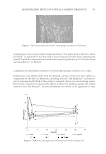
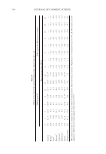
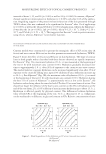
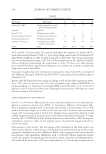
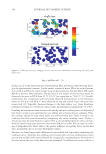
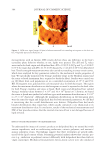
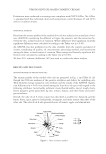
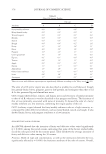
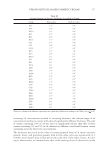
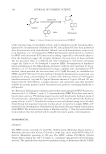
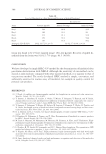
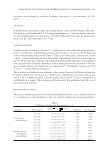
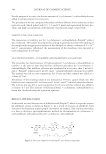
JOURNAL OF COSMETIC SCIENCE 332 This method is also an acceptable model for pretreatment of DM patients’ skin. Only then there was a one-off application of the CPs, the volume being 0.1 ml for each, to six areas of 8 cm2 each, as shown in Fig. 1. The ungreased area, not treated with a prepara- tion, served as a control for any irritative effects. Experimental values for the monitored parameters after degreasing were obtained by measuring each characteristic at the time intervals of 0, 1, 2, 3, 4, 24, 25, and 26 h. The hydration measured, using the corneomet- ric technique, was determined fi ve times for each volunteer in each delimited area of the Table I Composition of the CP for Foot Care Designed for Diabetics According to the INCI CP Composition Beline® (cream) Aqua, Ethylhexyl stearate, Hydrogenated palm glycerides, Caprylic/Kapric triglyceride, Glycerine, Cetearyl alcohol, Ceteareth-100, Glyceryl stearate, Butyrospermum parkii, Zea germ mays oil, Urea, Propylene glycol, Lanolin cera, Dimethicone, Ethoxidiglycol, Panthenol, Allantoin, Phenoxyethanol, Iodopropynyl butylcarbamate, Calendula offi cinalis fl ower extract, Equisetum arvense extract, Chamommila recutita fl ower extract, Niacinamide, Benzyl nicotinate, Methylparaben, Propylparaben, Ethylparaben, Butylparaben parfum Ziaja® (cream) Aqua, Glycerine, PPG-15 Steraryl ether, Elaeis guineesis (palm) oil, Steareth-2, Steareth-21, Cetyl alcohol, Methylsilanol hydroxyproline aspartate, Dimethicone, Polyacrylamide, C13-14 Isoparaffi n, Laureth-7, Panthenol, Hydrolyzed lupine protein, Lecithin, Urea, Tocopheryl acetate, Sodium polyacrylate, Phenoxyethanol, Methylparaben, Propylyparaben, 2-Bromo-2- nitropropane-1,3-diol, Diazolidinyl urea, Cymbopogon schoenanthus oil, Citral, Geraniol, Citric acid Eucerin® (cream) Aqua, Glycerine, Urea, Cetearyl alcohol, Sodium lactate, Caprylic/Capric triglyceride, Ethylhexyl cocoate, Hydrogenated coco-glycerides, Octyldodecanol, Cera microcristallina, Paraffi num liquidum, Dimethicone, Sorbitan stearate, Aluminum starch octenylsuccinate, Lactic acid, Phenoxyethanol, PEG-40 castor oil, Sodium cetearyl sulfate, Carbomer Allpresan® (foam) Aqua, Urea, Butane, Decyl oleate, Octyldodecanol, Cetearyl alcohol, Propane, Stearic acid, Propylene Glycol, Glycerine, Glyceryl stearate, Panthenol, Sacharide isomerate, Undecyl alcohol, Allantoin, Potassium lauroyl wheat amino acid, Palm glycerides, Capryloyl glycine, Sodium lauroyl sarcosinate, Citric acid, Pentavitin made by Pentapharm Ltd DiabeCare® (cream) Aqua, Glycerine, Glyceryl stearate, Ceteareth-20, Ceteareth-12, Cetearyl alcohol, Cethyl palmitane, Parafi num liquidum, Urea, Cetearyl ethylhexanoate, Macadamia ternifolia seed oil, Panthenol, Synthetic beewax, Ceramide 3, Ceramide 6 II, Ceramide 1, Phytosphingosine, Cholesterol, Sodium lauroyl lactylate, Phenoxyethanol, Methylparaben, Butylparaben, Ethylparaben, Propylparaben, Isobutylparaben, Carbomer, DMDM hydantoin, Triethanolamine, Parfume, Tocopheryl acetate, Aloe barbadensis, α-Isomethyl ionone, Butylphenyl methylpropional Scholl® (cream) Aqua, Urea, Dimethicone, Decyl oleate, Petrolatum, Lanolin, Dicocoyl pentaerythrityl distearyl citrate, Cera microsristallina, Glyceryl oleate, Paraffi n, Keratin, Hydrolyzed keratin, Panthenol, Aluminium stearate, Propylene glycol, Phenoxyethanol, Carbomer, Chlorphenesin, Bisabolol, Tocopheryl acetate, Sorbitol, Methylparaben, Butylparaben, Ethylparaben, Propylparaben, Isobutylparaben, BHA, Citric Acid, Sodium Phosphate, Faex, Potassium Sorbate. Ointment base Aqua purifi cata, Parafi num solidum, Parafi num liquidum, Alcohol cetylstearyl, Slovasol 2430, Trolaminum, Carbomerum 980, Methylparaben, Propylparaben

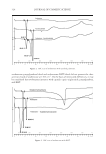
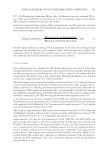
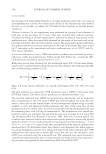
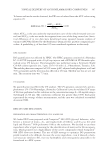
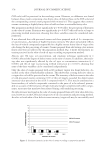
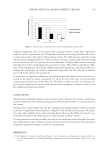
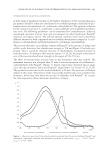
MOISTURIZING EFFECT OF TOPICAL COSMETIC PRODUCTS 333 volar forearm. Since measurement of water evaporation from the skin is signifi cantly re- lated to the temperature of the skin cover, the environment, and the probe, measurements were carried out 15 times, with the fi rst fi ve values not included in the calculation of the arithmetic mean. STATISTICAL DATA PROCESSING Calculating statistical data and creating graphical outputs were conducted using Excel 2010 and Statgraphics 6.0 (Manugistic, Inc., Rockville, MD). All the measured data were transferred to the database. Arithmetic means and standard deviations (SD) were calculated for the values obtained via corneometric measurement. Average hydration values acquired after pretreating the skin using SLS were subtracted from the mean CP hydration values, thus achieving the same initial conditions for each volunteer. Arithme- tic means and SDs were calculated using the primarily obtained TEWL data as well. The baseline was the time prior to the actual action of applying each CP to the test areas of the volar forearms on the right and left sides of each participating volunteer. The analysis of variance (ANOVA) factor evaluation was used for CP application at each time (1, 2, 3, 4, 24, 25, and 26 h) and the mutual interactions of these. The signifi cance level of 5% ( p 0.05) was chosen for statistical analysis. An F-test was carried out to discern the effects of CP containing 10% urea as declared against the control untreated area. Figure 1. A diagram describing the tested area with CP application to the volar forearms on the left and right hands.
Purchased for the exclusive use of nofirst nolast (unknown)
From: SCC Media Library & Resource Center (library.scconline.org)