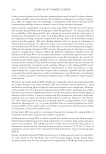
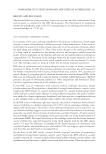
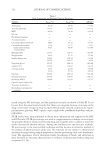
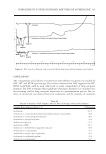
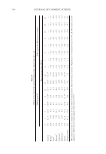
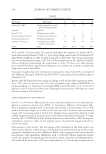
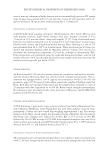
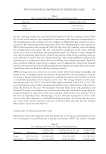
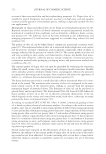
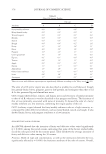
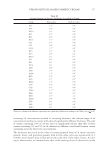
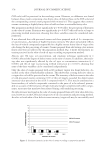
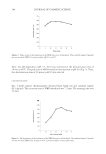
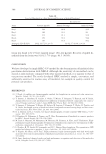
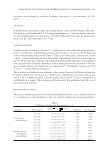
JOURNAL OF COSMETIC SCIENCE 322 tested using the IST technique, and the quantitative results are shown in Table III. It can be seen from the experimental results that there is an irregular decrease or increase in the drug content after storage of drug–excipient blends under stressed conditions for isopro- pyl myristate, glycerin, BHT, caprylic capric triglyceride, paraffi num liquidum, and pro- pylparaben. FT-IR studies were then performed to obtain more information and support for the DSC and IST results. FT-IR spectroscopy was used as a supplementary technique to investigate the possible chemical interaction between drug and excipient and to confi rm or reject the results obtained by thermal analysis. Among the nondestructive spectroscopic methods, IR spectroscopy is the most suitable technique and has become an attractive method in the analysis of pharmaceutical solids since the materials are not subject to thermal and mechanical energy during sample preparation, thereby preventing solid-state transforma- tions. The appearance of new absorption bands, broadening of bands, and alteration in their intensity are the main characteristics to evidence of interactions between drug and excipients (12, 24). Table I Peak Temperature and Enthalpy Values of Excipients Samples Tonset (°C) Tpeak (°C) ΔH (Jg-1) Avobenzone 82.99 86.40 −75.01 Ascorbyl palmitate 113.31 115.60 −133.12 BHT 69.00 70.98 −89.58 Silicone — — — Paraffi num liquidum — — — Acetylated lanolin — — — Cetearylalcohol/ceteareth 20 49.87 52.13 −63.67 Cetearylalcohol/sodium lauryl sulfate/sodium cetearyl sulfate 37.78 53.15 43.37 60.06 −74.11 −133.04 Methylparaben 125.52 126.51 −182.64 Propylparaben 96.03 97.41 −157.09 Imidazolidinyl urea 158.41 164.25 158.54 164.61 −12.60 −18.38 Propylene glycol 187.43 188.24 −409.44 Sorbitol 70% 115.60 118.82 −153.29 Cetearyl alcohol 36.63 52.46 41.08 54.93 −58.98 −108.39 Glycerin 262.45 286.54 −521.48 Isopropyl myristate 300.69 318.09 −286.32 Disodium EDTA 244.88 251.85 −97.52 Caprylic capric triglyceride — — — Titanium dioxide/silica — — — Diethylhexyl syringylidene malonate — — —

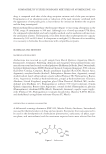
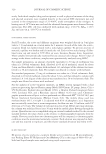
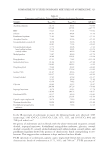
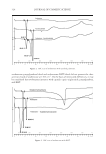
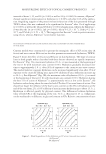
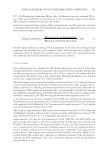
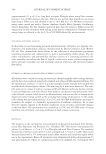
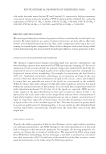
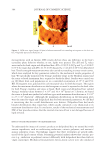
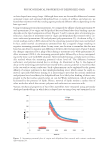
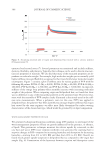
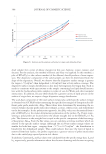
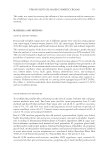
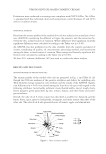
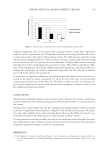
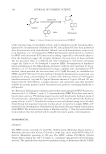
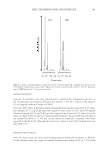
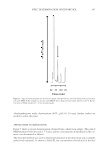
COMPATIBILITY STUDIES IN BINARY MIXTURES OF AVOBENZONE 323 In the IR spectrum of avobenzone in nujol, the following bands were observed: 1605 (asym ring) 1305 (O-C-C) 1259 (C-O) 1229 1171, 1111, and 1035 (C-C) 844 and 788 (p-di subst.) cm-1. IR spectra of avobenzone and its blends with the above-mentioned excipients cetearyl alcohol, isopropyl myristate, diethylhexyl syringylidene malonate, glycerin, cetearyl alcohol/ ceteareth 20, cetearyl alcohol/sodium lauryl sulfate/sodium cetearyl sulfate, and paraffi num liquidum showed the presence of characteristic bands corresponding to avo- benzone. This suggests that avobenzone is kept unaltered in these blends. FT-IR spectrum of avobenzone–caprylic capric triglyceride blend did not present the characteristic bands of avobenzone at 1171, 1035, and 788 cm−1. FT-IR spectrum of Table II Temperature and Enthalpy Values of Binary Mixtures Avobenzone/Excipients Samples Tonset (°C) Tpeak (°C) ΔH (Jg-1) Ascorbyl palmitate 81.75 103.48 85.45 107.65 −39.99 −427.75 BHT 54.23 57.91 −70.02 Silicone 81.62 84.95 37.10 Paraffi num liquidum 71.62 78.84 −37.14 Acetylated lanolin 73.46 81.66 −15.30 Cetearylalcohol/ceteareth 20 49.56 60.81 52.36 71.24 −35.59 −20.45 Cetearylalcohol/sodium lauryl sulfate/sodium cetearyl sulfate 37.75 52.26 72.41 40.96 56.95 80.16 −7.24 −10.24 −72.89 Methylparaben 74.87 96.86 80.40 116.95 −47.76 −44.48 Propylparaben 67.51 73.82 −115.38 Imidazolidinyl urea 81.04 158.82 84.70 160.54 −27.68 −2.05 Propylene glycol 79.60 155.20 83.92 172.38 −40.40 −34.00 Sorbitol 70% 81.07 109.47 85.36 123.15 −24.62 −82.99 Cetearyl alcohol 37.65 53.42 63.56 42.69 56.48 70.82 −33.17 −71.99 −12.47 Glycerin 89.85 286.68 93.12 287.26 −26.97 −78.44 Isopropyl myristate 49.79 146.09 63.54 180.74 −17.78 −46.57 Disodium EDTA 82.17 246.59 85.49 251.05 −30.83 −45.50 Caprylic capric triglyceride 59.76 75.59 −15.44 Titanium dioxide/silica 84.94 88.58 −33.44 Diethylhexyl syringylidene malonate 59.06 75.58 −12.25
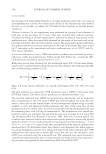
Purchased for the exclusive use of nofirst nolast (unknown)
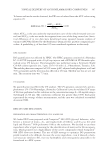
From: SCC Media Library & Resource Center (library.scconline.org)