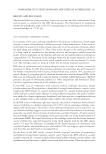
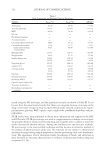
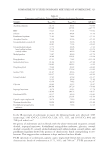
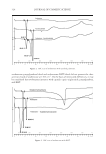
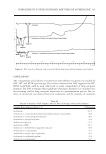
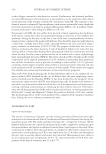
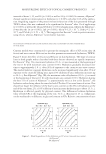
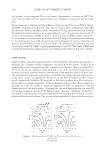
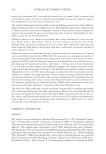
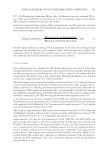
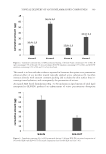
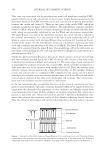
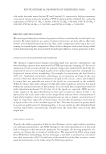
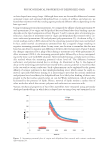
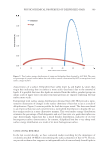
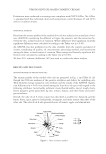
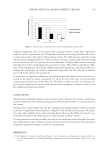
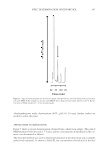
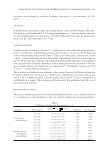
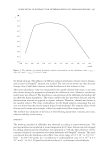
JOURNAL OF COSMETIC SCIENCE 364 measurements with an Instron. DSC results did not show any difference in the hair’s crystalline phase behavior whether, or not, lipids were present. The ΔH and Td values were similar for both virgin and delipidized hair: ΔH = 22.99 ± 0.49 J/g and Td = 142.86 ± 0.19° C for virgin hair and ΔH = 22.33 ± 0.83 J/g and Td = 142.46 ± 0.20° C for delipidized hair. Tensile strength measurements were also carried out resulting in stress–strain curves, which were analyzed for key parameters related to the mechanical tensile properties of hair. We specifi cally monitored the Young’s modulus (slope in the Hookean region) and the stress at break (maximum force required to break the fi ber). Studies were carried out on 100 fi bers from each population set in a controlled environment of 25° C and 45% RH. Histograms were generated for each measured value for both hair types. The region where the maximum distribution on the histogram occurred is reported as the fi nal value for both Young’s modulus and stress at break. Both virgin and delipidized hair yielded Young’s modulus values between 5 × 10¹⁰ and 10 × 1010 dynes/cm2. Likewise, we found the stress at break was similar for both hair types with maximum distributions at 2 × 10⁸ to 2.5 × 10⁸ dynes/cm2. Although the maximum distributions in the histogram plots were the same for virgin and delipidized hair for both measured parameters, we did fi nd it interesting that the overall distributions were distinct. Delipidized hair had much broader distributions than virgin hair, which usually contained a very sharp peak at its maximum distribution value. In conclusion, results of the mechanical measurements and DSC of hair provide evidence that the internal structure of hair is not damaged because of lipid removal. EFFECTS OF HAIR TREATMENTS ON DELIPIDIZED HAIR To understand the impact of cosmetic products on delipidized hair, we treated hair with various ingredients, such as conditioning surfactants, cationic polymers, and nonionic/ anionic polymeric resins. Our fi ndings suggest that these treatments are greatly infl u- enced by the lipid content of hair. Streaming potential analysis shows that cationic spe- cies (e.g., surfactant or polymer) interact differently with delipidized hair than with its virgin counterpart. Mechanical measurements (stress–strain curves) were also conducted Figure 4. AFM error signal image (10 μm) of solvent-extracted hair revealing micropores on the hair sur- face. Originally appeared in Reference 9.

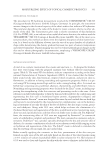
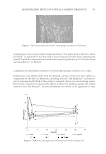
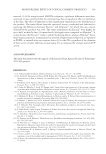
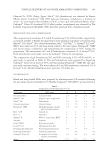
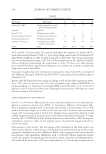
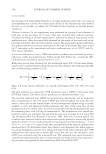
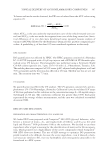
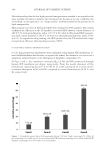
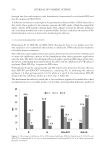
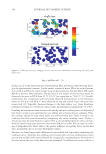
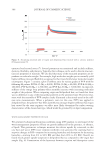
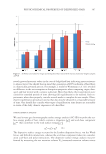
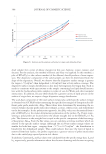
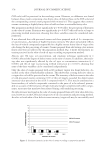
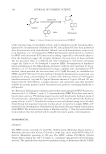
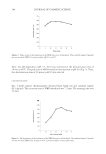
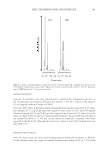
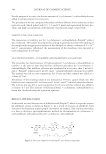
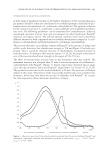
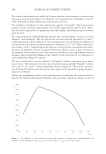
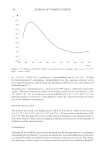
PHYSICOCHEMICAL PROPERTIES OF DELIPIDIZED HAIR 365 on hair shaped into omega loops. Although there were no discernible differences between untreated virgin and untreated delipidized hair, in terms of stiffness and elasticity, we found that treatment with hair styling agents produced different effects depending on the hair type used. Using streaming potential measurements, we compared the affi nity of polyquaternium-55 and quaternium-26 to virgin and delipidized hair and found that their binding capacity depends on the lipid composition of hair. Figures 5 and 6 contain plots of streaming po- tential as a function of treatment time for virgin and delipidized hair treated with a cat- ionic surfactant (quaternium-26) and polymer (polyquaternium-55). As shown in Fig. 6, initial readings (only in KCl solution) for the streaming potential plot were normalized. In fact, under normal circumstances untreated hair has a negative charge resulting in negative streaming potential values. In any event, our decision to normalize the data was based on our desire to monitor any differences between the two hair types. Figure 6 shows the changes experienced by a plug of hair during a treatment cycle with quaternium-26. After treatment (2000 s), the streaming potential spikes followed by a decay correspond- ing to the rinse cycle (with KCl solution). After extended rinsing, a steady state is eventu- ally reached where the streaming potential values level off. The difference between surfactant- and polymer-treated hair is striking. As illustrated in Fig. 6, the degree of decay in the streaming potential for hair treated with a cationic polymer is much less than is the case with a cationic surfactant. Such a phenomenon can be explained by the greater affi nity of cationic polymers to hair (multiple-binding sites), which cannot be easily re- moved, especially with water rinsing. It is interesting to note that the cationic surfactant and polymer have less affi nity for delipidized hair. It is likely that binding of these com- pounds to the hair surface greatly relies on van der Waals stabilization, which would be facilitated by the presence of lipids. Hence, removal of lipids renders a surface free of other molecules which the cationic polymer and surfactant can associate with. Various mechanical properties of hair fi ber assemblies were measured using previously developed methodology in which hair is shaped into an omega loop and examined in its Figure 5. Streaming potential plot of virgin and delipidized hair treated with cationic surfactant (Quaternium-26).
Purchased for the exclusive use of nofirst nolast (unknown)
From: SCC Media Library & Resource Center (library.scconline.org)