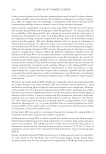
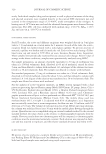
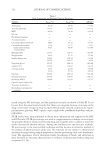
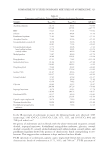
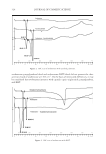
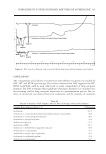
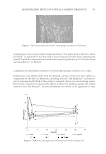
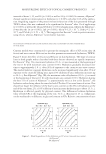
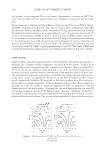
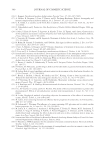
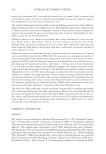
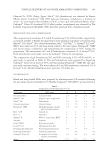
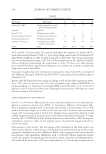
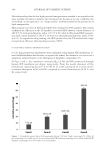
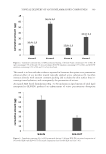
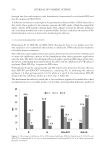
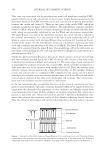
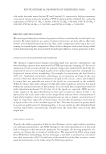
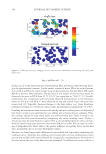
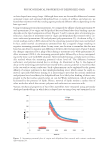
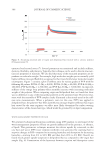
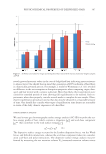
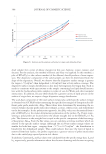
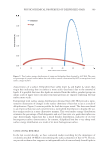
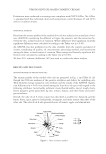
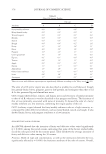
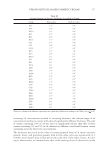
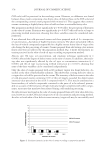
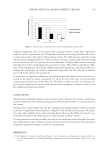
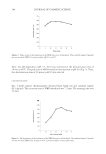
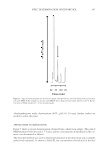
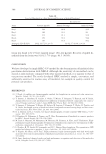
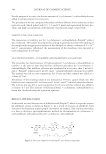
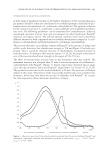
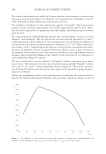
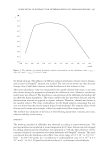
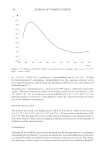
JOURNAL OF COSMETIC SCIENCE 366 untreated and treated states (7). Several parameters are monitored and include stiffness, elasticity, fl exibility, and plasticity. Typically, this technique can be used to discern structure- function properties of materials. We also fi nd that many of the measured properties are de- pendent on molecular weight. For example, high molecular weight species normally yield higher stiffness ratios and fl exibility as opposed to their more brittle lower molecular weight counterparts. Figure 7 contains a plot of stiffness ratio for various grades of PVP with the following Mw values: PVP K-15 (Mw = 8,000), PVP K-30 (Mw = 60,000), PVP K-60 (Mw = 400,000), PVP K-90 (Mw = 1,300,000), and PVP K-120 (Mw = 3,000,000). As expected, stiffness of the omega loop polymer–fi ber assembly increases with increasing molecular weight of the polymer. When comparing virgin and delipidized hair, we found that there was no difference in any of the measured parameters in the untreated state. However, treat- ment with the ensemble of PVP samples clearly illustrated a directional trend in the stiff- ness ratio measurements. When a polymeric resin (in this case, PVP) was applied to delipidized hair, the polymer–hair fi ber assembly was stronger (higher stiffness) than virgin hair treated by the same regimen—an effect most likely determined by surface wetting characteristics of the chosen hair type, which would be governed by its lipid composition. WATER MANAGEMENT PROPERTIES OF HAIR We generated adsorption/desorption isotherms using DVS analysis to investigate if the water management properties of hair are greatly infl uenced by the presence, or absence, of lipids. This gravimetric technique monitors the solvent uptake by a material, in this case hair and water. DVS water sorption isotherms were generated by exposing hair to stepwise changes in RH—sorption for increasing humidity and desorption for decreasing humidity—starting from 0% to 90% RH and then from 90% to 0% RH. Overall, we found much greater uptake (sorption) in delipidized hair as compared to the virgin hair sample (Fig. 8). Examination of the hysteresis between sorption and desorption curves Figure 6. Streaming potential plot of virgin and delipidized hair treated with a cationic polymer (Polyquaternium-55).

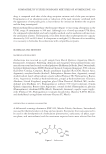
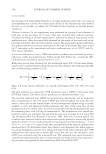
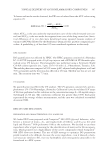
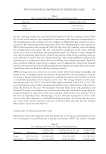
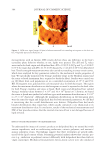
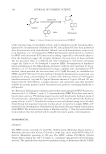
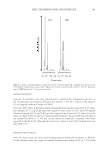
PHYSICOCHEMICAL PROPERTIES OF DELIPIDIZED HAIR 367 reveals greater hysteresis values in the case of delipidized hair indicating more resistance to release water. One should bear in mind that generation of DVS isotherms of hair fi bers is a kinetically governed process. For example, a study by Wortmann et al. (11) revealed no difference in the water sorption or desorption properties when comparing virgin, dam- aged, and hair treated with a cationic surfactant. More than likely, their experiments were carried for extended periods of time allowing full equilibration to be reached. Such ex- periments, when done properly, can take several weeks to complete for one sample. Often, shorter equilibration periods are used so that data may be obtained in a reasonable amount of time. One should also consider what types of equilibration time frames are reasonable in terms of the daily climatic experiences of a hair fi ber. SURFACE ENERGY ANALYSIS We used inverse gas chromatography surface energy analysis (iGC SEA) to probe the sur- face energy profi le of hair, which contains a dispersive ( ) γ d s and acid–base component ( ) γ AB s that contribute to the total surface energy ( ): γ T s γ = γ + γ T d AB s s s (1) The dispersive surface energy accounts for the London dispersion forces, van der Waals forces, and Liftschitz interactions, whereas the acid–base component takes into consider- ation acid–base and polar interactions. The dispersive surface energy analysis was per- formed by measuring the net retention volume VN (measured retention volume minus Figure 7. Stiffness ratio values for virgin and delipidized hair treated with various molecular weight samples of PVP.
Purchased for the exclusive use of nofirst nolast (unknown)
From: SCC Media Library & Resource Center (library.scconline.org)