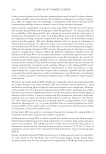
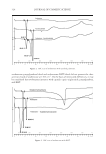
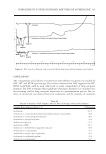
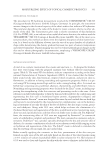
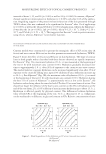
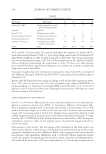
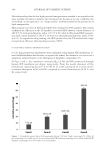
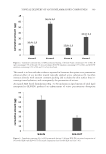
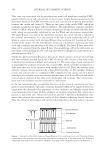
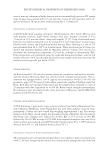
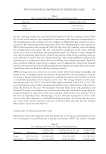
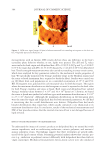
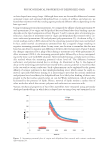
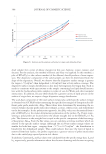
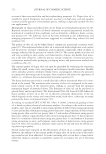
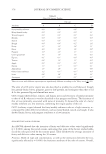
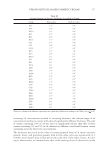
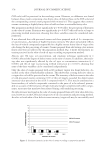
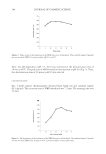
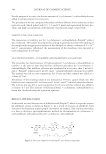
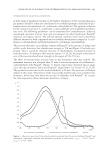
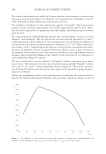
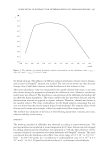
JOURNAL OF COSMETIC SCIENCE 368 dead volume) for a series of alkane elutants (in this case, heptane, octane, nonane, and decane). For the analysis, the method of Dorris and Gray was applied. In this method, a plot of RTln(VN) vs the carbon number (of the alkanes) should produce a linear regres- sion. The dispersive component of the solid sample can then be determined from the slope of the regression. Overall, we observe that the dispersive surface energy is greater for virgin (~55 mJ/m2) than delipidized (~48 mJ/m2) hair at low surface coverage. The dispersive surface energy distribution is also more heterogenous for virgin hair. Such as result is consistent with expectations as the sample containing less lipid should interact less with the hydrocarbon probe samples in terms of van der Waals and other nonpolar interactions. In addition, because there should be a greater variety of lipid species on the surface of virgin hair, we expect a larger dispersive energy distribution. The acid–base component of the total surface energy (also called specifi c surface energy) is obtained via iGC SEA by fi rst measuring the specifi c free energies of desorption for dif- ferent polar probe molecules, ΔGSP. These values were determined by measuring the re- tention volume of polar probe molecules (ethanol, acetone, ethyl acetate, and chloroform) on the hair samples. In the polarization approach, the ΔGSP values are determined from a plot of RTln(VN) vs the molar deformation polarization of the probes, PD. Points repre- senting a polar probe are located above the alkane straight line in the RTln(VN) vs PD plot. The distance to the straight line is equal to the specifi c component of the free energy of desorption, ΔGSP. From the ΔG values, one can calculate acid–base numbers which are related to the specifi c surface energy. Although the acid–base surface energy values are similar for both hair types—ranging from ~5.75 to 6.25 mJ/m2—the distribution is broader for the delipidized sample. This could indicate that once the layer of lipids is removed from hair surface, the probes experience a greater variety of polar interactions due to the underlying exposed protein side chains. In addition, Guttman (ka and kb) values were calculated from the specifi c energy data. ka and kb, respectively, provide information about the electron-donating and electron-accepting Figure 8. Sorption and desorption isotherms for virgin and delipidized hair.

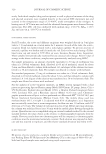
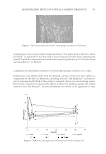
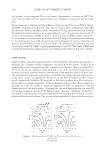
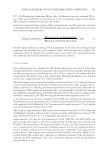
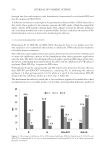
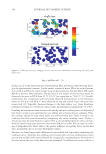
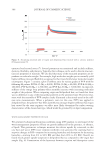
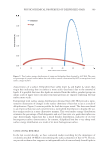
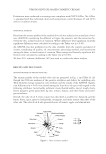
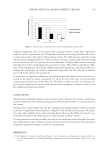
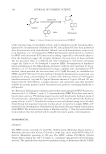
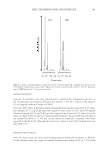
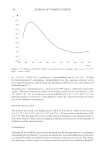
PHYSICOCHEMICAL PROPERTIES OF DELIPIDIZED HAIR 369 characteristics of a surface. Delipidized hair yields lower kb and higher ka values than virgin hair indicating that its surface is more acidic (less basic) due to the removal of lipids. It is possible that once free lipids are removed from the surface, pendant groups on amino acids of upper layer cuticular structural proteins are exposed rendering the hair surface more acidic. Extrapolated total surface energy distributions obtained from iGC SEA provide a repre- sentative illustration of changes in the surface chemistry of hair that occur as a result of delipidization. Figure 9 contains profi les for both hair types tested. The data were fi tted to an empirical function and converted into a normalized distribution to display the sur- face energy results in a more illustrative manner. This total surface energy distribution estimates the percentage of both dispersive and acid–base sites at a particular surface en- ergy. Interestingly, virgin hair has a much broader distribution, indicative of its very heterogenous surface characteristics. In contrast, delipidized hair has a very sharp total surface energy distribution as a result of its more homogenous surface. CONCLUDING REMARKS In the last several decades, we have witnessed studies searching for the importance of covalently attached 18-MEA in determining the surface properties of hair (2–4). Herein, we provide evidence that supports an indispensable role of noncovalently bound lipids in Figure 9. Total surface energy distributions of virgin and delipidized hair obtained by iGC SEA. The units are percentage of covered surface (where the total surface covered is determined by BET) vs extrapolated total surface energy (mJ/m2).
Purchased for the exclusive use of nofirst nolast (unknown)
From: SCC Media Library & Resource Center (library.scconline.org)