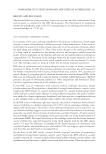
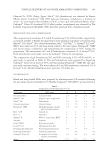
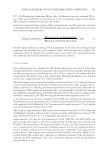
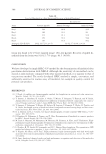
JOURNAL OF COSMETIC SCIENCE 374 propyl paraben, butylated hydroxytoluene. One half of the total water amount, ceteareth-20, cetostearyl alcohol, glyceryl monostearate, propylene glycol, methyl paraben, propyl paraben, and butylated hydroxytoluene were water bath heated at 75–80°C for 10 min. Five-minute mechanical agitation (Servodyne Mixer Heat 50003-45) at 500 rpm was applied to disperse phases. The remaining amount of water was then slowly added at room temperature (25°C), using mechanical agitation. For both base C and base H, 300 g cream were prepared from each of the studied oils at the three concentrations studied. Table I shows the coding scheme used to identify each of the studied cream compositions. SENSORY EVALUATION OF CREAMS The sensory panel previously used to evaluate the starting olive oils evaluated those 10 creams containing 10% of oil (Table I). Initially, the odor evaluation method was stan- dardized. The assessors were then asked to describe and report major differences in the odor of samples, enabling the selection of appropriate descriptors: fruity and defective. The 30 creams were evaluated over six separate sessions, i.e., fi ve creams per session, pre- sented in random manner in opaque plastic containers with lids, containing 20 g cream coded with three-digit random numbers. The cream samples were warmed in the asses- sors’ hands, uncovered, and deep-olfacted, followed by shorter olfactions. Cream odor was rated according to fruitiness and defectiveness on 10-cm unstructured scales ranging from none at all to too much. The assessors were also asked to describe the defective odor whenever detected. Table I Cream Composition and Coding Scheme Oil type Oil content (%) Cream code Cold method Hot method A 3 AC3 AH3 5 AC5 AH5 10 AC10 AH10 B 3 BC3 BH3 5 BC5 BH5 10 BC10 BH10 C 3 CC3 CH3 5 CC5 CH5 10 CC10 CH10 D 3 DC3 DH3 5 DC5 DH5 10 DC10 DH10 E 3 EC3 EH3 5 EC5 EH5 10 EC10 EH10

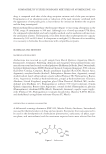
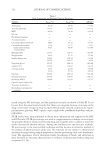
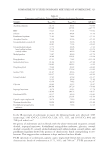
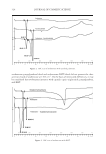
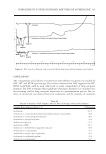
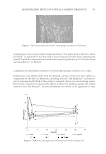
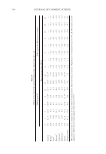
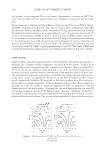
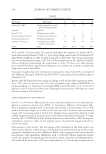
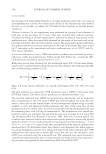
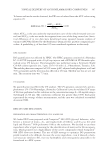
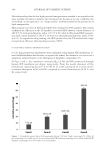
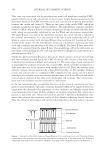
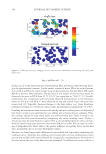
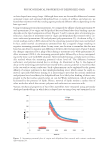
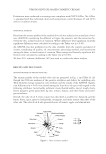
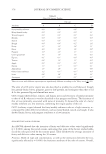
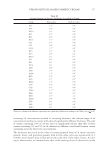
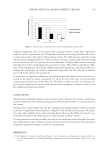
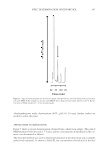
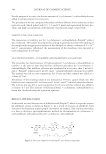
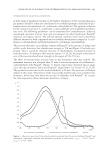
VIRGIN OLIVE OIL–BASED COSMETIC CREAMS 375 Evaluations were conducted in a testing room compliant with COI/T.20/Doc. No. 6/Rev. 1, equipped with fi ve individual cabins with temperature control (between 22 and 24°C) and air circulation means. STATISTICAL ANALYSIS Data from the sensory profi les of the studied olive oils was subjected to an analysis of vari- ance (ANOVA) considering the different oil types, the assessors, and the interaction be- tween the two, as fi xed sources of variation. Where differences were signifi cant, honestly signifi cant differences were calculated according to the Tukey test (p 0.05). An ANOVA was also performed on the data available from the sensory assessment of creams, considering oil quality, oil concentration, processing method, and interactions among the three, as fi xed sources of variation. Mean ratings and honestly signifi cant dif- ferences were calculated according to the Tukey test (p ≤ 0.05). XL-Stat 2011 software (Addinsoft, NY) was used to conduct the above analyses. RESULTS AND DISCUSSION SENSORY PROFILES OF VIRGIN OLIVE OILS The sensory profi les of the studied olive oils are presented in Fig. 1 and Table II. Al- though the COI uses medians of the positive attributes and defects for qualifying oils, Table II shows average rating for each attribute and the results of the ANOVA. Signifi - cant differences (p 0.05) were found among the four olive oil types with regard to the following attributes: fusty/muddy sediment, musty/humid/earthy, rancid, rough, fruity, bitter, pungent, green (grass/leaf), fi g tree, tomato, banana, and other fruity and astrin- gent attributes. Overall, the odor of oil A (extra virgin) was described as undefective, balanced, greenly fruity, bitter, spicy, grass-or leaf-greenly, astringent, and more intense than that of the other oils. The odor of oil A also presented notes of tomato, apple, and almond/nut. Figure 1. Olive oil sensory profi les.
Purchased for the exclusive use of nofirst nolast (unknown)
From: SCC Media Library & Resource Center (library.scconline.org)