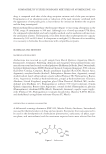
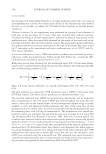
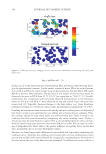
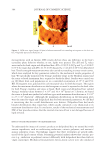
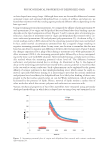
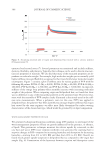
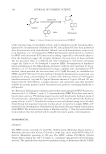
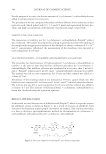
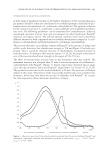
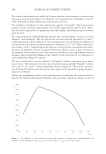
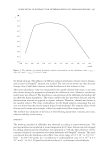
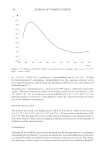
J. Cosmet. Sci., 64, 391–400 (September/October 2013) 391 Application of Purpald® for determination of 3-cyclohexene-1-carboxaldehyde and hydroxyisohexyl 3-cyclohexene carboxaldehyde ROBERT ZAKRZEWSKI, MONIKA SKOWRON, ZANETA REMBISZ, and WITOLD CIESIELSKI, Department of Inorganic and Analytical Chemistry, University of Lódz´, 91-403 Lódz ´, Poland. Accepted for publication February 28, 2013 Synopsis A spectrophotometric method for determination of 3-cyclohexene-1-carboxaldehyde and hydroxyisohexyl 3-cyclohexene carboxaldehyde was developed. This procedure is based on the reaction of carbonyl compounds with the selective derivatization reagent Purpald® in alkaline solution. The product of reaction is a colored compound with maximum absorption at 538 nm. The linear relationship is in the range of (2.5–30) × 10−5 mol·l-1 for 3-cyclohexene-1-carboxaldehyde and (2.0–20) × 10−5 mol·l-1 for hydroxyisohexyl 3-cyclohexene carboxaldehyde. The proposed method was successfully used for determination of hydroxyisohexyl 3-cyclohexene carboxaldehyde in a cosmetic product. INTRODUCTION 3-cyclohexene-1-carboxaldehyde and hydroxyisohexyl 3-cyclohexene carboxaldehyde (Figure 1) are aldehydes with cyclohexene ring. Hydroxyisohexyl 3-cyclohexene carbox- aldehyde is used as a fragrance ingredient in cosmetic products. In the cosmetics industry, the tested compound is known as Lyral®. It may be found in decorative cosmetics, per- fumes, shampoos, toilet soaps, and other cosmetics as well as in household detergents and cleaners. The recent dermatological studies have proved that this compound is lipophilic enough to penetrate the skin (1) and it is the reason for induction and elicitation of con- tact allergy to it (2,3). Further, Scientifi c Committee on Consumer Products stated that the concentration of up to 0.02% of this fragrance compound in a cosmetic product would induce sensitization or elicit allergic contact reactions in previously sensitized consumers (4). Hydroxyisohexyl 3-cyclohexene carboxaldehyde is listed as suspected al- lergens in cosmetics by the European Union (5). According to Directive 2003/15/EC, a declaration of the listed 26 “fragrance allergens” on the label of the fi nal product when present over the concentrations 0.001% for “leave-on” and 0.01% for “rinse-off” cosmetics Address all correspondence to Robert Zakrzewski at robzak@chemia.uni.lodz.pl.
Purchased for the exclusive use of nofirst nolast (unknown)
From: SCC Media Library & Resource Center (library.scconline.org)