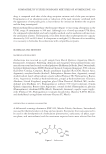
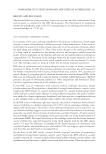
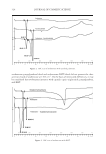
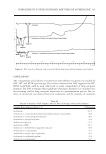
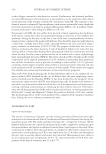
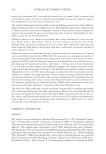
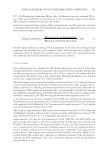
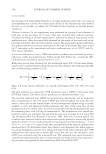
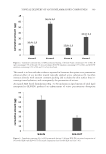
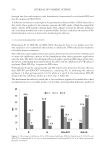
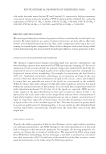
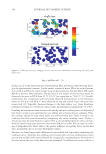
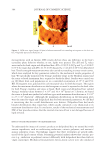
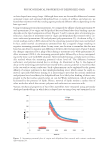
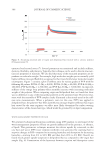
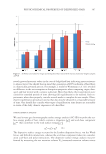
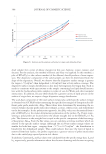
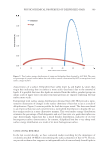
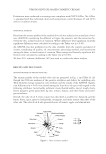
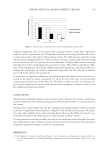
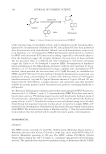
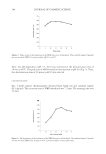
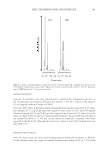
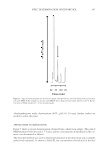
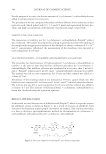
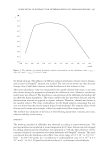
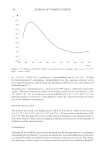
JOURNAL OF COSMETIC SCIENCE 392 is required (6). The harmfulness of fragrance ingredients in cosmetic has led to an in- creased interest in the analyses of these products. Most of the works on determination of volatile allergens used the technique of gas chromatography–mass spectrometry (GC– MS) (3,7) and high-performance liquid chromatography (HPLC) (8). 3-Cyclohexene-1-carboxaldehyde belongs to the same group of compounds as hydroxyiso- hexyl 3-cyclohexene carboxaldehyde and it is mainly used in organic chemistry (9), organic synthesis (10,11), and production of polymers (12). Moreover, it does irritate the mucous membrane of the respiratory system (13). To our knowledge, a spectrophotometric method has never been used for determination of 3-cyclohexene carboxaldehydes before. Therefore, the aim of this article was to develop a simple, accurate, and cheap method for the determination of 3-cyclohexene-1-carboxaldehydes. In our study, we used Purpald® (Figure 1) as a specific and sensitive derivatization reagent for the determination of men- tioned aldehydes. Purpald® reacts readily with aldehydes and ketones in alkaline solution at room temperature to give a colorless product, but the derivative from an aldehyde can be oxidized to give the purple tetrazine (14). The purple-colored solutions of aldehyde– Purpald® adduct absorb in the visible region at 520–555 nm (15). Several m ethods and applications have been developed for the detection and determination of aldehydes and other compounds with Purpald®. The reagent has been used in conjunction with ali- phatic aldehydes (13,14,16). Purpald® has been used for detecting the presence of alde- hydes in disinfectant (17), resin-bound aldehyde groups (18), neutral m onosaccharides (19), and lipid aldehydes (20). Several alcohol determination methods use the formation of an aldehyde by means of periodic acid, sodium periodate, or enzyme and its determina- tion using Purpald®, for example, assay of glucosamine, mannitol (21), and glyco l (22). Purpald® has also been used in thin layer chromatography as a spray reagent (19). Because of the advantages of this reagent such as selectivity, sensitivity, and ease of reaction we used Purpald® in our studies described later. EXPERIMENTAL CHEMICALS AND REAGENTS Purpald® (4-Amino-3-hydrazino-5-mercapto-1,2,4-triazole), 3-cyclohexene-1-carboxaldehyde, hydroxyisohexyl 3-cyclohexene carboxaldehyde, sodium hydroxide, and all organic solvents (methanol, ethanol, acetonitrile, acetone, dioxane) were obtained from Sigma-Aldrich (Steinheim, Germany), POCH (Gliwice, Poland), or LABSCAN Analytical Science (Dublin, Ireland). All chemicals used were of analytical grade and water was freshly distilled. Purpald® solution was prepared as 0.1 mol·l−1 in 1.0 mol·l−1 sodium hydroxide. This solution is not stable and must be used within an hour of preparation. Stock solutions of 3-cyclohexene-1-carboxaldehyde and hydroxyisohexyl 3-cyclohexene carboxaldehyde were prepared as 0.1 mol·l−1 in acetonitrile. One milliliter of these Figure 1. The chemical structure of 3-cyclohexene-1-carboxaldehyde, hydroxyisohexyl 3-cyclohexene car- boxaldehyde, and Purpald®.

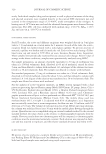
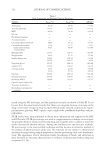
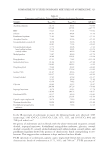
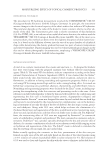
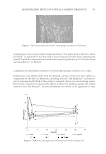
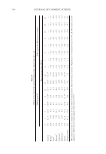
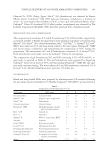
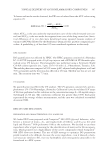
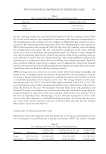
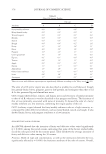
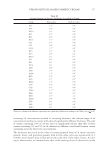
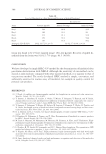
APPLICATION OF PURPALD® FOR DETERMINATION OF CARBOXALDEHYDES 393 solutions were diluted to produce working solutions at a concentration of 0.01 mol·l−1. APPARATUS A double-beam ultraviolet-visible spectrophotometer (Cary 100 Bio-Varian, Palo Alto, CA) with spectral bandwidth 0.2–4.0 nm programmable at 0.1 nm was used in the stud- ies. Spectrophotometric 10-mm quartz cells with Tefl on lids were used. In all measure- ments, the spectral bandwidth was 1.5 nm. GENERAL PROCEDURE Suitable volume of working solution of 3-cyclohexene-1-carboxaldehyde and hydroxyiso- hexyl 3-cyclohexene carboxaldehyde was transferred into a 10-ml in-volume fl ask and 5-ml in-volume fl ask, respectively (Table I). Then 1 ml of Purpald® solution and 1 ml of 1 mol·l−1 sodium hydroxide solution were added. The mixture was left at room tempera- ture for 45 min and then diluted to the mark with ethanol. The solutions were transferred into a spectroscopic cell and the absorbance of the resulting solution was measured at 538 nm, against blank solution. The blank test was composed of 1 ml Purpald® solution and 1 ml of 1 mol·l−1 sodium hydroxide solution. The absorbance of aldehydes was referred to the standard curves of aldehydes in drug-free samples to determine concentrations. Linearity was established on the basis of the equa- tion A = aC + b where A (AUS) is the absorbance and C (mol·l−1) is the concentration of an aldehyde in a sample. The evaluation of the linearity was performed with the use of linear regression analysis. PRECISION AND ACCURACY The precision determination was conducted through the analysis of six sample solutions of 3-cyclohexene-1-carboxaldehyde on the same day for intraday precision (repeatability). Table I The Results of Compounds Determination n = 6 Compound Taken (mol·l−1) Found s x t0,95. n ± (mol·l−1) RSD (%) Recovery (%) 3-Cyclohexene carboxaldehyde 2.5 × 10⁻⁵ (2.8 ± 0.1) × 10−5 2.75 110.8 5.0 × 10⁻⁵ (4.8 ± 0.1) × 10−5 2.01 96.0 1.0 × 10⁻⁴ (9.6 ± 0.3) × 10−5 3.24 96.0 2.0 × 10⁻⁴ (2.02 ± 0.04) × 10−4 2.01 101.0 3.0 × 10⁻⁴ (3.0 ± 0.1) × 10−4 3.39 100.0 Hydroxyisohexyl 3-cyclohexene carboxaldehyde 2.0 × 10⁻⁵ (1.91 ± 0.03) × 10−5 1.56 95.5 5.0 × 10⁻⁵ (4.9 ± 0.1) × 10−5 2.28 98.0 1.0 × 10⁻⁴ (1.03 ± 0.02) × 10−4 1.47 103.0 1.5 × 10⁻⁴ (1.50 ± 0.03) × 10−4 2.13 100.0 2.0 × 10⁻⁴ (2.01 ± 0.06) × 10−4 2.73 100.5
Purchased for the exclusive use of nofirst nolast (unknown)
From: SCC Media Library & Resource Center (library.scconline.org)