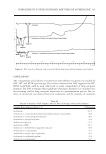
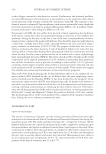
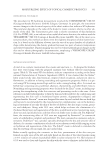
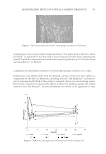
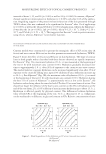
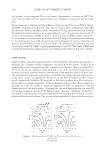
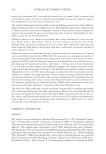
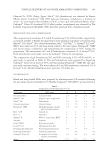
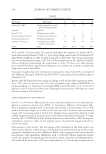
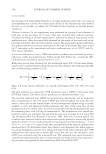
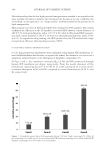
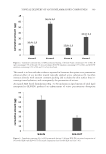
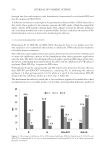
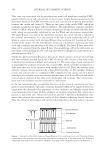
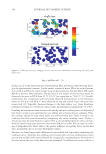
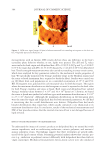
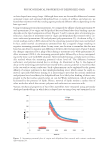
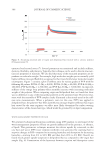
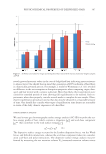
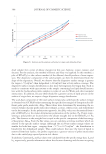
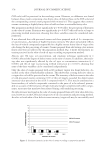
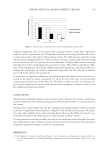
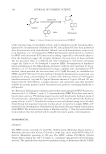
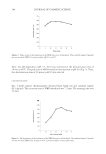
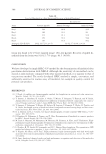
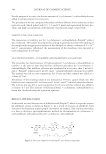
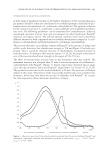
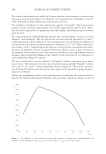
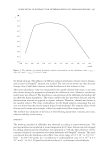
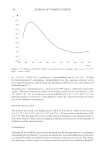
JOURNAL OF COSMETIC SCIENCE 396 The colors of the products are stable for 10 min therefore, the absorbance decreases with increasing reaction time (Figure 4). Therefore, the measurements of absorbance must be made immediately after stopping the derivatization reaction. The problem of instability of the solution also applies to Purpald®. The derivatization reagent solution develops slight purple color within approximately half an hour. There- fore, for the determination of compounds with this reagent, the freshly prepared solution must be used. The concentration of sodium hydroxide solution has a strong infl uence on the reaction of Purpald® with aldehydes. The best pH for the reaction was that provided by 1 mol·l−1 sodium hydroxide solution (Figure 5). Several reports have also described the infl uence of sodium hydroxide solution on determination of aldehydes (15,17,19). These studies have also chosen 1 mol·l−1 sodium hydroxide solution as the optimum concentration for deter- mination of aldehydes. Excess of sodium hydroxide solution causes a great decrease in the intensity of the produced color. The reason is probably too strongly alkaline reaction medium, which negatively infl uences the stability of the derivative of 3-cyclohexene-1- carboxaldehyde or Purpald® solution. The next studied effect was the infl uence of Purpald® solution concentration on absor- bance values. The maximum intensity was obtained on using optimal Purpald® solution of 0.1 mol·l−1 in 1 mol·l−1 sodium hydroxide solution (Figure 6). The similar concentra- tion of Purpald® solution was selected in many reports as the optimal for proposed proce- dures (15,19,20,22). During the preliminary studies on the optimization of conditions, the samples were di- luted to the mark with methanol. However, this procedure caused the change of color of Figure 4. The infl uence of derivatization reaction time between 3-cyclohexene-1-carboxaldehyde and Purpald® on the absorbance value, caldehyde = 4.0 × 10⁻⁴ mol·l−1, cPurpald® = 1.0 × 10⁻² mol·l−1.

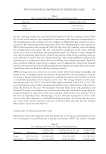
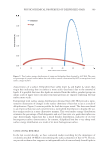
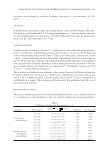
APPLICATION OF PURPALD® FOR DETERMINATION OF CARBOXALDEHYDES 397 the blank solution. The infl uence of different solvents (methanol, ethanol, water, dioxane, and acetone) on Purpald® solution was studied. The aim was to choose one that does not change color of the blank solution, and the absorbance of this solution is low. The lowest absorbance value was measured for the sample diluted with water, so we used this solvent during the preparation of samples for calibration curve. However, satisfactory results were not achieved. The absorbance–concentration of the aldehyde relationship did not show the linear dependence. The reason could be the fact that water does not stop the derivatization reaction as opposed to organic solvents. Therefore, ethanol was chosen as the suitable solvent. The value of absorbance for the blank solution containing this sol- vent was lower than that for the sample diluted with methanol. The samples diluted with dioxane and acetone were strongly colored in purple and yellow, respectively. The method was validated on the basis of the following parameters: linearity, precision, solution stability, and accuracy. LINEARITY The working standard of aldehydes was obtained according to experimental part. The reaction mixture was incubated at room temperature for 45 min, the reaction was stopped by adding ethanol and the absorbance was measured at 538 nm. The reference cuvette contained identical concentration of sodium hydroxide and Purpald® solution. The anal- ysis showed that the absorbance obeys Beer’s law in the range of 2.5 × 10⁻⁵ to 3.0 × 10⁻⁴ mol·l-1 (0.250–3.00 μmol) for 3-cyclohexene-1-carboxaldehyde and 2.0 × 10⁻⁵–2.0 × 10⁻⁴ mol·l-1 (0.10–1.00 μmol) for hydroxyisohexyl 3-cyclohexene carboxaldehyde. Figure 5. The infl uence of sodium hydroxide solution concentration on the absorbance value caldehyde = 4.0 × 10⁻⁴ mol·l−1, cPurpald®=1.0 × 10⁻² mol·l−1.
Purchased for the exclusive use of nofirst nolast (unknown)
From: SCC Media Library & Resource Center (library.scconline.org)