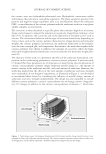
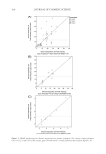
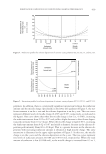
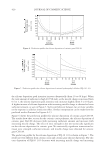
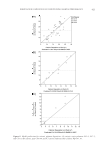
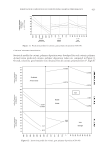
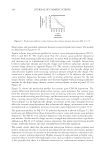
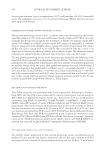
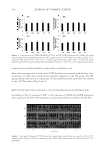
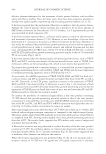
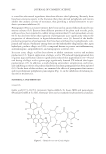
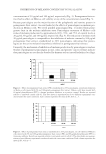
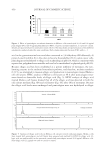
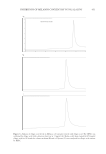
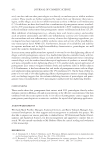
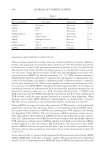
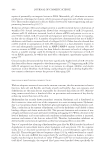
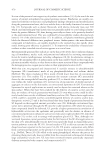
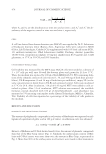
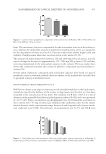
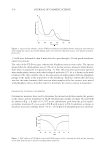
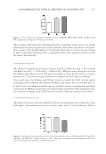
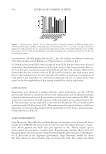
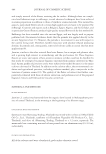
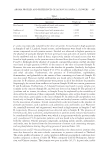
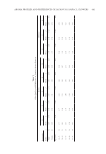
JOURNAL OF COSMETIC SCIENCE 424 Figure 13. Prediction profi ler for cationic hydroxyethyl cellulose polymer deposition (PQ-10 1.03). (Rsq) values, and reasonable agreement between actual and predicted values]. The models are illustrated in Figures 9–13. Figure 9 shows the prediction profi ler for cationic cassia polymers deposition (CC3.0, CC2.3, and CC1.9). The results show that the cationic cassia polymer deposition decreases with increasing surfactant amount, increases with increasing micelle charge, and increases up to a maximum level with increasing ionic strength. Interactions between surfactant amount and micelle charge and between surfactant amount and cationic charge density are apparent (Figure 10). The cationic cassia polymer deposition decreases signifi cantly with increasing surfactant amount at low micelle charge and only decreases slightly with increasing surfactant amount at high micelle charge. This interaction is shown in the panel labeled 10.1 in Figure 10. In addition, the cationic cassia polymer deposition decreases with increasing surfactant amount for the low charge density cationic cassia polymer and decreases slightly with increasing surfactant amount for the high charge density cationic cassia polymer, as seen in panel 10.2 in Figure 10. Figure 11 shows the prediction profi ler for cationic guar CG0.98 deposition. The results differ from the trends observed for cationic cassia polymers. For cationic guar CG0.98, polymer deposition decreases with increasing surfactant amount, slightly increases with increasing micelle charge, and decreases with increasing ionic strength. Also, a strong interaction between micelle charge and ionic strength is observed as seen in Figure 12. At high micelle charge, an increase in the ionic strength does not affect the cationic guar deposition. But at low micelle charge, an increase in the ionic strength leads to a signifi cant decrease in cationic guar deposition (see panel 12.1). The prediction profi ler for PQ-10 1.03 polymer deposition is shown in Figure 13. The results are very different from those obtained for cationic cassia and cationic guar polymer deposition. For PQ-10 1.03, polymer deposition only decreases with increasing surfac- tant amount. Neither micelle charge nor ionic strength was observed to have a signifi cant infl uence on PQ-10 1.03 polymer cationic deposition. No interactions between micelle charge, surfactant amount, and ionic strength were statistically signifi cant. The results clearly show that the molecular interaction between cationic polymer and anionic surfactant micelles is crucial for providing effi cient silicone and cationic polymer deposition. In all cases, an increase in the amount of surfactant leads to a decrease in sili- cone or cationic polymer deposition. Higher amounts of surfactant lead to highly struc- tured micelles or micelle with high aspect ratio, such as rodlike or lamellar structure. It is also possible that there is a different interaction (or conformation) between cationic

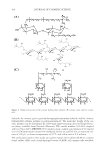
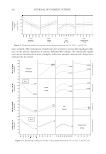
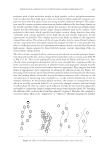
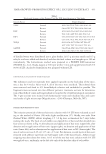
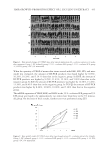
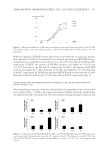
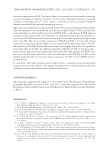
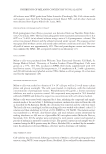
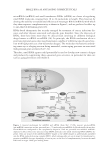
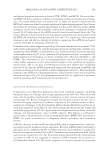
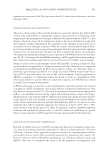
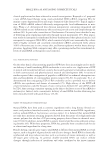
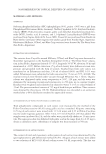
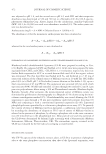
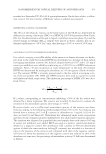
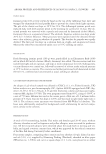
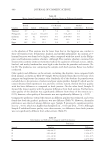
FORMULATION COMPOSITION ON CONDITIONING SHAMPOO PERFORMANCE 425 Figure 14. Effect of salt addition on micelle–polyelectrolyte interactions (14). polymers with a high molecular weight or high rigidity, such as polygalactomannans, with micelles that have high aspect ratios (occurring at higher surfactant amount) com- pared to those with low aspect ratios (occurring at lower surfactant amount). The surfac- tant micelle–cationic polymer interactions are further infl uenced by the charge density on the micelle and that of the cationic polymer. For instance, the interaction of high charge density micelles with high cationic charge density polymers such as the cationic cassia polymers in this study, which typically have higher cationic charge densities than other commonly used cationic polymers, favors high silicone and cationic deposition. Several explanations are possible. The complex may be more likely to adhere to the negatively charged hair surface. Flocculation of the silicone droplets may be more effi cient between cationic cassia polymers and highly negatively charged micelles. It is also possible that there is a different interaction (or conformation) between cationic cassia and micelles with high anionic charge compared to those with low anionic content, depending of the cat- ionic polymer charge density. The effect of ionic strength leads to a decrease in the silicone or cationic polymer deposi- tion especially for the low cationic charge density polymers such as cationic guar CG0.98 or PQ-10 1.03. This can be explained by the work done by Dubin and Oteri (15). Spe- cifi cally, these investigators showed that salt (or ionic strength) has a signifi cant effect on both coacervation and precipitation of polyelectrolytes and oppositely charged micelles due to screening of the interaction between the two components. They suggest that both forms of aggregation can be suppressed or enhanced by addition of salt (see Figure 14). Screening of electrostatic interactions between polyelectrolytes and micelles by salt means that the binding affi nity of micelles to polyelectrolytes increases with a decrease in salt concentration or decreasing ionic strength (i.e., in the initial formulation or also by shampoo dilution). As the binding affi nity increases, the system can change from one in which no micelles are bound (phase I), to a positively charged complex with few bound micelles (phase II), then to a system with suffi cient micelles for net neutrality (phase III), and fi nally to a negatively charged complex with excess bound micelles (phase IV). Similarly, the addition of salt can move the system from phase IV to phase I. Therefore, the complex [or coacervate (phase III)] can be “suppressed” or “enhanced” through changing the number
Purchased for the exclusive use of nofirst nolast (unknown)
From: SCC Media Library & Resource Center (library.scconline.org)