OPTIMAL ALUMINUM/ZIRCONIUM—PROTEIN INTERACTIONS 97 82% actives, 24.3% Al] aluminum zirconium glycine (ZAG) (Al3.6ZrCl3.3(OH)11.5·Gly, 77% actives, 14.9% Al, 14.2% Zr) and activated ZAG (Al3.6ZrCl4(OH)10.8·Gly, 74% actives, 13.9% Al, 13.3% Zr) were purchased from Summit (Huguenot, NY). Zirco- nium dichloride oxide, aluminum nitrate and aluminum chloride were purchased from Alfa Aesar (Ward Hills, MA). Concentrated hydrochloric acid, sodium carbonate and sodium hydroxide were purchased from J. T. Baker (Phillipsburg, NJ). The weight per- centage active and metal in the AP salts were provided by the certifi cates of analysis from suppliers. ZG (zirconium (IV)–glycine complex, [Zr6(O)4(OH)4(H2O)8(Gly)8]·12Cl·8H2O, 88.74% actives, 29.59% Zr), was prepared according to previous procedures (29) with slight modifi cation. Briefl y, 120 mmol of zirconium dichloride oxide octahydrate (ZrOCl2· 8H2O) and 177 mmol of glycine were placed in a fl ask with 500 ml deionized (DI) water. Concentrated HCl (4.5 ml, 33% wt) was added into this solution. The mixture was heated under refl ux at 80°C under vigorously stirring for 20 h. The product was collected as an off-white powder via freeze-drying. Powder X-ray diffraction analysis was performed to confi rm that the ZG powder was identical to the one reported in the literature (29). Al13-mer, AlO4Al12(OH)24(H2O)12(NO3)7 (80.09% actives, 23.8% Al), was prepared following the previous literature (30) and was confi rmed by both (27)Al nuclear mag- netic resonance (NMR) (AlTd: E= ~63ppm) and dynamic light scattering (0.5 nm radii) (17). The Al13-mer was prepared by adding 300 ml of a 0.6M Na2CO3 solution drop- wise into 300 ml of 0.5 M Al(NO3)3·9H2O solution at 75°C under vigorous stirring over a 3-h period. The hydrolysis ratio of [OH-]/[Al3+] was 2.46. The reaction was then cooled to room temperature and allowed to sit overnight. Slight white precipitate was removed by fi ltration. The fi ltrate was freeze-dried to remove water, and a white powder was collected (30). Al30-mer, Al30O8(OH)56(H2O)24Cl18 (80.74% actives, 27.3% Al), was prepared following the previous literature (32) and was confi rmed by both (27) Al NMR (AlTd: E = 70 ppm) and dynamic light scattering (1.0 nm radii) (17). The Al30-mer was prepared by drop- wise addition of 2 M NaOH solution into a 0.3 M AlCl3 solution at 95°C under fast stirring. The hydrolysis ratio of [OH-]/[Al3+] was 2.40. After the addition of NaOH, the solution was heated and stirred at 95°C for 48 h. The product was freeze-dried to remove water and a white powder was collected (31,32). ZG, Al13-mer, and Al30-mer were prepared by Colgate-Palmolive (Piscataway, NJ). Weight percentage active of these three compounds were calculated based on metal, OH or O, and Cl contents. PREPARATION OF PURE BSA, PURE AP, AND AP–BSA MIXTURE SOLUTIONS BSA solutions of 1, 5, 10, 20, and 40 mg/ml were prepared by dissolving 100, 500, 1000, 2000, and 4000 mg solid BSA, respectively, in 100 ml of DI water. 1 mg/ml of AP solu- tion was prepared by dissolving 100 mg of solid AP salt in 100 ml of DI water. Different molar ratios of AP–BSA solutions were prepared by combining varying amounts of solid AP salts with 18 ml of 20 mg/ml BSA solution in vials. A white homogenous suspension was formed immediately upon certain ratio.

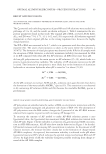
JOURNAL OF COSMETIC SCIENCE 98 ZETA POTENTIAL MEASUREMENTS All measurements of ζ-potential were conducted by using a Zetasizer Nano series from Malvern Instruments (Worcs, U.K.) equipped with an MPT-2 Autotitrator. In this in- strument, ζ-potential is determined by measuring the electrophoretic mobility of parti- cles and then calculating via the Henry Equation 3 2ε[ E f ka U I = where E U is the electrophoretic mobility, ζ is the zeta potential, ε is the dielectric con- stant, and it is set as 78.5 by the instrument, f(ka) is Henry’s function, it is set to be 1.5 automatically by Smoluchowski approximation, and I is the viscosity of the solvent (wa- ter) (33). ζ-Potential of all solutions was measured directly after pure solutions and AP–BSA mixture solutions were prepared. Each solution (1 ml) was transferred into a cell for measurement. Universal Dip Cell (ZEN1002, Malvern Instruments) and disposable siz- ing cell (DTS0012, Malvern Instruments) were used for measurements of pure BSA solution, pure AP salt solutions, and AP–BSA mixture solutions without pH control. Disposable Zeta Cell (DTS1061, Malvern Instruments) was used for zeta potential measurement in pH-controlled experiments. pH of mixture solutions was adjusted via MPT-2 Autotitrator (Malvern Instruments) with 1.0 M HCl and 1.0 M NaOH solutions by Malvern Zetasizer software. ELEMENTAL ANALYSIS According to the molar ratio at IEP reported in this study, 18.0 ml of ACH–BSA, ZAG– BSA, Al13–BSA, and ZG–BSA solutions were prepared. The mixtures were centrifuged at 5000 rpm for 15 min. The supernatant was decanted and 18.0 ml of DI water was used to wash the precipitate, followed by centrifuging at the same settings. This wash proce- dure was repeated three times to remove any free metal salts or BSA particles. The white AP–BSA product was freeze-dried to remove all water. C, H, and N were analyzed via Perkin-Elmer 2400 Elemental Analyzer (Waltham, MA). Metal components were ana- lyzed by using Perkin-Elmer ICP-OES (inductively coupled plasma optical emission spectrometry) Optima 4300 DV. TURBIDITY MEASUREMENTS The turbidity of every mixture solutions as measured right after they were prepared by using 2100P Tubidimeter from HACH (Loveland, CO). Turbidity of AP–BSA mixture solutions was outside the range of the instrument and were thus measured by diluting 1 ml of these mixture solutions into 15 ml DI water. Turbidity of pure BSA and individual AP solutions used in the fi rst section of experiment (zeta poten- tial properties of individual BSA and AP solutions with pH control) were measured without dilution.
Purchased for the exclusive use of nofirst nolast (unknown)
From: SCC Media Library & Resource Center (library.scconline.org)