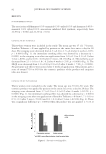
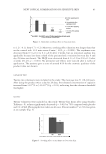
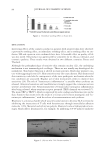
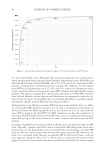
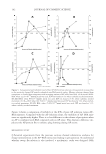
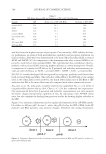
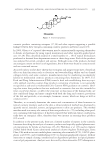
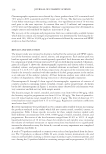
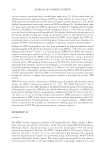
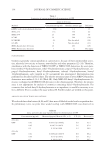
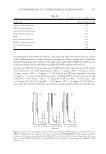
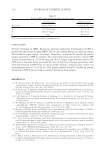
ESTRIOL, ESTRADIOL, ESTRONE, AND PROGESTERONE IN COSMETIC PRODUCTS 115 cosmetic products containing estrogens (17,18) and other reports suggesting a possible linkage between these estrogen-containing cosmetic products and breast cancer (19). In 2009, Olson et al. reported that women may be unintentionally exposing themselves to female sex hormones by using topical moisturizers and other topically applied prod- ucts (17,18). They described analysis of a small number (n = 16) of topical moisturizers purchased or donated from department stores or chain drug stores. Each of the products was analyzed for estriol, estradiol, and estrone. Although none of the products declared any estrogen content on their list of ingredients, fi ve of them were found to contain estriol and one contained estrone. As noted earlier, studies have shown that estrogens and progesterone have a benefi cial effect on skin functions such as elasticity and water-holding ability and on dermal collagen levels, and some cosmetic manufacturers may be marketing incompletely labeled or misbranded cosmetic products containing these hormones. In 1993, U.S. Food and Drug Administration (FDA) issued a fi nal rule establishing that any topi- cally applied over-the-counter drug product containing a hormone is not generally recognized as safe and is misbranded (20). Current FDA guidance on cosmetic label- ing also states that products that are marketed as cosmetics but are also intended to treat or prevent disease, or affect the structure or functions of the human body, are also considered drugs and must comply with both the drug and cosmetic provisions of the law and provides, as an example, hormone creams, which are drugs as well as cosmetics (21). Therefore, to accurately determine the extent and concentration of these hormones in typical cosmetic products used on the skin, a robust analytical method was developed to quantify estriol, estradiol, estrone, and progesterone in skin care products. This method was then used in a survey of a variety of skin care products (n = 70), including a few prod- ucts containing wild yam extract. It has been reported that wild yam extract could poten- tially have an estrogenic effect, therefore there was interest in assessing these products (22) as well. In addition to the present study, there are a limited number of reports in the scientifi c literature describing the analysis of cosmetic products and topically applied pharmaceuti- cal preparations for female sex hormones (23–26). Havlikova et al. (23) used an Agilent Zorbax Stable Bond Cyano substituted analytical column (Agilent Technologies, Santa Clara, CA) with an isocratic mobile phase consisting of acetonitrile (27%), 0.085% phos- phoric acid (63%), and tetrahydrofuran (10%) to chromatographically separate, without extraction or sample cleanup, estradiol and its degradation products in topical pharma- ceutical gel preparations. Analytes were detected by their ultraviolet (UV) absorption at Figure 3. Steroid sapogenins.

JOURNAL OF COSMETIC SCIENCE 116 225 nm. Feng et al. (24) used a monolithic capillary column and an 85% methanol and 15% 0.03 M phosphate solution to extract testosterone, methyltestosterone, and proges- terone in liquid cosmetic products followed by isocratic high-performance liquid chro- matography (HPLC) separation on a Hypersil ODS C18 (Thermo Electron Corporation, Waltham, Ma) column with 75% methanol and 25% water with UV detection at 245 nm. De Orsi et al. (25) also used the Agilent Zorbax Stable Bond Cyano substituted ana- lytical column to chromatographically separate minoxidil, progesterone, estrone, spi- ronolactone, canrenone, hydrocortisone, and triamcinolone in liquid cosmetic creams and lotions, but used gradient elution starting at 90% water (with 0.1% trifl uoroacetic acid) and 10% acetonitrile for 1 min, decreasing to 10% water and 90% acetonitrile in 40 min, and then returning to the initial condition in 10 min. Cosmetic samples were prepared for HPLC analysis by dissolution in methanol with sonication and centrifuga- tion. UV detection was at 230, 254, and 280 nm. Novakova et. al. (26) determined concentrations of estradiol, its degradation product estrone, and the preservatives methylparaben and propylparaben in topical FDA-approved estrogen therapy gel prep- arations by extraction into a acetonitrile solution with sonication followed by centrifu- gation and then chromatographic separation on a Supelco Discovery C18 analytical column (Supelco, Bellefonte, PA) and an isocratic mixture of acetonitrile, methanol, and water in the ratio of 23:24:53 v/v with UV detection at 225 nm. Finally, there are many reports describing the analysis of other matrices for female sex hormones. Of these later reports, reports of the analysis of water samples for female sex hormones may be relevant (27–31). Although the use of HPLC with UV detection for the analysis of cosmetic products and topically applied pharmaceutical preparations for various hormones, hormone degrada- tion products, and preservatives is not novel, such reports are limited and where analysis of such products is reported, HPLC with UV detection has been the method of choice and the HPLC method presented in this manuscript, in terms of specifi c elution solvents, specifi c gradient program, and specifi c column used, is novel and original. In addition, the use of extraction from Celite with methanol followed by cleanup with a commercially available solid phase extraction cartridge and then chromatographic separation on an extra-dense boding (XDB) C8 analytical column, as applied to all four hormones estriol, estradiol, estrone, and progesterone in cosmetic product matrices, has not been reported previously to our knowledge. In comparison to that reported in references 23–26, the method presented in this report is applicable to a more diverse set of sample matrices and product types and a wider range of concentration levels. Moreover, in addition to the HPLC method presented, this report also provides important details regarding the label information content (e.g., hormones present and concentrations) and product use claims for surveyed cosmetic products. EXPERIMENTAL REAGENTS AND MATERIALS The following reagents and materials were used: acetonitrile, methanol, water and Celite 545 [purchased from Fisher Scientifi c (Fairlawn, NJ)]. All solvents were of HPLC grade or better. Estriol (99%), estradiol (98%), estrone (99%), and progesterone (99%)
Purchased for the exclusive use of nofirst nolast (unknown)
From: SCC Media Library & Resource Center (library.scconline.org)