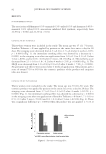
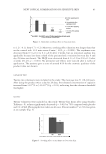
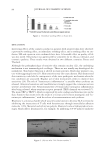
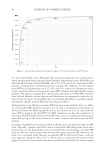
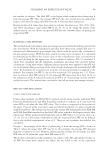
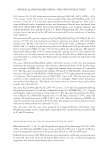
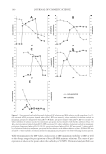
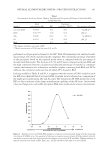
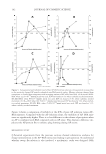
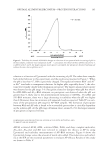
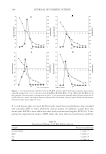
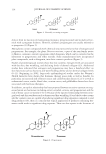
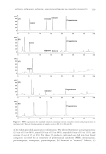
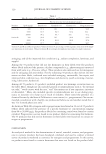
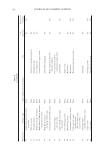
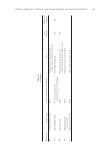
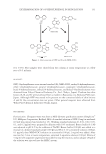
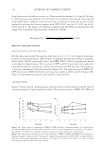
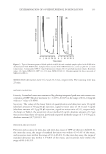
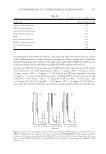
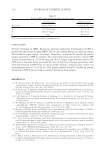
ESTRIOL, ESTRADIOL, ESTRONE, AND PROGESTERONE IN COSMETIC PRODUCTS 119 of the labels provided quantitative information. The labeled hormones were progesterone (23 out of 35 or 66%), estriol (16 out of 35 or 46%), estradiol (4 out of 35 or 11%), and estrone (2 out of 35 or 6%). For these 35 products, indicated uses fell into four broad categories: (a) relief for or treatment of premenstrual syndrome (PMS), menstruation, perimenopause, menopause, postmenopause (b) hormone or “women’s” balance (c) Figure 4. HPLC separation of a standard solution containing estriol, estradiol, estrone and progesterone in methanol (A). Typical chromatograms of sample extracts (B), (C), (D) and (E).

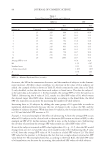
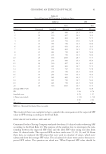
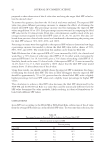
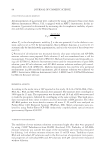
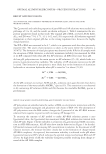
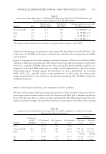
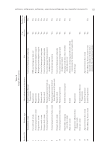
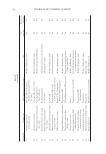
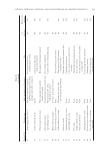
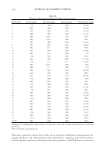
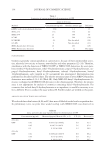
JOURNAL OF COSMETIC SCIENCE 120 antiaging, and (d) for improved skin condition (e.g., radiant complexion, luminous, and supple). Among the 35 products that did not list hormones on their labels were fi ve products whose labels indicated the presence of plant compounds (e.g., phytoestrogens) extracted from wild yams (e.g., Dioscorea villosa). These products also indicated use for menopause and for antiaging and antiwrinkle. For the remaining 30 products that did not list hor- mones on their labels, indicated uses included antiaging, antiwrinkle, line repair, and improved skin condition (e.g., skin brightness and elasticity, youth activating, moistur- izing, lubrication, hydration). Among all 70 products, 43 products included product use warnings or instructions on the label. Most, though not all, included general recommendations such as “for external use only,” “avoid contact with the eyes,” and “discontinue use if you experience irritation or discomfort.” Many also included specifi c recommendations not to use during preg- nancy or lactation or to keep out of reach of children. Three noted the presence of a chemical known by the State of California to cause cancer (i.e., progesterone). One recom- mended consultation with a health care professional before use and another stated that it was “for licensed physicians only.” As shown in Table III, estrogens and/or progesterone were found in 34 out of 35 products (whose labels indicated the presence of a specifi c hormone) at concentrations ranging from 86 to 26,800 μg/g. Six products labeled as containing estriol were found to contain estradiol. Progesterone was not found in one product labeled as containing this hormone. The 35 products that did not list hormones on their labels were found not to contain es- trogen or progesterone. CONCLUSION An analytical method for the determination of estriol, estradiol, estrone, and progester- one in cosmetic products has been developed, validated, and used to conduct a limited survey of products marketed as cosmetics for estrogens and progesterone. In this survey, no products were found to contain hormones that were not listed on the product label. Table I Mass Recovery of Estriol, Estradiol, Estrone, and Progesterone from Two Lotionsa Percent recovery for each hormone analyte Product Spike (μg/g) Estriol (%) Estradiol (%) Estrone (%) Progesterone (%) Lotion A 100 97.2 101 97.4 92.5 1000 92.3 94.5 92.4 104 10000 96.2 95.7 101 97.2 Lotion B 100 90.0 101 98.6 94.0 1000 87.8 81.8 86.9 87.4 10000 97.7 94.8 101 96.7 a Lotions A and B are different products. Values for lotion A are averages of two separate extractions with dupli- cate injections of each extract. Values for lotion B are averages for duplicate injections of a single extraction.
Purchased for the exclusive use of nofirst nolast (unknown)
From: SCC Media Library & Resource Center (library.scconline.org)