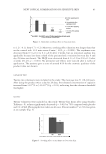
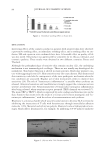
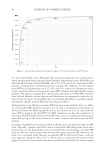
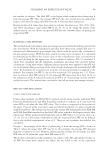
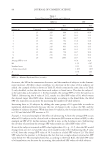
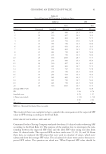
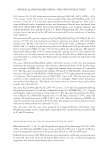
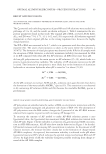
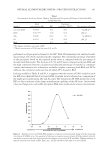
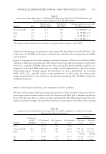
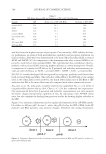
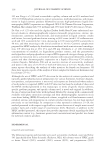
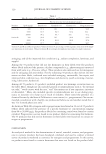
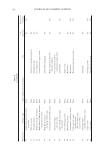
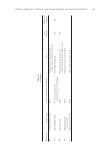
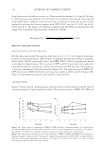
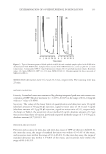
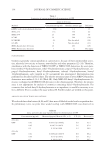
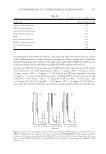
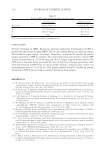
OPTIMAL ALUMINUM/ZIRCONIUM—PROTEIN INTERACTIONS 103 solutions with varying concentrations were titrated by the addition of solid AP salts. The molar ratio of AP–BSA at the point of maximum turbidity was measured for each BSA concentration. Figure 5 demonstrates the relationship between the amount of AP actives added and BSA solution in different concentrations. The linearity indicates that precipitation is governed solely by a constant AP/BSA molar ratio. Since sweep fl occulation would entail the en- trapment of multiple BSA molecules in a single metal hydroxide fl oc, this clean linear relationship argues strongly against the dominance of such a mechanism. As activated ACH, ZAG, Al13, and ZG all have same performance in this study we surmise that charge neutralization is the dominant mechanism regulating the AP–BSA interaction and plug formation. EFFECT OF PH ON ZETA POTENTIAL AND TURBIDITY OF AP–BSA COMPLEX We have demonstrated that ζ-potential measurements can be used to evaluate the forma- tion of precipitate between various AP salt solutions and BSA. pH is another signifi cant factor (39) that has effect on these systems, undoubtedly. The following studies were de- signed to provide insight into how the formation of precipitate was affected by varying Table II Isoelectronic Point, Molar Ratio of AP/BSA at IEP, Maximum Turbidity of AP–BSA Mixtures, and Precipitation Dosage Range for Four AP–BSA Samples Samples IEP* Molar ratio at IEP (AP–BSA) Turbidity at IEP (NTU) Dosage range for precipitation* (AP–BSA molar ratio) Activated ACH 5.60 24:1 549 b b 14 AP/BSA 62 ZAG 5.65 8:1 392 b b17 5 AP/BSA Al13 5.6 4:1 525 b b 3 AP/BSA 7 ZG 5.10 1.5:1 390 b b 0.5 AP/BSA 3 *The dosage range is determined at the molar ratio where turbidity is greater than 50NTU. Table III Comparison of Calculated Metal Percentage (w/w) in AP–BSA Complexes to the Metal Percentage Obtained from Elemental Analysis Samples Molar ratio at IEP (AP/BSA) %C Obtained (w/w) %H Obtained (w/w) %N Obtained (w/w) %Metal(s) Calculated (w/w) Obtained (w/w) BSA - 50.75 7.28 15.28 - - Activated ACH 24:1 49.20 7.09 14.42 1.65, Al 1.62, Al ZAG 8:1 49.15 7.08 14.23 0.97, Al 0.92, Zr 0.92, Al 0.88, Zr Al13 4:1 49.08 7.12 14.43 1.79, Al 1.57, Al ZG 1.5:1 49.86 7.13 14.67 1.27, Zr 1.70, Zr

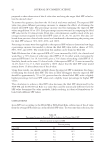
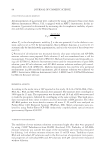
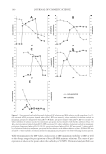
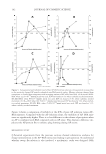
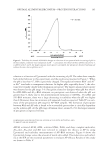
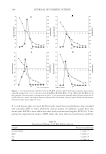
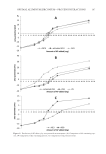
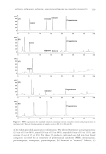
JOURNAL OF COSMETIC SCIENCE 104 pH. The starting mixtures were prepared according to the molar ratios at the IEP of each AP–BSA solution as demonstrated previously. ζ-Potential and turbidity measurements were performed as the pH is adjusted to the range of 3 to 11. The ζ-Potential and turbid- ity of all solutions varied as pH changed. Figure 6 represents the turbidity of ACH–BSA Figure 4. Comparison of maximum turbidity at IEP of pure AP solutions with AP–BSA mixture solutions. The turbidity of all solutions was measured after the dilution of 15 times. Figure 5. Amount of AP actives added as a function of BSA concentration. BSA solutions with fi ve different concentrations (1, 5, 10, 20, and 40 mg/ml) were used. The amount of AP actives required to neutralize BSA increased the same as the ratio increases in the concentration of BSA solutions resulting in a constant value of AP/BSA ratio. Activated ACH, ZAG, Al13, and ZG had same behavior under this study.
Purchased for the exclusive use of nofirst nolast (unknown)
From: SCC Media Library & Resource Center (library.scconline.org)