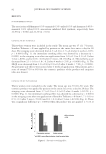
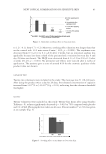
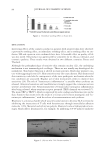
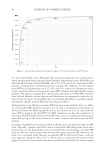
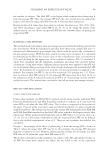
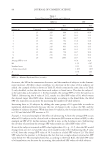
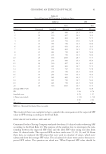
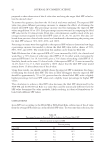
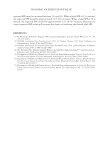
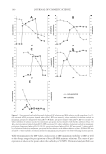
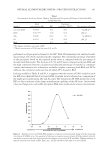
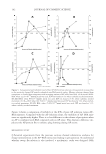
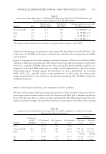
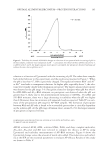
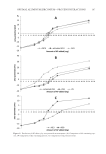
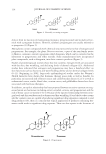
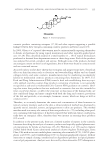
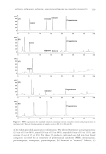
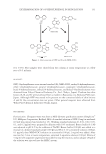
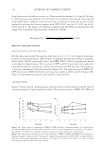
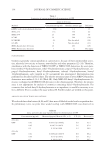
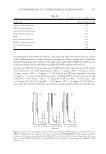
NEW TOPICAL COMBINATION ON SENSITIVE SKIN 83 to 1.2 (±0.1), then 0.7 (±0.2). Moreover, soothing effect duration was longer than that on the control side: 14.2 min versus 8 min (-44%, p 0.0001). The erythema score decreased from 0.3 (±0.1) to 0.1 (±0.0) after 4 weeks, but no statistical analysis was applicable because less than a third of the patients had a variation between day 0 and day 28 (data not shown). The DLQI score decreased from 4.3 (±1.2) to 0.8 (±0.3) after 4 weeks (81.4% p 0.001). No pertinent side effects were noticed after 4 weeks of application. The patients gave a score of around 8/10 for the cosmetic qualities of the product (data not shown). CAPSAICIN TEST Twenty-two volunteers were included in the study. The mean age was 31 (18–64) years. After using the product twice a day for 28 days, the tolerated concentration of capsaicin increased from 1.10−4% to 3.16.10−4% (p 0.01), indicating that the tolerance threshold was higher. SLS TEST Twenty volunteers were included in this study. Twenty-four hours after using Sensibio Tolérance+®, redness signifi cantly decreased (p 0.01) by 79% compared with placebo and 1% of SLS. Photographs were taken in all cases. Patient number 7 at 24 h was given as an example (Fig. 5). Figure 2. Immediate soothing effect on Caucasian skin. Figure 3. Soothing effect on erythema on Caucasian skin.

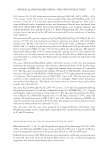
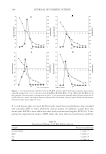
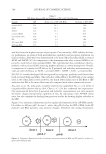
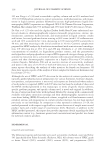
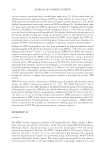
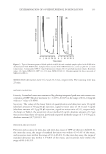
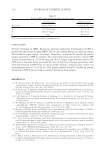
JOURNAL OF COSMETIC SCIENCE 84 DISCUSSION Interesting effects of the cosmetic product in patients with sensitive skin were observed: a preventive soothing effect, an immediate soothing effect, and a soothing effect on ery- thema. SLS and capsaicin tests confi rmed these data. A favorable effect on quality of life was also noted. The product was appreciated by volunteers for its effi cacy, tolerance, and cosmetic qualities. These results were obtained in two different countries: France and Thailand. Although the pathophysiology of sensitive skin remains unclear (22), the underlying mechanism is not immunological or allergic. There are not usually any histological ab- normalities. Skin barrier function is altered in many patients, which may promote con- tact with triggering factors (23). Skin sensitivity may also cause dryness. Skin dryness and skin sensitivity could also be consequences of the same pathogenic mechanism when the two conditions are associated. Regular use of skin moisturizers seems to improve skin sensitivity (24). The role of “keratinocytic infl ammation” is possible when cytokines are released. Abnormal sensations and vasodilatation strongly suggest the cutaneous nervous system’s involvement (22). Neurotransmitters (25) may induce neurogenic infl ammation after being released, when transient receptor potential (TRP) channels are activated (7). The main TRP is TRPV1, which is expressed by nerve endings and keratinocytes in the skin. Sensitive skin seems to be the result of a vicious cycle between neurogenic and “ke- ratinocytic infl ammation,” with the release of neurotransmitters and cytokines. Rhamnose is a monosaccharide which was previously known to decrease IL-8 secretion by inhibiting the interactions of T-cells with keratinocytes through intercellular adhesion molecule 1 (26). Mannitol and xylitol are polyols. Mannitol is also a hydroxyradical scav- enger, which affects keratinocytes, for example, by inhibiting UV B–induced oxidative Figure 4. Immediate soothing effect on Asian skin. Figure 5. SLS test after 24 h: Patient number 7.
Purchased for the exclusive use of nofirst nolast (unknown)
From: SCC Media Library & Resource Center (library.scconline.org)