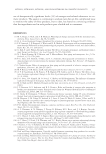
OPTIMAL ALUMINUM/ZIRCONIUM—PROTEIN INTERACTIONS 111 (35) J. J. Fitzgerald and A. H. Rosenberg, “Chemistry of Aluminum Chlorohydrate and Activated Alumi- num Chlorohydrates,” in Antiperspirants and Deodorants, K. Laden. Ed. Cosmetic Science and Technology Series. 2nd Ed. (Marcel Dekker Inc, New York, 1999), pp. 83–136. (36) A. H. Rosenberg and J. J. Fitzgerald, “Chemistry of Aluminum-Zirconium-Glycine (AZG) Com- plexes,” in, Antiperspirants and Deodorants, K. Laden. Ed. Cosmetic Science and Technology Series. 2nd Ed. (Marcel Dekker Inc, New York, 1999), pp. 137–168. (37) P. Benezeth, D. A. Palmer, and D. J. Wesolowski, The aqueous chemistry of aluminum. A new approach to high-temperature solubility measurements, Geothermics, 26, 465–481 (1997). (38) V. Pophristic, M. L. Klein and M. N. Holerca, Modeling of small aluminum chlorohydrate polymers, J. Phys. Chem. A., 108, 113–120 (2004). (39) D. L. Teagarden and S. L. Hem, Conversion of aluminum chlorohydrate to aluminum hydroxide, J. Soc. Cosmet. Chem., 33, 281–295 (1982). (40) I. M. Metcalfe and T. W. Healy, Charge-regulation modelling of the Schulze–Hardy rule and related coagulation effects, Faraday Discuss. Chem. Soc., 90, 335–344 (1990).

Purchased for the exclusive use of nofirst nolast (unknown)
From: SCC Media Library & Resource Center (library.scconline.org)