ESTRIOL, ESTRADIOL, ESTRONE, AND PROGESTERONE IN COSMETIC PRODUCTS 117 standards were purchased from Sigma Aldrich (Saint Louis, MO). The extraction tubes and fi lter disks were obtained from Supelco. Oasis HLB solid phase extraction cartridges were purchased from Waters Corporation (Milford, MA). A chromatographic separation was achieved using a Zorbax Eclipse XDB C8 (5 μm, 250 mm by 4.6 mm) analytical column obtained from Agilent Technologies. ESTROGEN AND PROGESTERONE CALIBRATION STANDARDS A stock solution of the three estrogens (~1.0 mg/ml each) was prepared by adding ap- proximately 100 mg of each estrogen to a 100 ml volumetric fl ask and diluting to the mark with methanol. A separate stock solution containing progesterone (~1.0 mg/ml) was prepared by adding approximately 100 mg of progesterone to a 100 ml volumetric fl ask and diluting to the mark with methanol. Because of the wide range of possible con- centrations in cosmetic products and because the linearity range for estriol, estradiol, and estrone (0.60 to 600 μg/g) is different from that for progesterone (0.30 to 300 μg/g), three different sets of working standards were prepared for estrogens and progesterone. For the estrogens, one set was at approximately 0.60, 1.8, 3.6, and 6.0 μg/ml. A second set was at approximately 6.0, 18, 36, and 60 μg/ml and a third set was at 60, 180, 360, and 600 μg/ml. Similarly, for progesterone, one set was at approximately 0.30, 0.90, 1.8, and 3.0 μg/ml. A second set was at approximately 3.0, 9.0, 18, and 30 μg/ml and a third set was at 30, 90, 180, and 300 μg/ml. Hormones were identifi ed in sample extracts by comparing HPLC retention times with standards, and quantifi ed using the standard calibration curve for each hormone. Sample extracts were diluted as necessary to assure that concentrations were in the linear range of the calibration curves. SAMPLE PREPARATION Approximately 300 mg of each sample was mixed thoroughly with about 1.5 g of Celite, and transferred to a 6-ml extraction tube containing a fi lter disk. The sample/Celite mixture was covered with a second fi lter disk and compacted fi rmly. The packed column was put on the top of a Waters Oasis HLB solid phase extraction cartridge for cleanup. The prepared extraction tube was eluted with suffi cient methanol to obtain 10 ml of extract in a volumetric fl ask. The extracted sample was mixed prior to HPLC analysis. Sample extracts were diluted as necessary to assure concentrations were in the linear range of the calibration curves. HPLC ANALYSIS HPLC analyses were carried out on an Agilent 1100 HPLC instrument equipped with a an Agilent Zorbax Eclipse XDB C8 (5 μm , 250 mm by 4.6 mm) analytical column, a quaternary pumping system, a vacuum degasser, a UV photodiode array detector, and a computer with Agilent ChemStation (Agilent Technologies, Santa Clara, CA) software. Because each estrogen has a different absorbance profi le, four different wavelengths, 230, 254, 280 and 300 nm, were evaluated for absorbance sensitivity and selectivity. For all four analytes, 230 nm was determined to be the best compromise.

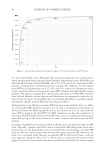
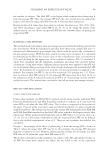
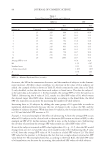
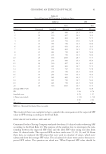
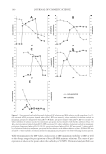
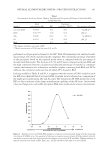
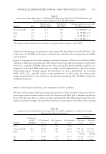
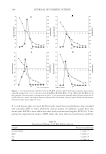
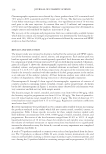
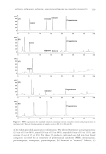
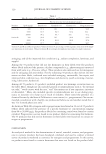
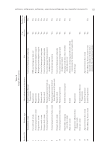
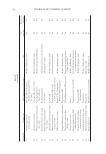
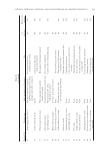
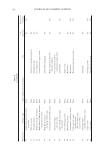
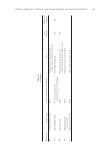
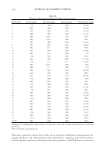
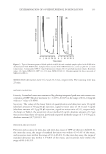
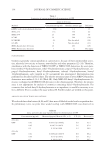
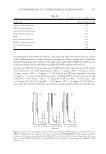
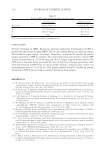
JOURNAL OF COSMETIC SCIENCE 118 Chromatographic separation was achieved by a linear gradient from 30% acetonitrile and 70% water to 80% acetonitrile and 20% water over 30 min. The fi nal ratio was held for 5 min before returning to the starting conditions. A re-equilibration time of 10 min was used prior to the next injection. A constant fl ow rate (1.0 ml/min) and temperature (25°C) were used throughout the analysis. Hormone concentrations were determined in sample extracts and standards by duplicate injections of 20 μL. The recovery of the estrogens and progesterone from two commercially available lotions which did not contain any estrogen or progesterone was determined by fortifying the lo- tions with 100, 1000 or 10,000 μg/g of each hormone followed by extraction and HPLC analysis as described above. RESULTS AND DISCUSSION The present study was initiated to develop a method for the extraction and HPLC separa- tion of the hormones estradiol, estriol, estrone, and progesterone. Each analyte peak was baseline separated and could be unambiguously quantifi ed. Each hormone was identifi ed by comparison of peak retention times and UV spectra with known standards. Chromato- gram A in Figure 4 shows the chromatographic separation and elution order of estriol, estradiol, estrone, and progesterone as standard solutions in methanol, with retention times of 5.4, 12.9, 15.7, and 21.8 min, respectively. As expected, the retention time was found to be inversely correlated with the number of alcohol groups present in the analyte as an indicator of the analyte’s polarity. All four hormone analytes were stable with no evidence of degradation, either during extraction or chromatographic separation. Chromatograms B through E show typical chromatographic separations of extracts of cosmetic products containing estriol, estradiol, estrone, and/or progesterone. As shown by the fi ve chromatograms in Figure 4, retention times observed for each hormone were very consistent and did not vary with sample matrix. The linearity ranges for estriol, estradiol, and estrone were from 0.60 to 600 μg/g, while the linearity range for progesterone was from 0.30 to 300 μg/g. The limit of quantifi ca- tion (10 times baseline noise) ranged from 0.46 to 1.0 μg/g. The limit of detection (3.3 times baseline noise) ranged from 0.15 to 0.30 μg/g. Regression correlation coeffi cients were better than 0.995. Recovery experiments were performed on two commercially available lotions (not among the products analyzed in the study) which did not contain estriol, estradiol, estrone, or progesterone. Table I shows specifi c recoveries for these sample matrices spiked with three different concentrations (100, 1000, 10000 μg/g) of estriol, estradiol, estrone, and progesterone. Recoveries of the four hormones ranged from 81.8% to 101%. A single liquid/solid extraction of 10 ml was chosen for simplicity and rapidity since increasing the volume of methanol extractant or repeat extractions was found not to signifi cantly increase the observed recovery. For lotion A, a second recovery experiment was completed on a different day (Table I). A total of 70 products marketed as cosmetics were selected and purchased from the Inter- net. The 70 products, as shown in Table II, were creams, lotions, moisturizers, oils, and extracts and had labels claiming a diverse range of product types, hormones present, and uses. Among the 35 products labeled as containing estrogen and/or progesterone, 22 (63%)
Purchased for the exclusive use of nofirst nolast (unknown)
From: SCC Media Library & Resource Center (library.scconline.org)