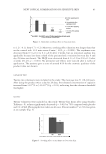
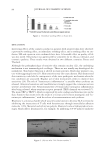
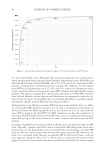
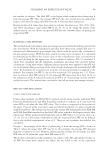
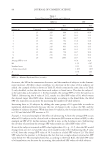
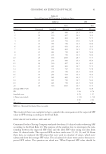
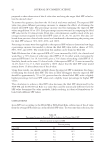
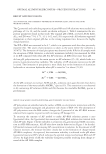
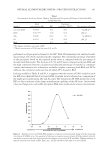
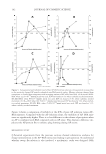
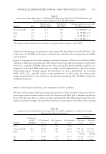
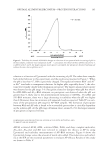
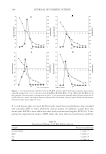
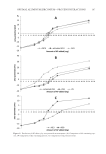
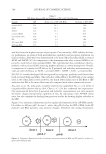
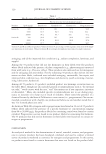
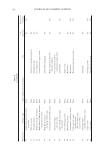
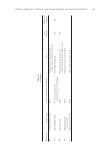
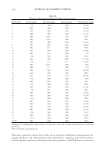
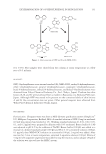
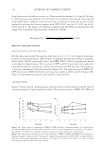
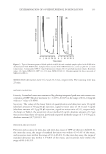
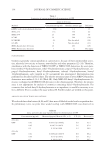
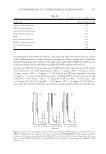
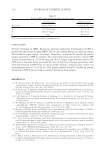
JOURNAL OF COSMETIC SCIENCE 108 and also forms the highest amount of precipitate. Concomitantly, ACH exhibits the low- est performance in terms of both neutralization capability and precipitate formation. In clinical studies, ZAG has been demonstrated to be more effi cacious than ACH, activated ACH, and ASCH (36). In comparison to the aluminum-only salts, activated ZAG is ex- pected to work better than standard ZAG. The experimental data corroborates this hy- pothesis, with activated ZAG achieving higher turbidity at a lower dosing level. Overall, a comparison of commercial AP effi cacy by ζ-potential and turbidity measurements pro- vides an order of effi cacy as: ACH activated ACH ASCH ZAG activated ZAG. ZG (CP-2), a newly developed AP salt reported by our group, performs much better than both activated ZAG and ZAG. The turbidity of ZG–BSA at the IEP falls at the similar level as two other ZAG actives however, the much lower molar ratio of ZG/BSA at IEP indicates that ZG is the most effi cacious salt compared with other commercial actives. Al30-mer, as an 18+ polycation, would be expected to outperform Al13 (7+) in terms of coagulation/fl occulation effi cacy (40). Chen et al. (3,6) has confi rmed this expectation. Our experimental data from ζ-potential and turbidity measurements not only supports the better charge neutralization capability of Al30 by indicating a low AP/BSA molar ratio, but also confi rms the fi nding from previous studies by showing higher turbidity at the IEP. Figure 9 is a schematic illustration used to explain the formation of the AP–BSA insolu- ble adduct at different pH. In zone 1, where the pH is below the IEP of BSA, both AP particles and BSA particles carry positive charges. Therefore, the strong electrostatic Table V IEP, Molar Ratio at IEP and Turbidity at IEP of AP–BSA Mixtures Samples IEP Molar ratio at IEP (AP–BSA) Turbidity at IEP (NTU) activate ACH 5.61 24:1 549 ACH 5.28 30:1 360 ASCH 5.25 22:1 663 activated ZAG 5.28 7:1 416 inactivated ZAG 5.65 8:1 390 ZG 5.08 3:2 386 Al13-mer-BSA 5.58 4:1 520 Al30-mr-BSA 5.33 3:2 812 Figure 9. Schematic illustration of the electrostatic interaction between BSA and AP particles in three re- gions under different pH.

OPTIMAL ALUMINUM/ZIRCONIUM—PROTEIN INTERACTIONS 109 repulsion prevents the adsorption of AP onto BSA. In zone 2, BSA particles are negatively charged while AP particles still carry positive charges the electrostatic attraction causes adsorption on to the BSA surface. In zone 3, both BSA and AP particles are negatively charged—leading to repulsion between these two particles. The zeta potential measure- ment technique provides an effective and effi cient way to evaluate effi cacy of metal salts to use as AP product or coagulants/fl occulants in water treatment. CONCLUSIONS The possibility of using ζ-potential measurements to demonstrate the optimal interac- tion between BSA across a wide range of commercial AP actives has been successfully investigated. ζ-potential measurement is not only effective, but can also be used as a simple indicator to evaluate the effi cacy of an AP active when it is combined with a solu- tion containing a representative biomolecule (e.g., BSA) at IEP. As a result of minimum repulsion, an insoluble AP–BSA precipitate was formed at the pH where the molar ratio of AP/BSA allows for electrostatic neutrality and the ζ-potential of solution is zero, also known as IEP. The disparity between the turbidity of AP salts alone and turbidity of the AP–BSA combination implicates the importance of biomolecules in the Plug Theory. The electrostatically driven mechanism of plug formation is similar to that which is ac- cepted as the mode of action of primary coagulants in water treatment. The techniques and results described here should allow for more quantitatively analysis of new AP ac- tives, as well as providing insight into the rational design of new active salts. ACKNOWLEDGMENTS The authors warmly thank Dr. Andrei Potain from Colgate-Palmolive Co. for helping and providing advice on the operation of Zetasizer. REFERENCES (1) J. Duan and J. Gregory, Coagulation by hydrolyzing metal salts, Adv. Colloid Interface Sci., 100–102, 475–502 (2003). (2) S. D. Faust and O. M. Aly, Chemistry of Water Treatment. 2nd Ed. CRC (Press, Boca Raton, 2010), pp. 217–268. (3) Z. Chen, B. Fan, X. Peng, Z. Zhang, J. Fan, and Z. Luan, Evaluation of Al30 polynuclear species in polyaluminum solutions as coagulant for water treatment, Chemosphere, 64, 912–918 (2006). (4) B. Shi, Q. Wei, D. Wang, Z. Zhu, and H. Tang, Coagulation of humic acid: The performance of pre- formed and non-preformed Al species, Colloids Surf., A, 296, 141–148 (2007). (5) C. Staaks, R. Fabris, T. Lowe, C. W. K. Chow, J. A. van Leeuwen, and M. Drikas, Coagulation assess- ment and optimisation with a photometric dispersion analyser and organic characterisation for natural organic matter removal performance, Chem. Eng. J., 168, 629–634 (2011). (6) Z. Chen, Z. Luan, Z. Jia, and X. Li, Study on the hydrolysis/precipitation behavior of Keggin Al13 and Al30 polymers in polyaluminum solutions, J. Environ. Manage., 90, 2831–2840 (2009). (7) K. Laden, “Antiperspirants and Deodorants: History of Major HBA Market,” in Antiperspirants and Deodorants. K. Laden. Ed. Cosmetic Science and Technology Series. 2nd Ed. (Marcel Dekker Inc, New York, 1999), pp. 1–14. (8) C. J. C. Edwards and A. K. Mills, “A Guide to Understand Antiperspirant Formulations,” in Antiperspi- rants and Deodorants. K. Laden. Ed. Cosmetic Science and Technology Series. 2nd Ed. (Marcel Dekker Inc, New York, 1999), pp. 233–257.
Purchased for the exclusive use of nofirst nolast (unknown)
From: SCC Media Library & Resource Center (library.scconline.org)