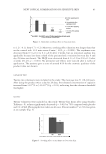
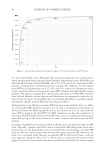
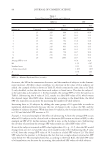
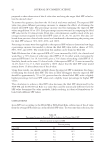
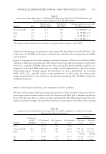
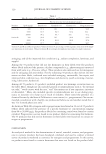
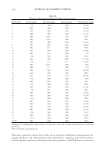
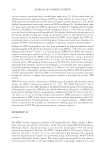
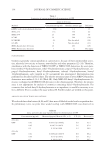
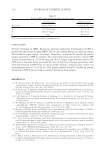
JOURNAL OF COSMETIC SCIENCE 134 INTERFERENCE Cosmetics generally contain parabens as a preservative, because of their antimicrobial activi- ties, relatively low toxicity to human, nonvolatility and other properties (22–24). Therefore, interference with the detection of NBD-CO-OPP or NBD-CO-IS derivatives by seven para- bens (methyl 4-hydroxybenzoate, ethyl 4-hydroxybenzoate, propyl 4-hydroxybenzoate, iso- propyl 4-hydroxybenzoate, butyl 4-hydroxybenzoate, isobutyl 4-hydroxybenzoate, benzyl 4-hydroxybenzoate, each 1 μg/ml in 1% acetonitrile) was investigated. Derivatization was performed as described in Procedures. The relative retention times of seven NBD-CO-paraben derivatives were within 0.34–1.00 (Table III). Only NBD-CO-butyl 4-hydroxybenzoate de- rivative overlapped with NBD-CO-IS derivative in the chromatogram. Therefore, the present assay is not appropriate for analysis of cosmetics containing butyl 4-hydroxybenzoate. For cosmetics that include butyl 4-hydroxybenzoate as an ingredient, it would be necessary to se- lect a different IS or to conduct the assay without IS. Further studies are needed on this point. ANALYSIS OF OPP IN THREE SKIN LOTIONS We selected three skin lotions (A, B, and C) that were all labeled on the bottles as paraben-free. In preliminary tests, no peak that would overlap with NBD-CO-IS was observed in Table I Sensitivity of various methods for determination of OPP Method Limit of detection Reference Concentration (ng/ml) Absolute amount (pg) μHPLC with electrochemical detection 0.68 3.4 (7) HPLC-UV 17.6 350 (6) HPLC-UV 24 300 (9) LC-MS 10 200 (10) LC-MS/MS 0.1 Not described (20) GC-MS 9 Not described (21) HPLC-fl uorescence detection 10 100 (19) HPLC-fl uorescence detection 3 12 This paper Table II Intra- and inter-day assay reproducibility for determination of OPP Concentration (μg/ml) Measured (μg/ml, Mean ± S.D., n=5) C.V. (%) Recovery(%) Intra-day OPP 0.01 0.00914 ± 0.00062 6.8 91.4 0.05 0.0462 ± 0.0026 5.6 92.4 0.2 0.192 ± 0.008 4.2 96.0 Inter-day OPP 0.01 0.00894 ± 0.00079 8.8 89.4 0.05 0.047 ± 0.0032 6.8 94.2 0.2 0.189 ± 0.010 5.3 94.5

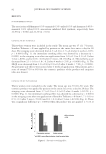
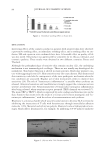
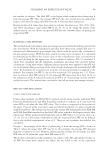
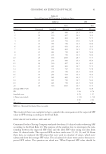
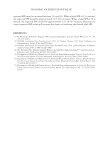
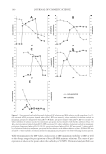
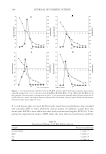
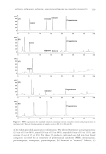
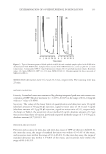
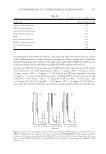
DETERMINATION OF O-PHENYLPHENOL IN SKIN LOTION 135 chromatograms of the three skin lotions, indicating that these skin lotions did not contain butyl 4-hydroxybenzoate or other interfering contaminants. Figure 4 shows typical chromato- grams obtained from three samples of the skin lotions. The peak of NBD-CO-OPP was de- tected in A and B. On the other hand, no NBD-CO-OPP peak was observed in C. As shown in Table IV, the concentrations of OPP in the three skin lotions (A, B, and C) were found to be 1.07±0.06 mg/g (mean ± SD, n = 5, range, 0.996–1.14 mg/g,), 18.8 ± 1.3 μg/g (mean ± SD, n = 5, range, 17.5–20.2 μg/g), and ND (not detectable, less than 5.0 μg/g, n = 5), respectively. Recovery values of spiked OPP from the lotions A, B, and C were 88.7±5.4% (mean ± SD, n = 5, range, 81.2–94.3%). 88.2 ± 4.2% (mean ± SD, n = 5, range, 83.6–92.6%), and 88.9 ± 3.5% (mean ± SD, n = 5, range, 85.0–93.8%), re- spectively. The results of addition–recovery tests in the present system were satisfactory. Figure 4. Typical chromatogram of diluted skin lotion samples (A, B, and C) after derivatization with NBD-COCl.Skin lotion was diluted with water as described in EXPERIMENTAL, and mixtures of diluted samples and IS solution were reacted with NBD-COCl for 2 min at pH 8.5 at room temperature. Retention times: 16.2 min, NBD-CO-OPP (1) 22.2 min, NBD-CO-IS (2). Sample (C) showed no peak of NBD-CO-OPP derivative (1). Table III Relative retention times of paraben derivatives tested for interference with NBD-CO-OPP and NBD-CO-IS Compounds Relative retention time Methyl 4-hydroxybenzoate 0.34 Ethyl 4-hydroxybenzoate 0.47 Isopropyl 4-hydroxybenzoate 0.64 Propyl 4-hydroxybenzoate 0.67 OPP 0.73 Benzyl 4-hydroxybenzoate 0.93 Isobutyl 4-hydroxybenzoate 0.94 Butyl 4-hydroxybenzoate 0.99 IS 1.00
Purchased for the exclusive use of nofirst nolast (unknown)
From: SCC Media Library & Resource Center (library.scconline.org)