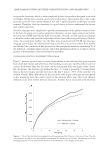
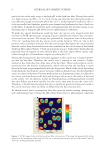
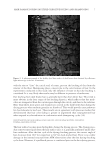
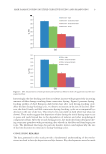
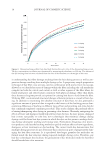
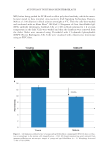
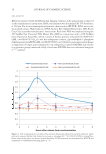
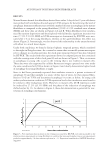
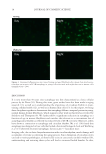
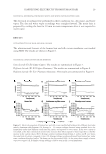
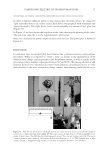
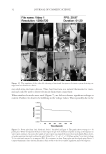
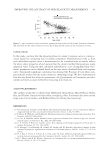
AUTOPHAGY IN HUMAN SKIN FIBROBLASTS 19 improvement in autophagy function may also lead to amelioration in the visible signs of cutaneous aging. Interestingly, after UV irradiation of cells, we also observed a slight reinduction of the autophagosomal response in those cells derived from mature donors. Thus, our data indicate the possibility of restoring autophagosomal function in aged skin. Since a phase shift in the timing of autophagy was also observed, resynchronization as a treatment modality should also be investigated. Future research should include investigation into the downstream effects of UV exposure in skin such as the generation of reactive oxygen species and how they may contribute to the activation of intracellular damage removal. In addition, oxidation-sensitive signaling cascades, such as mitogen-activated protein kinases (MAPK), which can lead to genetic activation of antioxidant response elements, may also be a productive area for future stud- ies and the utilization of fi broblasts from more donors should strengthen our conclusions. In conclusion, we report for the fi rst time that autophagy levels peak at night in young fi broblasts, whereas in aged human skin fi broblasts, there is a reduction in autophagy. We further show the effect that environmental stress has on the expression of autophagic processes, and demonstrate how autophagy may be potentiated under these condi- tions, which emphasize its importance in maintaining healthy skin. Figure 5. UVA irradiation of fi broblasts did not signifi cantly affect LC3B/autophagy levels in young cells. However, UVA signifi cantly increased LC3B/autophagy in mature cells by 27.2% (±5.3% SEM) and phase shifted its peak expression to 1 h.

JOURNAL OF COSMETIC SCIENCE 20 REFERENCES (1) D. C. Rubinsztein, G. Marino, and G. Kroemer, Autophagy and aging, Cell, 146, 682–695 (2011). (2) T. Yorimitsu and D. J. Klionsky, Autophagy: Molecular machinery for self-eating, Cell Death Differ., 12 (Suppl 2), 1542–1552 (2005). (3) C. Zhan g and A. M. Cuervo, Restoration of chaperone-mediated autophagy in aging liver improves cellular maintenance and hepatic function, Nature Med., 14, 959–965 (2008). (4) A. M. Cuervo, Autophagy and aging: Keeping that old broom working. Trends in Genet., 24, 604–612 (2008). (5) F. Madeo, N. Tavernarakis, and G. Kroemer, Can autophagy promote longevity?, Nature Cell Biol., 12, 842–846 (2010). (6) U. M. Sachdeva and C. B. Thompson, Diurnal rhythms of autophagy: Implications for cell biology and human disease, Autophagy, 4, 581–589 (2008). (7) I. Tanida, T. Ueno, and E. Kominami, LC3 conjugation system in mammalian autophagy, Intl. J. Biochem. Cell Biol., 36, 2503–2518 (2004). (8) K. Yagita, F. Tamanini, G. T. J. van der Horst, and H. Okamura, Molecular mechanisms of the bio- logical clock in cultured fi broblasts, Science, 292, 278–281 (2001). (9) L. Lin, G. Ishdorj, and S. B. Gibson, Reactive oxygen species regulation of autophagy in cancer: Impli- cations for cancer treatment, Free Rad. Biol. Med., 53, 1399–1410 (2012). (10) P. Codogno, Shining light on autophagy, Nat. Rev. Mol. Cell Biol., 15, 153 (2014). (11) C. Lop ez-Otin, M. A. Blasco, L. Partridge, M. Serrano, and G. Kroemer, The hallmarks of aging, Cell, 153, 1194–1217 (2013). (12) T. Hunt, and P. Sassone-Corsi, Riding tandem: Circadian clocks and the cell cycle, Cell, 129, 461–464 (2007). (13) N. Pernodet and E. Pelle, “Chronobiology of the Skin,” in Harry’s Cosmetology, M. Rosen. Ed. 9th Ed. (Chemical Publishing Co., Revere, MA, 2015), Vol. 2, pp. 1241–1254. (14) D. Ma, S. Panda, and J. D. Lin, Temporal orchestration of circadian autophagy rhythm by C/EBPβ, EMBO J., 30, 4642–4651 (2011). (15) N. Weibking, E. Maronde, and A. Rami, Increased neuronal injury in clock gene per-1 defi cient-mice after cerebral ischemia, Curr. Neurovasc. Res., 10, 112–125 (2013). (16) E. S. Schernhammer, F. Laden, F. E. Speizer, W. C. Willett, D. J. Hunter, I. Kawachi, and G. A. Colditz, Rotating night shifts and risk of breast cancer in women participating in the nurses’ health study, J. Natl. Cancer Inst., 93, 1563–1568 (2001).
Purchased for the exclusive use of nofirst nolast (unknown)
From: SCC Media Library & Resource Center (library.scconline.org)