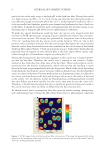
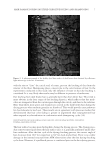
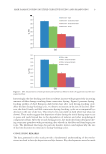
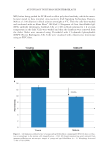
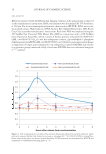
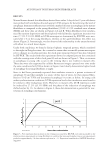
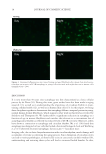
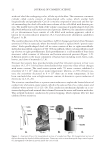
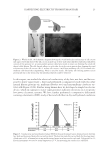
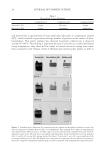
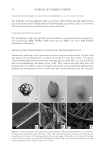
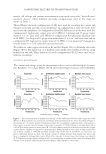
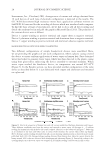
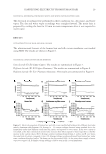
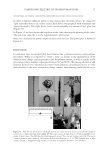
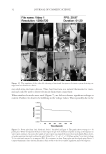
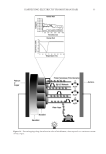
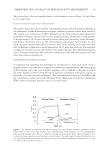
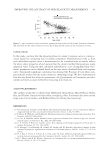
HARVESTING ELECTRICITY FROM HUMAN HAIR 29 ELECTRICAL RECORDINGS FROM DRY, MOIST, AND WATER VAPOR-EXPOSED HAIR The electrical recordings were performed in three conditions viz., dry, moist, and water vapor. The dry and water vapor recordings were straight forward. The moist hair is prepared by cooling the hair for 30 min in room temperature after it was exposed to water vapor. RESULTS ULTRASTRUCTURE OF HAIR AND SILK COCOON The ultrastructural features of the human hair and silk cocoon membrane was studied using SEM. The results are shown in Figure 6. ELECTRICAL CONDUCTIVITY MEASUREMENTS Same electrode (E1:E2/Copper:Copper). The results are summarized in Figure 7. Different electrode (E1:E2/Copper:Aluminum). The results are summarized in Figure 8. Different electrode (E1:E2): Platinum:Aluminum.: The results are summarized in Figure 9. Figure 9. Electrical properties of human hair and silk cocoon sandwiched between two different electrodes namely aluminum and platinum. (A) Average (n = 6) current readings obtained using standard device for human hair under three different conditions (dry, moist, and exposed to water vapor). In dry state current is very small, as the hair is moistened current value increases then when exposed to water vapor there is further increase in the current values. (B, C) Average current recording obtained from A. mylitta and B. mori shows the same kind of pattern compared to hair. (D) Average voltage recording obtained from human hair under same conditions described earlier. The hump on the plot around 1600 s is the point where supply of water vapor was stopped. (E, F) Similar voltage readings could be seen in silk cocoon membranes.

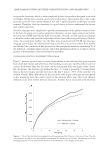
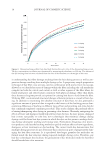
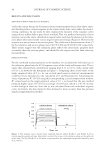
JOURNAL OF COSMETIC SCIENCE 30 DSC The results are summarized in Figure 10. DSC data indicated that hydrated polymer ex- hibit an endothermic reaction between 50° and 80°C, which signifi es rapid movement and elimination of water molecules on the polymer surface. Figures 10. Shown are the DSC curves of hair and silk cocoon under two different conditions viz., without moisture and with moisture. These curves show an unique endothermic thermal event between 50° and 80°C, which resulted in rapid movement of water molecules on the surface of these polymers, thus resulting in the hopping of protons. Similar results were observed in earlier studies with keratin fi bers (28–30).
Purchased for the exclusive use of nofirst nolast (unknown)
From: SCC Media Library & Resource Center (library.scconline.org)