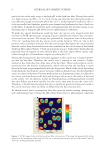
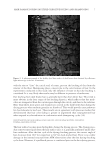
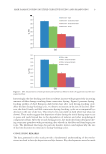
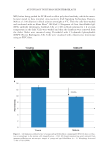
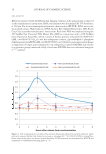
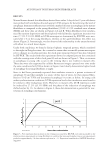
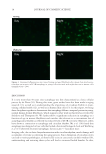
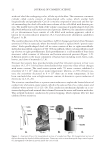
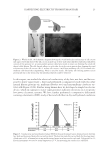
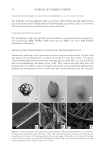
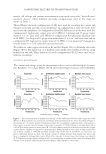
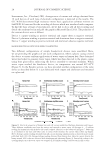
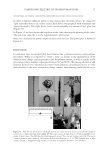
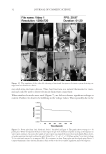
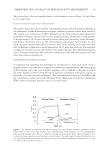
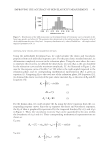
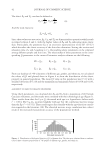
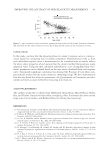
HARVESTING ELECTRICITY FROM HUMAN HAIR 23 In this report, we studied the electrical conductivity of dry hair, wet hair, and hair ex- posed to water vapor (water + heat) and performed a comparative study with two other natural fi brous proteins viz. mulberry (Bombyx mori) and non-mulberry Antheraea my- litta) silk (Figure 2)(26). Further using human hair, we developed a simple bio-electric device, which on exposure to water vapor generates suffi cient electricity so as to operate low power electronic systems. We have further performed a comparative differential scanning calorimetric (DSC) study of hair and silk fi ber in dry and hydrated conditions Figure 2. World of silk. (A) Schematic diagram showing the overall molecular architecture of silk cocoon and unprocessed silk thread. The silk cocoon is made up of these individual silk fi bers. Individual silk fi bers consists of two proteins viz. an outer gummy protein called sericin and an inner core forming the actual silk thread called fi broin. The silk threads adhere to each other by sticky sericin protein thus forming the rigid architecture of the silk cocoon. (B) A. mylitta silk cocoon, a wild non-mulberry silk. (C) Processed non- mulberry silk thread after degumming, which is used for textile. (D) Spider silk lacking gummy sericin protein and that is the reason why the individual threads could be observed. Figure 3. Conductivity and total dissolved solute (TDS) of the pure deionized water, deionized water after fi rst hair wash and deionized water after second hair wash. The hair was used after second wash for the experiment. A bath ratio of 5:1 of human hair in mg and deionized water in ml was used in each soak. Cyberscan Con 11 Eutech instruments was used at room temperature 25 °C for measuring the conductivity and TDS.

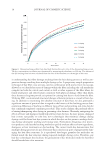
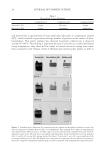
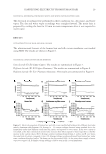
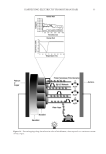
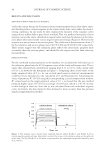
JOURNAL OF COSMETIC SCIENCE 24 and showed that a rapid motion of water molecules takes place at temperature around 80°C, which resulted in generation of large number of protons on the surface of these biopolymers. This partly explains the observed maximum conductivity is observed around 50°–80°C. This fi nding is important because if such devices could be developed using biopolymers, then these will be useful to harness electrical energy from waste heat contained in the exhaust steam of thermal and nuclear power plants, as well as Table I Hair and Silk Cocoon Membrane Confi guration I Confi guration II Confi guration III Electrode 1 (E1) Copper Platinum Copper Electrode 2 (E2) Copper Aluminum Aluminum Figure 4. Standard device fabricated by connecting the two similar and dissimilar electrodes to study the electrical properties of human hair and silk cocoon membrane. This uniform device helps in comparing the data obtained from different sources. (A) Two copper electrodes attached with colloidal silver paste for mak- ing proper connections. The fi rst device is prepared with human hair. Second and third devices were prepared with A. mylitta silk cocoon with average natural thickness 0.5 mm and B. mori silk cocoon membrane with an average thickness of 0.5 mm. (B) Simple device was made by connecting the two different electrodes on the surface composed of aluminum and platinum. (C) Device prepared with aluminum and copper electrodes.
Purchased for the exclusive use of nofirst nolast (unknown)
From: SCC Media Library & Resource Center (library.scconline.org)