JOURNAL OF COSMETIC SCIENCE 36 (40) I. Oshida, Y. Ooshika, and R. Miyasaka, Proton transfer in hydrogen bond and its participation in p-electron systems. J. Phys. Soc. Jpn, 10, 849–859 (1955). (41) E. Schauenstein, E. Treiber, W. Berndt, W. Felbinger, and H. Zima, Ultraviolett-absorptions spektren von seidenfi broin und cellulose in lithiumbromidlo¨sung. Monatsh, 85, 120–139 (1954). (42) D. Porter, and F. Vollrath, Water mediated proton hopping empowers proteins. Soft Matter, 9, 643–646 (2013). (43) P. Ball, Water as an active constituent in cell biology. Chem. Rev., 108, 74–108 (2008). (44) D. Porter, and F. Vollrath, Water mobility, denaturation and the glass transition in proteins. Biochim. Biophys. Acta, 1824, 785–791 (2012). (45) L. Pauling, The nature of the chemical bond and the structure of molecules and crystals: an introduction to modern structural chemistry. (Cornell University Press, Ithaca, 1960), Vol 18. (46) D. Porter, and F. Vollrath, The role of kinetics of water and amide bonding in protein stability. Soft Matter, 4, 328–336 (2008). (47) W. W. Cleland, and M. M Kreevoy, Low-barrier hydrogen bonds and enzymic catalysis. Science, 264, 1887–1890 (1994). (48) M. E. Tuckerman, D. Marx, M. L Klein, and M. Parrinello, On the quantum nature of the shared proton in hydrogen bonds. Science, 275, 817–820 (1997). (49) D. Marx, M. E Tuckerman, J. Hutter, M. Parrinello, The nature of the hydrated excess proton in water. Nature, 397, 601–604 (1999).

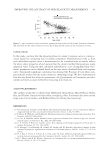
J. Cosmet. Sci., 67, 37–44 ( January/February 2016) 37 Improving the accuracy of skin elasticity measurement by using Q-parameters in Cutometer DI QU and G. PAUL SEEHRA, Amway R&D, Ada, MI. Accepted for publication January 20, 2016. Synopsis The skin elasticity parameters (Ue, Uv, Uf, Ur, Ua, and R0 through R9) in the Cutometer are widely used for in vivo measurement of skin elasticity. Their accuracy, however, is impaired by the inadequacy of the defi nition of a key parameter, the time point of 0.1 s, which separates the elastic and viscoelastic responses of human skin. This study shows why an infl ection point (tIP) should be calculated from each individual response curve to defi ne skin elasticity, and how the Q-parameters are defi ned in the Cutometer. By analyzing the strain versus time curves of some pure elastic standards and of a population of 746 human volunteers, a method of determining the tIP from each mode 1 response curve was established. The results showed a wide distribution of this parameter ranging from 0.11 to 0.19 s, demonstrating that the current single-valued empirical parameter of 0.1 s was not adequate to represent this property of skin. A set of area-based skin viscoelastic parameters were also defi ned. The biological elasticity thus obtained correlated well with the study volunteers’ chronological age which was statistically signifi cant. We conclude that the Q-parameters are more accurate than the U and R parameters and should be used to improve measurement accuracy of human skin elasticity. INTRODUCTION Skin elasticity is an important biomechanical property of human skin, and the Cutome- ter® (Courage + Khazaka Electronic GmbH, Cologne, Germany) is the most widely used instrument for noninvasive measurement of skin elasticity. Extensive studies have been reported using the Cutometer to understand skin elastic properties in relation to age, gender, and race (1–6), to correlate elasticity with skin hydration state (7–8), and to detect changes in diseased skin and quantify treatment effects (9–13). Of the elasticity studies using the Cutometer, the vast majority used the U parameters (Ue, Uv, Uf, Ur, and Ua) under mode 1 conditions as described by Barel et al. (14). In a typical elasticity measurement, a constant negative pressure is applied to the skin and a response curve is generated showing the deformation or elongation of the skin versus time in both the suction and relaxation phases. Based on the curve, the U parameters are deter- mined and used to calculate various skin elasticity parameters (R0 through R9) (15). Among the R parameters, R7 (Ur/Uf ), which is often referred to as the “biological elasticity” since it measures the skin’s ability to return to its initial position following deformation (3), has been found to decrease with age in several studies (2,4,5). Part of this study was originally presented at the 2006 U.S. Symposium of ISBS, Atlanta, Georgia. Address all correspondence to Di Qu at di.qu@amway.com.
Purchased for the exclusive use of nofirst nolast (unknown)
From: SCC Media Library & Resource Center (library.scconline.org)