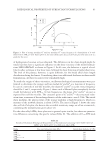
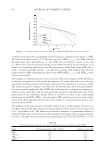
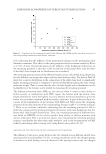
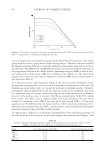
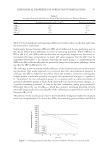
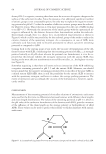
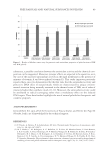
RHEOLOGICAL PROPERTIES OF SURFACTANT FORMULATIONS 69 Also, the infl uence of the headgroup structure of the betaines on the streaming potential can provide valuable insight into the intra or intermolecular interaction of the betaines, which in turn determines their ability to interact with anionic surfactants in formula- tions. Although AEB shows only a negative streaming potential due to the strong inter- action of the amide group with the quaternary nitrogen, there is still some—but limited—interaction with SLES, thus leading to the lowest viscosity of all betaines stud- ied. Increasing the distance between the quaternary nitrogen and the amide group re- duces their interaction, and hence yields both a more positive streaming potential and a higher viscosity in the mixture with SLES. In the AB without an amide group, the cat- ionic charge of the quaternary nitrogen is unaffected, and hence, the streaming potential is positive at all relevant pH values. Therefore, the interaction with SLES is most effi - cient, resulting in the highest viscosity of all systems studied. ACKNOWLEDGMENTS The authors are thankful to Dominik Schuch and Uwe Begoihn for their help in the syn- thesis of different betaines and for fruitful discussions and also acknowledge the help of Karin Fürch, Luca Supovec, and Meike Buchholz for performing the physicochemical measurements. REFERENCES (1) U. Kortemeier, J. Venzmer, A. Howe, B. Grüning, and S. Herrwerth, Thickening agents for surfactant systems, SOFW J., 136 (3), 30–38 (2010). (2) T. E. Mezger, The Rheology Handbook, 4th Ed. (Vincentz Network, Hannover, Germany, 2014), pp. 135–210. (3) E. Lomax, “Amphoteric Surfactants,” in Surfactant Science Series. (Marcel Dekker, New York, 1996), Vol. 59, pp. 273–311. (4) S. Herrwerth, H. Leidreiter, H. H. Wenk, M. Farwick, I. Ulrich-Brehm, and B. Grüning, Highly con- centrated cocamidopropyl betaine—The latest developments for improved sustainability and enhanced skin care, Tenside Surfact. Det., 45, 304–308 (2008). (5) N. C. Christov, N. D. Denkov, P. A. Kralchevsky, K. P. Ananthapadmanabhan, and A. Lips, Synergistic sphere-to-rod micelles transition in mixed solutions of sodium dodecyl sulfate and cocamidopropyl be- taine, Langmuir, 20, 565–571 (2004). (6) Z. Mitrinova, S. Tcholakova, Z. Popova, N. Denkov, B. R. Dasgupta, and K. P. Ananthapadmanabhan, Effi cient control of the rheological and surface properties of surfactant solutions containing C8-C18 fatty acids as cosurfactants, Langmuir, 29, 8255–8265 (2013). (7) D. A. Kuryashov, O. E. Phillippova, V. S. Molchanov, N. Y. Bashkirtseva, and I. N. Diyarov, Tempera- ture effects on the viscoelastic properties of solutions of cylindrical mixed micelles of zwitterionic and anionic surfactants, Colloid J., 72, 230–235 (2010). (8) L. A. Hough, D. Bendejacq, and T. J. Fütterer, Characterization of multilamellar vesicles for cleansing applications, Cosmet. Toiletries, 123 (11), 59–66 (2008). (9) H. Hoffmann, A. Rauscher, M. Gradzielski, and S. F. Schulz, Infl uence of ionic surfactants on the visco- elastic properties of zwitterionic surfactant solutions, Langmuir, 8, 2140–2146 (1992). (10) T. Iwasaki, M. Ogawa, K. Esumi, and K. Meguro, Interactions between betaine-type zwitterionic and anionic surfactants in mixed micelles, Langmuir, 7, 30–35 (1991). (11) J. N. Israelachvili, D. J. Mitchell, and B. W. Ninham, Theory of self-assembly of hydrocarbon amphi- philes into micelles and bilayers, J. Chem. Soc. Faraday Trans. II, 72, 1525–1568 (1976). (12) M. E. Cates, Reptation of living polymers: Dynamics of entangled polymers in the presence of reversible chain-scission reactions, Macromolecules, 20, 2289–2296 (1987). (13) C. A. Baker, D. Saul, G. J. T. Tiddy, B. A. Wheeler, and E. Willis, Phase structure, nuclear magnetic resonance and rheological properties of viscoelastic sodium dodecyl sulphate and trimethylammonium bromide mixtures, J. Chem. Soc. Faraday Trans. I, 70, 154–162 (1974).

JOURNAL OF COSMETIC SCIENCE 70 (14) S. R. Raghavan, G. Fritz, and E. W. Kaler, Wormlike micelles formed by synergistic self-assembly in mixtures of anionic and cationic surfactants, Langmuir, 18, 3797–3803 (2002). (15) C. Oelschlager and N. Willenbacher, Mixed wormlike micelles of cationic surfactants: Efect of the cosurfactant chain length on the bending elasticity and rheological properties, Colloids Surfaces A, 406, 31–37 (2012). (16) N. L. Burns, “Measurement of Electrokinetic Phenomena in Surface Chemistry,” in Handbook of Applied Surface and Colloid Chemistry, K. Holmberg. Ed. (Wiley, Chichester, UK, 2002), Vol. 2, pp. 371–382. (17) C. Weitemeyer, W. Foitzik, H. D. Kaeseborn, U. Begoihn, and B. Gruening, Aqueous liquid solution of a betaine with a solids content of at least 40% by weight, Patent US5354906 to Th. Goldschmidt AG. (18) J. R. Kanicky, A. F. Poniatowski, N. R. Mehta, and D. O. Shah, Cooperativity among molecules at interfaces in relation to various technological processes: Effect of chain length on the pKa of fatty acid salt solutions, Langmuir, 16, 172–177 (2000). (19) R. G. Laughlin, Fundamentals of the zwitterionic hydrophilic group, Langmuir, 7, 842–847 (1991). (20) J. G. Weers, J. F. Rathmann, F. U. Axe, C. A. Crichlow, L. D. Foland, D. R. Scheuing, R. J. Wiersema, and A. G. Zielske, Effect of the intramolecular charge separation distance on the solution properties of betaines and sulfobetaines, Langmuir, 7, 854–867 (1991). (21) B. Sesta and C. La Mesa, Micellization and surface activity of n-alkyldimethylaminopropanesulfonates in aqueous solution, Colloid Polym. Sci., 267, 748–752 (1989). (22) J.-Q. Guan and C.-H. Tung, Aggregation of novel betaine surfactants N-(3-alkoxy-2-hydroxypropyl)- N,N-dimethylglycines in aqueous solution: Micellization and microenvironment characteristics, Langmuir, 15, 1011–1016 (1999). (23) K. W. Herrmann, Micellar properties of some zwitterionic surfactants, J. Coll. Interf. Sci., 22, 352–359 (1966). (24) Y. Chevalier, L. Germanaud, and P. Le Perchec, Micellar properties of zwitterionic phosphobetaine amphiphiles in aqueous solution: Infl uence of the intercharge distance, Colloid Polym. Sci., 266, 441– 448 (1988). (25) Y. Chevalier, Y. Storet, S. Pourchet, and P. Le Perchec, Tensioactive properties of zwitterionic carboxy- betaine amphiphiles, Langmuir, 7, 848–853 (1991). (26) N. Kamenka, Y. Chevalier, and R. Zana, Aqueous solutions of zwitterionic surfactants with varying carbon number of the intercharge group. 1. Micelle aggregation numbers, Langmuir, 11, 3351–3355 (1995).
Purchased for the exclusive use of nofirst nolast (unknown)
From: SCC Media Library & Resource Center (library.scconline.org)