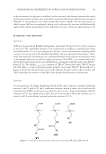
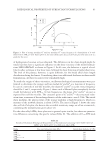
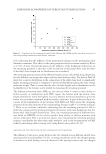
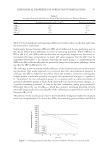
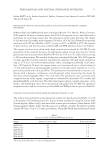
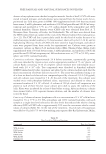
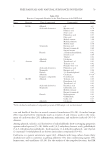
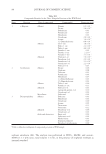
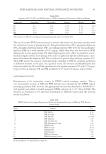
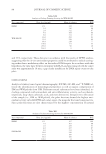
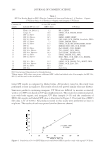
RHEOLOGICAL PROPERTIES OF SURFACTANT FORMULATIONS 61 of the zwitterionic headgroup is modifi ed: on the one hand, the distance between the amide and the quaternary nitrogen was reduced by using dimethyl aminoethyl amine instead of DMAPA in the synthesis of an alkyl amidoethyl betaine (AEB). On the other hand, an alkyl betaine (AB) was investigated, which can be obtained by reaction of alkyldimethyl amine with sodium monochloroacetate and hence does not contain an amide group at all. MATERIALS AND METHODS MATERIALS SLES was obtained from BASF (Ludwigshafen, Germany) (Texapon® LS 35, 30%) and used as received. The amidoalkyl betaines were synthesized according to standard procedures used industrially (17) via a two-step process. At fi rst, a fatty acid (mixture) or hydrogenated coconut oil was reacted with dimethylaminoalkyl amine at elevated temperatures. After- ward, the respective amidoamine was carboxymethylated with sodium monochloroacteate in an aqueous solution to yield the respective betaine. The APBcoco is commercially avail- able from Evonik Nutrition & Care GmbH (Essen, Germany) under the trade name TEGO® Betain F 50. The APB8/10 + 12/18 is a mixture of TEGO® Betain 810 with TEGO® Betain CK. The AB12/14 is also an Evonik product with the trade name TEGO® Betain AB 1214. Figure 1 shows the chemical structures of the different betaines used in these studies, and Table I provides an overview of the alkyl chain length distributions of the betaines. METHODS Streaming potential. A Charge Analyzing System (CAS emtec papertest, Leipzig, Germany) was used, and 20 mL of 0.5 wt% surfactant solution, which is above the critical micelle concentration (CMC) in all cases, was added to the cuvette. Aqueous hydrogen chloride solution (0.5%) was added until a pH value of 4 was reached. Then the solution was ti- trated to pH 9 with diluted sodium hydroxide solution (0.5%). Figure 1. Structures of the zwitterionic surfactants used: alkyl APB, alkyl AEB, and AB.

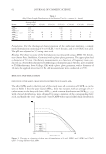
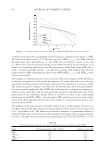
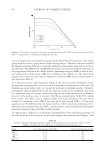
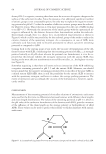
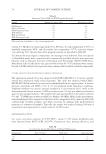
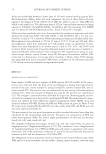
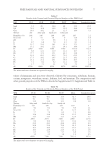
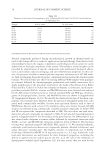
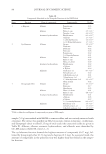
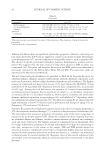
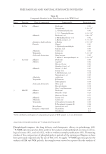
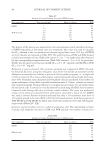
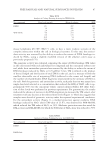
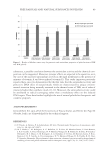
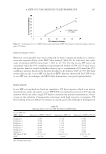
JOURNAL OF COSMETIC SCIENCE 62 Figure 2. Viscosity as a function of shear rate of formulations of 9 wt% SLES/3 wt% APB/2 wt% NaCl (pH 5.5) using different alkyl APBs. Formulations. For the rheological characterization of the surfactant mixtures, a simple model formulation consisting of 9 wt% SLES, 3 wt% betaine, and 2 wt% NaCl was used. The pH was adjusted to 5.5 using citric acid. Rheology. The shear viscosity of the formulations was measured using a MCR 302 rheom- eter (Anton Paar, Ostfi ldern, Germany) with a plate–plate geometry. The upper plate had a diameter of 50 mm. Oscillatory measurements as a function of frequency were con- ducted on a StressTech rheometer by Rheologica (formerly Lund, Sweden now available at TS RheoSystems, State College, PA) with a plate–plate geometry, with a diameter of 40 mm the applied stress was 0.2 Pa. All measurements were conducted at 25°C. RESULTS AND DISCUSSION INFLUENCE OF THE ALKYL CHAIN LENGTH DISTRIBUTION IN ALKYL APBs The alkyl APBs used in the fi rst part of this study were all a variation of CAPB, as can be seen in Table I: fi rst the pure lauryl APB12, then two variants with an average of 12.7 carbon atoms in the fatty acid chain, APB12/14 with a narrow distribution and APB8/10 + 12/18 with a broad distribution, were obtained by using a mixture of the corresponding fatty acids, and fi nally the “real” triglyceride–based CAPB with a typical alkyl chain distribution Table I Alkyl Chain Length Distributions of the Betaines Used (n = narrow b = broad) Name Average alkyl chain length C8 (%) C10 (%) C12 (%) C14 (%) C16 (%) C18 (%) APB12 12.0 100 APB12/14 12.7 (n) 70 30 APB8/10 + 12/18 12.7 (b) 10 8 47 17 9 9 APBcoco 12.8 8 8 48 17 8 11 AEBcoco 12.8 8 8 48 17 8 11 AB12/14 12.7 (n) 70 30
Purchased for the exclusive use of nofirst nolast (unknown)
From: SCC Media Library & Resource Center (library.scconline.org)