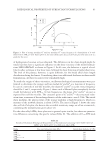
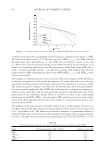
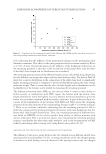
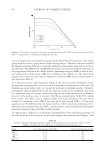
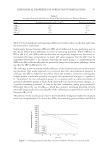
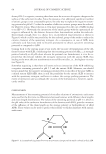
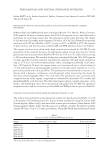
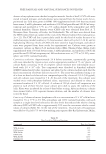
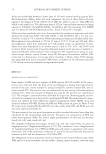
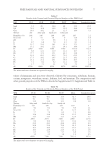
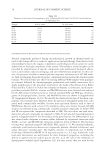
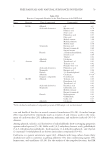
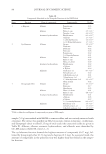
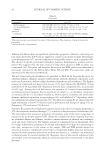
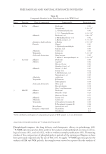
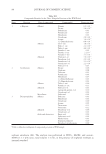
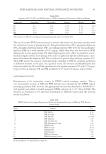
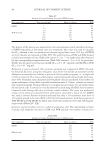
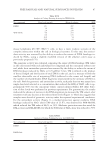
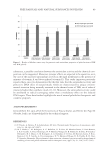
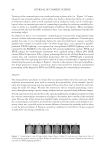
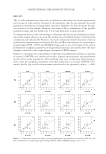
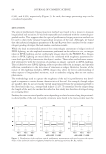
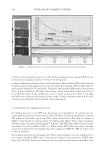
FREE RADICALS AND NATURAL SUBSTANCES IN PELOIDS 89 substances, a possible correlation between the antioxidant activity and the chemical com- position can be suggested. Moreover, synergic effects are expected to be operative, as in the case of the increased antioxidant activity in the lipid membrane in the presence of mixture of vitamin A and α-tocopherol (vitamin E). This study improves previously reported data, since we demonstrated for the fi rst time that the antioxidant activity and protective DNA effect of natural muds, which are characterized by unique environ- mental situation being naturally matured in the thermal water of TSB, are of order of intensity higher than synthetic muds (11,12). Moreover, the antioxidant activity could be attributed to radical scavenging rather than a modulatory effect on the induced DNA repair. These data further highlight the use of natural peloids for therapeutic and cosmetic purposes. ACKNOWLEDGMENTS GentoxChem Srl, spin-off of the University of Tuscia (Italy), and Terme dei Papi Srl (Viterbo, Italy), are acknowledged for the technical support. REFERENCES (1) F. Veniale, A. Bettero, P. G. Jobstraibizer, M. Setti, Thermal muds: Perspectives of innovations, Appl. Clay. Sci., 36, 141–147 (2007). (2) M. S. Muñoz, C. M. Rodríguez, A. G. Rudnikas, O. D. Rizo, M. Martínez-Santos, E. Ruiz-Romera, J. R. F. Castillo, A. Pérez-Gramatges, N. V. Martínez-Villegas, D. B. Padilla, R. H. Díaz, P. González- Hernández, M. S. Munoz, C. M. Rodriguez, A. G. Rudnikas, O. D. Rizo, M. Martinez-Santos, E. Ruiz- Romera, J. R. F. Castillo, A. Perez-Gramatges, N. V. Martinez-Villegas, D. B. Padilla, R. H. Diaz, P. Gonzalez-Hernandez, Physicochemical characterization, elemental speciation and hydrogeochemical modeling of river and peloid sediments used for therapeutic uses, Appl. Clay. Sci., 104, 36–47 (2015). Figure 1. Results of alkaline comet assay for genotoxic and antioxidant properties of polar fractions of DM and WM peloids.

JOURNAL OF COSMETIC SCIENCE 90 (3) J. L. Legido, C. M. Medina, L. Mourelle, M. I. Carretero, M. Pozo, Comparative study of the cooling rates of bentonite, sepiolite and common clays for their use in pelotherapy, Appl. Clay Sci., 6, 148–160 (2007). (4) K. Bakker, Water security: Research challenges and opportunities, Science, 337, 914–915 (2012). (5) C. Carubbi, G. Gobbi, G. Bucci, M. Gesi, M. Vitale, P. Mirandola, Skin, infl ammation and sulfurous waters: What is known, what is believed, Eur. J. Infl ., 11, 591–599 (2013). (6) N. Riyaz, F. R. Arakkal, Spa therapy in dermatology, Indian J. Dermatol. Venereology Leprology, 77, 128– 134 (2011). (7) M. I. Carretero, C. S. F. Gomes, F. Tateo, “Clays and Human Health,” in Handbook of Clay Science, Devel- opments in Clay Science, F. Bergaya, B. K. G. Theng, G. Lagaly. Eds. (Elsevier, Amsterdam, the Nether- lands, 2006), Vol. 1, pp. 717–741. (8) F. Tateo, A. Ravaglioli, C. Andreoli , F. Boninad, V. Coiroe, S. Degettof, A. Giarettaa, A. Menconi Orsinig, C. Pugliad, V. Summah, The in-vitro percutaneous migration of chemical elements from a thermal mud for healing use, Appl. Clay Sci., 44, 83–94 (2009). (9) J. Pinnagoda, R. A. Tupkek, T. Agner, J. Serup, Guidelines for transepidermal water loss (TEWL) mea- surement. A report from the Standardization Group of the European Society of Contact Dermatitis, Cont. Derm., 22, 164–178 (1990). (10) G. Grubauer, P. M. Elias, K. R. Feingold, Transepidermal water loss: The signal for recovery of barrier structure and function, J. Lipid Res., 30, 323–333 (1989). (11) M. Centini, M. R. Tredici, N. Biondi, A. Buonocore, R. Maffei Facino, C. Anselmi, Thermal mud maturation: Organic matter and biological activity, Int. J. Cosmet. Sci., 37, 339–347 (2015). (12) G. Mihelčić, G. Kniewald, G. Ivanišević, R. Čepelak, V. Mihelčić, N. Vdović, Physico-chemical char- acteristics of the peloid mud from Morinje Bay (eastern Adriatic coast, Croatia): Suitability for use in balneotherapy, Environ. Geochem. Health, 34, 191–198 (2012). (13) L. Djekic, D. Krajisnik, Z. Micic, Polyphenolics-phospholipid complexes as natural cosmetic ingredi- ents: Properties and application, Tenside Surfact. Det., 52, 186–192 (2015). (14) P. Van Hoogevest, B. Prusseit, R. Wajda, Phospholipids: Natural functional ingredients and actives for cosmetic products, Intern. News Fats Oils Related Mater., 25, 182–188 (2014). (15) U. Chiocchini, F. Castaldi, M. Barbieri, V. Eulilli, A stratigraphic and geophysical approach to studying the deepcirculating groundwater and thermal springs, and their recharge areas, in Cimini Mountains— Viterbo area, central Italy, Hydrogeol. J., 18, 1319–1341 (2010). (16) S. B. Curri, E. Bombardelli, Lipid components in the peloids of Terme dei Papi, Clin. Ter., 43, 13–20 (1997). (17) B. Messina, F. Grossi, In Elements of Medical Hydrology. (S.E.U., Rome, Italy, 1984). (18) S. B. Curri, E. Bombardelli, G. Grossi, Observations on the organic component of thermal mud: Mor- phological histochemical and biochemical investigations on lipid components of the sludge of the Terme dei Papi (pond Bagnaccio, Viterbo), Clin. Ter., 148, 637–654 (1997). (19) M. Suàrez, P. Gonzàlez, R. Domìnguez, A. Bravo, C. Melián, M. Pérez, I. Herrera, D. Blanco, R. Hernández, J. R. Fagundo, Identifi cation of organic compounds in San Diego de los Baños Peloid (Pinar del Río, Cuba), J. Altern. Complement. Med., 17, 155–165 (2011). (20) S. Tserenpil, G. Dolma, M. G. Voronkov, Organic matters in healing muds from Mongolia, Appl. Clay. Sci., 49, 55–63 (2010). (21) W. C. Krumbein, F. L. J. Pettijohn, Manual of Sedimentary Petrography, Part I and II. (D. Appleton- Century Company Inc., New York, NY, 1938), p. 549. (22) F. P. Shepard, Nomenclature based on sand-silt-clay rations, J. Sed. Petrol., 24, 151–158 (1954). (23) R. Tavakoli, M. Mohadjerani, R. Hosseinzadeh, M. Tajbakhsh, A. Naqinezhad, Essential-oil and fatty-acid composition, and antioxidant activity of extracts of Ficaria kochii, Chem. Biodeivers., 9, 2732–2741 (2012). (24) D. Ibrahim, A. Bulent, S. Ayse, A. Hüseyin, E. Mahfuz, T. Isa, Antioxidant activity and chemical com- position of Sideritis libanotica Labill. ssp. linearis (Bentham) Borm. (Lamiaceae), Nat. Prod. Res., 25, 1512–1523 (2011). (25) H. Metsufuji, H. Nakamura, M. Chino, M. Takeda, Antioxidant activity of capsanthin and the fatty acid esters in paprika (Capsicum annuum), Agric. Food. Chem., 46, 3468–3472 (1998). (26) C. J. Yeop, Cosmetic compositions containing herb extracts for preventing skin trouble. Republic of Korean Patent 2011104624 A 20110923. Kongkae Taeho, Kongbo (2011). (27) N. Kana, S. Hiromichi, Oily solid cosmetics containing (poly) glycerin mixed esters with long-chain fatty acids and long-chain dicarboxylic acids. Japanese Patent 2008280287 A 20081120. Kokai Tok- kyo, Koho (2008).
Purchased for the exclusive use of nofirst nolast (unknown)
From: SCC Media Library & Resource Center (library.scconline.org)