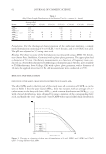
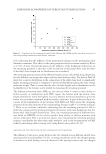
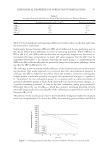
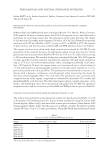
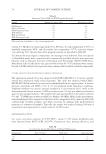
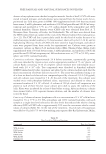
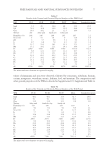
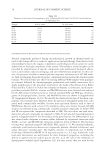
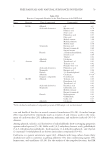
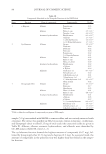
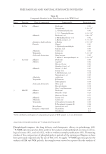
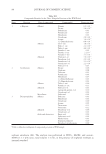
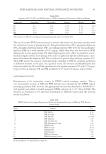
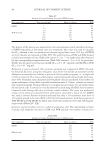
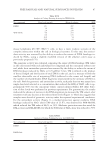
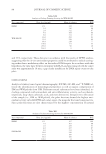
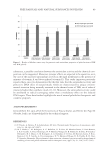
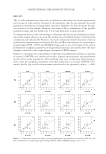
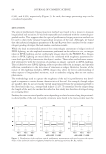
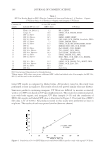
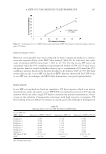
A NEW IN VITRO METHOD TO DETERMINE SPF 107 REPRODUCIBILITY STUDY Moreover, seven parallel tests were conducted on three commercial products to demon- strate the reproducibility of the EBT3 fi lm method (Table II). As indicated, the coeffi - cient of variation (COV) varies from 7.14% to 10.75%. For the in vivo SPF test to be considered valid, the 95% confi dence interval must fi t within a COV of 17% and, if not, the product must be tested on further subjects (up to a maximum of 20) until the 95% confi dence interval, based on the data for all subjects, fi t within a COV of 17%. The fi nal results indicate the in vitro SPF test based on EBT3 fi lm has almost half the COV of the in vivo SPF test. Accordingly, the EBT3 fi lms demonstrate very good reproducibility. DISCUSSION In vivo SPF test methods are based on cumulative UV dose response, which is an instant measurement while all current in vitro SPF/UVA test methods are based on UV spectral transmit which use only a single UV beam to measure the spectral transmittance of sun- screen on the substrate. Consequently, sunscreens with high viscosity or inorganic UV fi lter loading levels are diffi cult to measure accurately, given the challenge of homogeneous Figure 5. Correlation of in vitro EBT3 fi lm results and labeled SPF for products with both organic and inor- ganic UV fi lters. Table II Reproducibility of In Vitro SPF Test Based on EBT3 Film In vitro SPF test (EBT3 fi lm) Sunscreen 1 (SPF 30, PA++) Sunscreen 2 (SPF 15) Sunscreen 3 (SPF 30, PA++) Duplicate 1 32.95 17.26 33.90 Duplicate 2 35.06 13.91 28.26 Duplicate 3 29.59 14.36 28.51 Duplicate 4 28.00 13.19 28.92 Duplicate 5 26.81 13.83 32.11 Duplicate 6 29.59 14.72 32.12 Duplicate 7 26.41 15.14 29.85 SPF (Mean ± SD) 29.77 ± 3.20 14.63 ± 1.32 30.52 ± 2.18 COV 10.75% 9.02% 7.14% SD: Standard deviation.

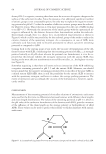
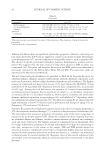
JOURNAL OF COSMETIC SCIENCE 108 spreading. Alternatively, the EBT3 fi lm method requires a specifi ed area to measure SPF value, and the reproducibility of data should be signifi cantly increased. It is worth noting that both European Cosmetic and Perfumery Association (Colipa) and U.S. Food and Drug Administration (FDA) required UV irradiation for in vitro UVA test. In 2011, the FDA published a fi nal rule including a method to determine the critical wave- length which requires a fi xed preirradiation dose of 4 MEDs (8 J/cm2). For the area of EBT3 fi lm (5.1 × 6.3 cm), the four MEDs dose is about 257 J which is close to the dose 237.12 J used in this study. However, all current SPF/UVA tests are instant measurement by UV spectrometer after preirradiation. Sunscreens with different UV degradation pattern might have the same SPF/UVA results. For example, two sunscreens will degrade 50% after 30 min under UV irradiation. The fi rst sunscreen degrades 50% instantly after the fi rst 5 min, whereas the other degrades gradually to 50% after 30 min. Both sunscreens will have the same in vitro SPF value with current irradiation method, but they will have differ- ent in vivo SPF value. Alternatively, the new SPF method based on EBT3 fi lm should give similar SPF because it is also based on cumulative UV dose response like in vivo SPF test. CONCLUSIONS A new in vitro SPF test method based on UV dose cumulate response was proposed. The new method utilizes Gafchromic EBT3 fi lm in lieu of UV spectrophotometers. Based on in vitro SPF results from 17 commercial products, the EBT3 fi lm method is accurate and cost-effective. The EBT3 fi lm method has almost half the COV of in vivo SPF tests, indi- cating that this new method has very good reproducibility. Like other in vitro SPF meth- ods, the new method can be improved by optimizing test parameters, such as sunscreen amount, irradiation time, and EBT3 fi lm, provided reproducibility is maintained. This technology could also be used in UV light source and sample application uniformity check, sunscreen photostability check, etc. ACKNOWLEDGMENTS The authors would like to thank Michael Shi (Ashland Inc.) and Shelley Shih (Ashland Inc.) for providing Gafchromic fi lm, and Linda Foltis (Ashland Inc.) for valuable discussions. REFERENCES (1) M. Pissavini and L. Ferrero, In vitro determination of sun protection factor, Glob Cosmet Manuf., 4, 1–5 (2004). (2) D. Lutz and N. Cariou, Accurate, fast and quite easy way of sunscreen testing. Compliant with in vitro global standard: COLIPA, BOOTS, FDA & ISO, H&PC Sun Care, 3, 25–29 (2011). (3) L. Ferrero, M. Pissavini, A. Dehais, S. Marguerie, and L. Zastrow, Importance of substrate roughness for in vitro sun protection assessment, IFSCC Magazine, 9(2), 97–108 (2006). (4) O. Dueva-Koganov and N. Shaath, Comparative evaluation of commercial SPF 100+ sunscreen prod- ucts, Happi, 47, 48–53 (2010). (5) V. Borca, M. Pasquino, G. Russo, P. Grosso , D. Cante, P. Sciacero, G. Girelli, M. R. La Porta, and S. Tofani, Dosimetric characterization and use of Gafchromic EBT3 fi lm for IMRT dose verifi cation, J. Appl. Clin. Med. Phys., 14(2), 158–170 (2013). (6) E. Butson, T. Cheung, P. Yu, and M. Buston, Measuring solar UV radiation with EBT radiochromic fi lm, Phys. Med. Biol., 55, 487–493 (2010).
Purchased for the exclusive use of nofirst nolast (unknown)
From: SCC Media Library & Resource Center (library.scconline.org)