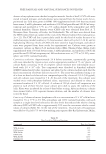
J. Cosmet. Sci., 67, 71–92 (March/April 2016) 71 Free radical scavenging capacity and protective effect of natural substances in peloids from the thermal spring pool Bagnaccio (Viterbo, Italy) RAFFAELE SALADINO, UGO CHIOCCHINI, GIORGIA BOTTA, MICHELA DELFINO, ROBERTO CONIGLIARO, and PASQUALE MOSESSO, Department of Ecology and Biology, Tuscia University, Largo dell’Università (R.S., G.B., M.D., P.M.), Department for Agriculture, Forestry, Nature and Energy, Tuscia University, Largo dell’Università (U.C.), and Terme dei Papi Spa (R.C.), 01100 Viterbo VT, Italy. Accepted for publication April 10, 2016. Synopsis Natural peloids from sulfurous thermal springs are largely used in cosmetic and pelotherapy for the treatment of different dermatological conditions, including skin aging, dermatitis, and other eczemas. The benefi cial effects are correlated to mineralogical and other thermal properties, as well as to the presence of natural substances with specifi c antioxidant activity. Few data are available for the comparison between natural peloids and synthetic (i.e., artifi cially maturated) muds. In this context, the natural substances and antioxidant activity of natural white mud (WM) and dark mud (DM) peloids from the sulfurous thermal spring pool Bagnaccio (Viterbo, Italy) have been studied in detail to evaluate possible relationships between physico- chemical properties and therapeutic effect. A large panel of natural substances in WM and DM were characterized for the fi rst time by 31 P-nuclear magnetic resonance and gas chromatography associated to mass spectrometry analysis. Polar fractions of WM and DM peloids were characterized by the presence of several bioactive natural compounds, showing high antioxidant activity and DNA protective effect, as evaluated by 2,2-diphenyl-1-picrylhydrazyl assay, and hydrogen peroxide–induced DNA breakage in the alkaline comet assay. The antioxidant activity and DNA protective effect could be attributed to radical scavenging rather than a modulatory effect on the induced DNA repair, and are of order of intensity higher than that reported for synthetic muds. INTRODUCTION Peloids are thermal muds characterized by an inorganic matrix embedded with natural bioactive compounds, which are synthesized during the metabolism of growing microor- ganisms (1). The therapeutic use of peloids is called pelotherapy (2,3), and represents a typical procedure in cosmetic and medical hydrology for the treatment of different Address all correspondence to Raffaele Saladino at saladino@unitus.it.

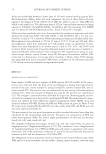
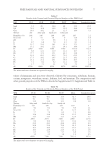
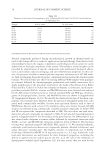
JOURNAL OF COSMETIC SCIENCE 72 pathologies, including rheumatoid, osteoarticular and cutaneous diseases (skin aging, dermatitis, and other eczemas), usually associated to stimulatory, antiphlogistic, antioxidant, and analgesic effects (4–6). The activity of peloids is strictly correlated to their chemical composition, as well as to mineralogical and other thermal properties (7). During pelotherapy, the bioactive compounds can penetrate the skin by diffusion and electrophoresis, as dem- onstrated by the Franz-type cell model (8). In addition, the inorganic particles’ transepi- dermal water loss (9) occlusion process induces the active transport of organic substances through the epidermal barrier (10). Among bioactive compounds, natural antioxidants prevent skin aging by specifi c radical scavenging and anti-infl ammatory activities, while phospholipids improve formulation performances and are active ingredients largely used in cosmetic products (11–14). The thermal spring pool Bagnaccio (TSB) is related to Viterbo (Italy) geothermal area, which is fed by a circuit of groundwater derived from the carbonate aquifer, consisting of Mesozoic-Cenozoic Umbria–Marche succession of the Narni-Amelia chain, Spoleto, Martani Mountains, and Sabini Mountains in central Apennines (15). Detailed stratigraphic, structural, and hydrogeological data of the Viterbo geothermal area are provided in Supplemental #1 (Supplemental Figures 1–8). TSB produces two types of peloids: (a) black-gray mud (dark mud, DM), and (b) white mud (WM). Both peloids are known for their analgesic, anti-infl ammatory, osteoarticular, and neuro-hormonal ac- tivities that affect the local sites of application, and in general, the whole organism (16). Benefi cial effects on health of WM and DM are historically documented (17). The WM peloid shows light brown or yellow-orange pseudo-micellar particles, containing white and pigmented (blue, red-orange, and green) microfl ora of Mastigocladus laminosus, Os- cillatoria cortiana, Spirulina subtilissima, and Phormidium laminosus (18). The DM peloid is devoid of granules, and the pigmented component (brown-blue) is abundant and homo- geneously mixed in the clay matrix. This peloid is rich in diatoms Navicula gracilis and Cymbella lanceolata van Heurck, algae (M. laminosus), and fragments of hyphae of Oscil- latoria animalis (18). Few reports are available dealing with the analysis of the organic composition and antioxidant activity of natural peloids, mainly due to sulfur interference in common analysis procedures (19,20). We report here the identifi cation of bioactive compounds in DM and WM peloids by gas chromatography associated to mass spectrom- etry (GC-MS) analysis through sulfur interference suppression and 31 P-nuclear magnetic resonance (31P-NMR). Polar fractions of WM and DM peloids were characterized by the presence of several bioactive natural compounds, showing high antioxidant activity and DNA protective effect, as evaluated by 2,2-diphenyl-1-picrylhydrazyl (DPPH) assay, and hydrogen peroxide (H2O2)–induced DNA breakage in the alkaline comet assay. MATERIALS AND METHODS All commercial products and solvents were purchased in the highest purity grade available and were used as such. Organic solvents (n-heptane, cyclohexane, diisopropyl ether, ethyl acetate (EtOAc), acetone, methanol (MeOH), and pyridine), as well as deuterated chloroform (CDCl3), Cr(III) acetylacetonate, and triphenyl methane, were reagent grade and were supplied by Aldrich (Milan, Italy). The chemical constituents were identifi ed by liquid ion chromatography (IC 761 Metrohm, Bern, Switzerland), and determinations of minor and trace elements were carried out using quadrupole inductively coupled plasma mass- spectrometry (ICP-MS) analysis (Thermo X Series II, Thermo Finnigan, Milan, Italy). The mineralogical composition of peloids was measured by diffraction analysis (Goniometer
Purchased for the exclusive use of nofirst nolast (unknown)
From: SCC Media Library & Resource Center (library.scconline.org)