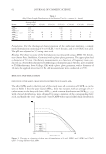
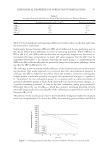
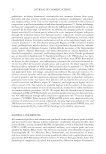
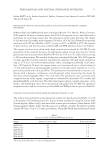
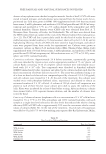
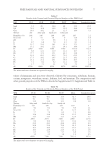
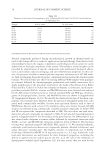
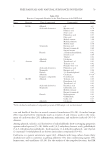
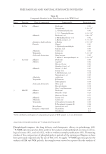
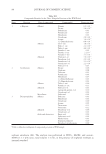
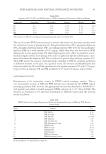
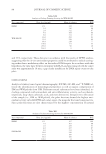
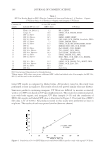
FREE RADICALS AND NATURAL SUBSTANCES IN PELOIDS 79 Table VIII Bioactive Compounds Identifi ed in the Polar Fractions of the DM Peloid Entry Fraction Class of compounds Compound(s) Yielda 1 EtOAc Alkanols n.d. n.d. Acids and derivatives Myristic acid 0.78 Palmitic acid 0.90 Stearic acid 0.62 Palmitoleic acid 0.57 Oleic acid 0.60 Methyl stearate 1.68 Methyl palmitate 2.23 Methyl oleate 0.38 Terpenoids Retinoic acid 0.46 Retinol (vitamin A) 0.40 Retinol acetate 0.14 Phenols 2-Hydroxybenzaldhyde 0.02 Salicylic acid 0.04 Thymol 0.02 Alkaloids Colchicine 0.02 2 Acetone Alkanols Tetradecan-1-ol 0.01 Tridecan-1-ol 0.02 Hexadec-9-en-1-ol 0.06 Acids and derivatives Palmitoleic acid 0.37 Terpenoids Retinoic acid 0.06 Phenols 2,4-Dimethylphenol 0.02 Alkaloids Colchicine 6 × 10⁻³ Inorganic compounds Octathiocane 0.01 3 MeOH Alkanols Tridecan-1-ol 0.05 Pentadecan-1-ol 0.25 Tetradecan-1-ol 0.03 Acids and derivatives Ricinoleic acid 0.02 Terpenoids Gibberellic acid 0.05 Methyl retinoate 0.04 Retinol (vitamin A) 0.21 Phenols Hydroquinone 0.01 Gallaldehyde 0.20 Gallic acid 0.27 Alkaloids Colchicine 0.01 a Yield is defi ned as milligram of compounds per gram of DM sample. n.d. not determined care and health of the skin in several cosmetic formulations (26–28). A similar benign effect was observed for terpenoids (such as vitamin A and retinoic acid) in the treat- ment of cardiovascular (29), infl ammatory, melanoma, and oxidative-induced (30–34) diseases. Among phenols, salicylic acid derivatives of salicylaldehyde show scavenging properties against radical species (35–38). Gallic acid (3,4,5-trihydroxy benzoic acid), gallaldehyde (3,4,5-trihydroxybenzaldehyde), hydroquinone (1,4-dihydroxyphenol), and thymol (2-isopropyl-5-methylphenol) are known antioxidant compounds (39–41). Colchicine is a potent antimitotic agent (42). Alkanols with long carbon chains (fatty alcohols) are used in cosmetics as gelling additives (43), skin conditioning agents (44), humectants, and emollients (45,46). For the analysis of the nonpolar fractions, the DM

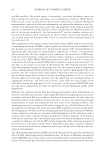
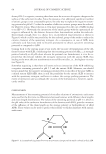
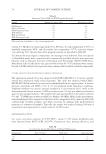
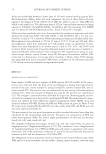
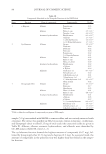
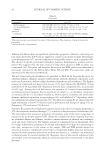
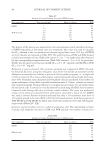
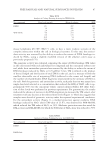
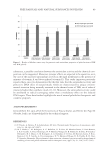
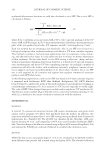
JOURNAL OF COSMETIC SCIENCE 80 Table IX Compounds Identifi ed in the Nonpolar Fractions of the DM Peloid Entry Fraction Class of compounds Compound(s) Yielda 1 n-Heptane Alkanes Pentadecane 0.03 Dodecane 0.15 Alkenes Tridec-1-ene 2.5 × 10⁻³ Tetradec-1-ene 4.6 × 10⁻³ Aromatic hydrocarbons Ethylbenzene 8.2 ×.10−4 o-Xylene 1.7 × 10⁻³ 1,4-Diethylbenzene 4.0 × 10⁻³ 1,2,4-Trimethylbenzene 1.7 × 10⁻³ 2 Cyclohexane Alkanes Decane 3.5 × 10⁻³ Undecane 0.18 Dodecane 0.02 Tridecane 0.06 Pentadecane 0.02 2,4-Dimethylhexane 0.01 Alkenes Dodec-1-ene 0.05 Tridec-1-ene 0.05 Hexa-2,4-diene 0.09 Aromatic hydrocarbons Ethylbenzene 0.02 o-Xylene 0.02 m-Xylene 0.04 Alkanols Undecan-1-ol 8.7 × 10⁻³ Tretradecan-1-ol 0.02 2-Methyldecan-1-ol 0.01 2-Butyloctan-1-ol 0.02 2,7-dimethyloctan-1-ol 4.5 × 10⁻³ Oleyl alcohol 0.02 3 Diisopropyl ether Alkanes Decane 3.7 × 10⁻³ Dodecane 0.17 Hexadecane 0.03 Alkenes Hexa-2,4-diene 0.01 Tridec-1-ene 4.8 × 10⁻³ Aromatic hydrocarbons Ethylbenzene 0.01 o-Xylene 0.05 p-Xylene 0.02 1,2,3-trimethylbenzene 8.9 × 10⁻³ Alkanols Tetradecan-1-ol 3.5 × 10⁻³ 2-Butyl-octan-1-ol 1.7 × 10⁻³ 2-Methyl-undecan-1-ol 1.5 × 10⁻³ a Yield is defi ned as milligram of compounds per gram of DM sample. sample (5.0 g) was washed with MeOH to remove sulfur, and successively extracted with n-heptane. The extract was purifi ed on SiO2 by isocratic elution (n-heptane, cyclohexane, and diisopropyl ether) to afford 125 mg of total crude (the extraction yields are given in Table II). Alkanes, alkenes, aromatic hydrocarbons, and alkanols were identifi ed by GC-MS analysis (Table IX, entries 1–3). The cyclohexane fraction showed the highest amount of compounds (0.67 mg), fol- lowed by diisopropyl ether (0.31 mg) and n-heptane (0.2 mg). As a general trend, the amount of compounds in the polar fraction was higher than that found in the nonpo- lar fraction.
Purchased for the exclusive use of nofirst nolast (unknown)
From: SCC Media Library & Resource Center (library.scconline.org)