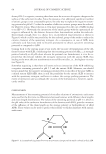
JOURNAL OF COSMETIC SCIENCE 60 rod-like micelles. The second option is hydrophilic, associative thickeners, which are able to bridge the surfactant assemblies—or a combination of both (1). While Brook- fi eld viscosity is just an indication of the viscosity under shear, oscillatory rheological measurements can provide a lot more information, not only on the behavior at rest (e.g., existence of a yield point) but also on the type and properties of the surfactant micelles present. A network of rod-like micelles can be described by the Maxwell model the plot of the storage modulus G′, the loss modulus G″ and the complex viscosity as a function of frequency yields information on the zero shear viscosity, the network den- sity, and the structural relaxation time, which is a measure of the exchange kinetics of the surfactants (2). The combination of the anionic sodium lauryl ether sulfate (SLES) with the zwitterionic cocamidopropyl betaine (CAPB) is quite popular not only because of its mildness, but also because it is easy to thicken (3,4). In general, the origin of the viscosity behavior is known the pH of personal care formulations is typically set to about 5.5 to match the pH of human skin. At these slightly acidic conditions, the zwitterionic CAPB is par- tially protonated and thus carries some positive charge, leading to a strong interaction with the anionic SLES. While SLES forms spherical micelles of only low viscosity, the combination with the protonated CAPB leads to a sphere-to-rod micelle transition (5–7) and thus to an increase in viscosity of the mixture (8). The resulting viscosity of the surfactant mixtures depends on the mixing ratio (9), the amount of minor components such as sodium chloride (NaCl) and free fatty acids (6), and the chain length of the used betaines (10). The variation of the chain lengths of the betaine has two consequences: on the one hand, longer chains lead to an increase in packing parameter (11), i.e., to a more effi cient sphere-to-rod micelle transition. On the other hand, the exchange kinetics of aggregated surfactants, and hence the viscosity, scales with the chain length of the molecules forming the aggregate (12–15). In general, in the system SLES/CAPB there are only minor adjustments necessary to achieve the desired rheological profi le of the formulation. However, the question remains how the rheological properties of the formulations are related to the molecular structure (chain length distribution, headgroup structure) of the secondary surfactant. Because oscillatory rheological measurements can only show the rheological effects of the different betaine structures, we have used streaming potential measurements to study and understand the root cause of the rheological effects. The streaming potential is a measure of the surface charges of, e.g., colloidal objects (16) it is typically used to determine the isoelectric point (IEP) of proteins or to forecast the stabil- ity of dispersions. We have used the streaming potential of micellar solutions of different betaine surfactant structures as a measure of the hydrophilicity of the surfactants, and to correlate these values with the rheological properties of binary mixtures of the betaines with anionic surfactant. Also, the chemical structure of the betaine headgroup varied, and a signifi cant infl uence on both the IEP and the magnitude of the streaming potential of the zwitterionic surfactants could be shown. These effects have again a dramatic infl uence on the interaction with anionic surfactants, as becomes obvious when looking at the rhe- ology of such mixtures. The alkyl amidopropyl betaines (APBs) used in the fi rst part of the paper for studying the effect of alkyl chain length and its distribution were all based on dimethyl aminopropyl amine (DMAPA), fatty acids or fatty acid esters (triglycerides), and sodium monochloro- acetate. In the second part, the alkyl chain distribution is kept constant, but the structure

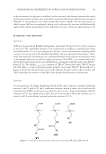
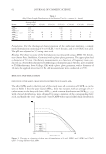
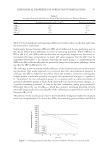
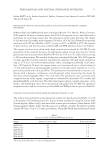
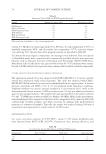
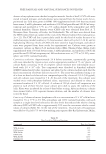
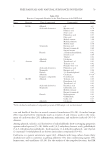
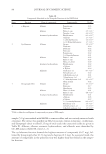
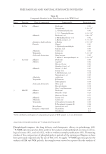
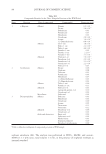
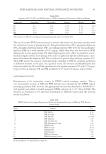
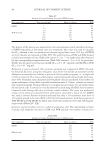
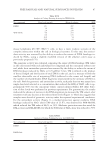
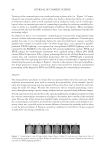
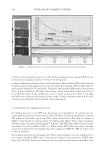
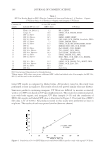
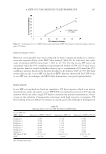
RHEOLOGICAL PROPERTIES OF SURFACTANT FORMULATIONS 61 of the zwitterionic headgroup is modifi ed: on the one hand, the distance between the amide and the quaternary nitrogen was reduced by using dimethyl aminoethyl amine instead of DMAPA in the synthesis of an alkyl amidoethyl betaine (AEB). On the other hand, an alkyl betaine (AB) was investigated, which can be obtained by reaction of alkyldimethyl amine with sodium monochloroacetate and hence does not contain an amide group at all. MATERIALS AND METHODS MATERIALS SLES was obtained from BASF (Ludwigshafen, Germany) (Texapon® LS 35, 30%) and used as received. The amidoalkyl betaines were synthesized according to standard procedures used industrially (17) via a two-step process. At fi rst, a fatty acid (mixture) or hydrogenated coconut oil was reacted with dimethylaminoalkyl amine at elevated temperatures. After- ward, the respective amidoamine was carboxymethylated with sodium monochloroacteate in an aqueous solution to yield the respective betaine. The APBcoco is commercially avail- able from Evonik Nutrition & Care GmbH (Essen, Germany) under the trade name TEGO® Betain F 50. The APB8/10 + 12/18 is a mixture of TEGO® Betain 810 with TEGO® Betain CK. The AB12/14 is also an Evonik product with the trade name TEGO® Betain AB 1214. Figure 1 shows the chemical structures of the different betaines used in these studies, and Table I provides an overview of the alkyl chain length distributions of the betaines. METHODS Streaming potential. A Charge Analyzing System (CAS emtec papertest, Leipzig, Germany) was used, and 20 mL of 0.5 wt% surfactant solution, which is above the critical micelle concentration (CMC) in all cases, was added to the cuvette. Aqueous hydrogen chloride solution (0.5%) was added until a pH value of 4 was reached. Then the solution was ti- trated to pH 9 with diluted sodium hydroxide solution (0.5%). Figure 1. Structures of the zwitterionic surfactants used: alkyl APB, alkyl AEB, and AB.
Purchased for the exclusive use of nofirst nolast (unknown)
From: SCC Media Library & Resource Center (library.scconline.org)