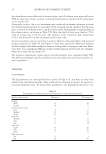
EMULGEL FORMULATION AND IN VITRO AND IN VIVO ASSESSMENT 3 (voucher # Pharm-Pharmaceutical Chemistry and Technology-2084-5) was deposited at our laboratory herbarium. For the extraction of LG oil, the leaves were separated with meticulous care, washed twice with distilled water, and dried for 7–10 days in the shade at room temperature to avoid extra damage and to minimize cross-contamination, and then the dried leaves were grounded. In this work, a microwave-accelerated distillation method was used for volatile oil extraction. The power of the oven was set up at 700 W (70% power) and 100°C temperature. About 250 g of C. citratus powdered leaves were mixed with 500 mL deionized water and placed in a 1,000-mL round bottom microwave fl ask. The distillate was collected in a beaker, and CaCl2 was added to dry the obtained oil. Finally, the distillate was weighed and placed in well-closed amber-colored bottles. The % yield was calculated using the following equation: q100, % yield Bm M where M is the mass of the extracted oil (g) and Bm is the initial plant biomass (g). P REPARATION OF EMULGEL T he emulgel was prepared using the levigation technique. In this step, a previously pre- pared primary emulsion and gel were accurately levigated together. The components of the formulation are reported in Table II. P reparation of primary emulsion. The preparation of the primary emulsion was adopted us- ing a standard method as summarized in Table I (20). The amount of water and acacia was calculated separately for olive oil (fi xed oil) and LG (essential oil). Olive oil and LG were accurately measured and placed in a dry mortar (oily phase), and then acacia was added to the oil phase and mixed gently to disperse the gum lumps, and fi nally, the aqueous phase was immediately added while stirring continuously until the mixture became thick. P reparation of gel. The compounds and amounts of the emulgel formulation are reported in Table II. To prepare the gel phase, Carbopol 934 and glycerin were dispersed deion- ized water was added under constant and gentle stirring using a homogenizer. The hydro- gel pH was adjusted around 6.5 using TEA, and it was continuously stirred until the gel is formed. F inal steps of emulgel formulation. The obtained primary emulsion was incorporated with the calculated amount of hydrogel through hand levigation, by using tile and fl at spatulas until achieving the desired fi nal emulgel. The formed emulgel was placed in a suitable tightly closed plastic jar and stored in a cool dry place for stability and clinical evaluation. Table I Quantities of the Primary Emulsion Type of oil Example Quantities for primary emulsion (parts) Oil (mL) Water (mL) Gum (g) Fixed Olive oil 4 2 1 Volatile LG oil 2 2 1

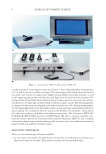
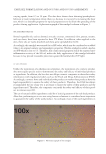
JOURNAL OF COSMETIC SCIENCE 4 E VALUATION OF EMULGEL FORMULATIONS I n vitro assessment. The prepared emulgel formulation was evaluated for its stability and quality using in vitro tests. p H measurement. T he pH of emulgel formulations was determined by using a pH meter at room temperature (25°C ± 1°C). Samples were prepared by dilution of 1 g of emulgel to 10 mL with purifi ed water. The measurement of pH of each formulation was carried out in triplicate, and average values were calculated. Cent rifuge test. Cent rifugation of emulgel was performed at 3,000 rpm in Eppendorf tubes at room temperature. The inspection was carried out for possible phase separation after 15, 30, and 60 min. Dye and microscopic analysis test. Micr oscopic examination was performed using an optical microscope (Olympus, Cx22led, Tokyo, Japan) with ×40 magnifi cation. Samples were diluted with an amaranth solution (water-soluble dye). Visco sity test. The v iscosity of the emulgel was assessed using a Brookfi eld viscometer (spindle No. 6). The viscosity of samples was determined at room temperature using dif- ferent rotational speeds for 1 min each. Stabi lity test. For s tability studies of cosmetic preparations, the selected formulation was subjected to freeze–thaw (F/T) cycling. In the fi rst cycle, the formulation was kept at +4°C for 24 h in a refrigerator and then thawed at room temperature (25°C) for 24 h. In the second cycle, samples were kept at 4°C for another 24 h, and then they were thawed at 40°C in the oven for 1.5 h. Afterward, samples were incubated at room temperature for 1 h before pH measurements and microscopic analysis. Spreadabi lity test. Spreadabi lity is a term expressed to denote the extent of the area to which the emulgel readily spreads on application to the skin or affected parts (21). It was expressed in terms of time in seconds taken by two slides to slip off from the emulgel which was placed in between the slides, under a certain load. Lesser the time taken for separation of the two slides, better is the spreadability. Two sets of glass slides of standard dimensions were taken. The herbal emulgel formulation was placed over one of the slides. The other slide was placed on the top of the emulgel, such that the emulgel was sand- wiched between the two slides in an area occupied by a distance of 30.6 cm along with the slide. The two slides in position were fi xed to a stand without slightest disturbance in such a way that only the upper slide to slip off freely by the force of weight tied to it. A 150-g weight was tied to the upper slide carefully. The time taken for the upper slide to Table II Quantities for 1% w/w LG Emulgel Ingredient Quantity (g) Primary emulsion phase Olive oil 8.98 LG oil 1.02 Acacia gum 3 Water 6 Gel phase Carbopol 934 2 TEA 2 Glycerin 4 Water 94
Purchased for the exclusive use of nofirst nolast (unknown)
From: SCC Media Library & Resource Center (library.scconline.org)