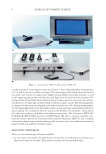
ANTIPOLLUTION COSMETIC EFFECTIVITY AGAINST AIR POLLUTANT ABSORPTION 37 the inside atmosphere of the simulation chamber, and the receiver solution consisted of 12 mL saline solution of 0.9% (w/v) NaCl adjusted to pH 7.4 with phosphate buffer 0.15 M, both maintained at 25°C by control of the external temperature. Receptor solutions in each cell were continuously stirred using a tefl on-coated magnetic stirrer. The synthetic membrane used in this experiment was Strat-M®, specifi cally designed to mimic different layers of human skin and composed of two layers of porous polyether sulfone, on a polyolefi n nonwoven fabric support, treated with synthetic lipids (12). Control experiments were performed with the Strat-M® membrane directly exposed to the surrounding contaminated atmosphere. On the other hand, effectiveness of the antipollution cosmetics was evaluated by homogeneously applying 2 mg product per cm2 exposed membrane, this side of the membrane being in contact to the contami- nated atmosphere. The amount of HAPs diffused through the control and treated membranes was determined by GC-MS analysis of the receptor solution after different exposure times, from 0.5 to 24 h. GC-MS DETERMINATION Analysis of HAPs was performed using direct and head sp ace (HS) injection G C-MS, depending on the physicochemical properties of the analyzed compounds. For HS in- jection, 5 mL acceptor solution with 200 ng mL-1 of internal standard (toluene-d8) was introduced in a 10-mL HS vial, hermetically closed. The vial was heated at 60°C for 20 min and HS measured by GC-MS. In the direct injection method, a liquid–liquid ex- traction of 5 mL acceptor solution with 20 ng mL-1 of internal standard was carried out with 0.5 mL hexane and 2-min vortex shaking. After that, the upper layer was intro- duced in a 2-mL glass vial containing a 200-μL internal volume glass insert and ana- lyzed by GC-MS. The used chromatographic system was an Agilent 7697A HS injector, coupled to a 789 0A GC and a 53975C inert XL EI/CI MSD with a triple-axis single quadrupole detector. An Agilent HP-5MS (30 m, 0.25 mm, and 0.25 μm) capillary column was used, and the oven program of temperatures was an initial temperature of 40°C, held for 8 min, increased at a rate of 20°C min-1 up to 200°C, and fi nally held for 2 min. Injector temperature was 250°C, using helium as carrier gas at a constant fl ow mode of 0.8 mL min-1. Ion source and transfer line temperatures were 300 and 250°C, respec- tively. Electron impact ionization was performed at 70 eV and MS acquisitions using selected ion monitoring mode. Table 1 shows m/z ions and retention time of studied compounds. PERMEATION PARAMETER DETERMINATION HAP concentration data of the receptor solution for each diffusion cell experiment were tran sformed to analyte mass/area unit (μg cm-2). Flux (μg cm-2 h-1) was determined for each experimental condition from the initial slope of the plot of cumulative chemical mass/area in the receptor solution over time. Experimental time points before analyte detection in the receptor solution were not used for slope determination. Lag time (h) is estimated as linear extrapolation back to x-axis of the linear trend of the absorption profi le.

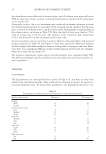
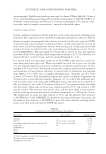
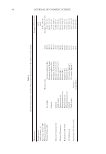
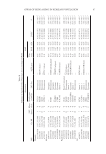
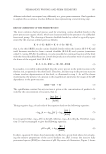
JOURNAL OF COSMETIC SCIENCE 38 Furthermore, pollutant concentration in the simulation chamber air can be estimated through Henry’s law and the concentration of the aqueous receiving solution once the equilibrium was reached, as shown in Equation (2) (13). gas = , Caqueous HCC C (2) where HCC is the dimensionless Henry solubility constant and Caqueous and Cgas are the con centrati ons of analytes in the aqueous and gas phases, respectively. STATISTICAL DATA ANALYSIS HAP absorption parameters were obtained for treated and control experiments as mean ± standard deviat ion of three independent measurements. Student’s t-test was used to de- termine if values obtained for treated and control experiments were statistically different at a P-value lower than 0.05. RESULTS AND DISCUSSION PHYSICOCHEMICAL PROPERTIES OF ANTIPOLLUTION COSMETICS Physicochemical properties of the developed antip ollution cosmetic products, includ- ing viscosity, densi ty, pH, conductivity, and refraction index, have been determined (see Table 2). Viscosity is one of the important physicochemical properties of cosmetics because high viscosity values are associated to a rich composition of active ingredients or consistency factors. On the other hand, low viscosity values could generate problems of dissolution and absorption of the product. As it can be seen in Table 2, antipollution cosmetic B (3.95–4.95) has a higher viscosity value than antipollution cosmetic A (2.53–3.53). Table I Analytical Procedure, Selected Ions, and Retention Time Characteristics of the Analyzed HAPs Analytical procedure Ions (m/z) Retention time (min) Limit of quantifi cation (ng mL-1) 1,2-dichloroethane HS-GC-MS 62 1.54 10 Benzene HS-GC-MS 7,778 1.58 5 Bromodichloromethane HS-GC-MS 83 1.87 10 Toluene HS-GC-MS 9,192 2.36 5 Ethylbenzene GC-MS 91,106 3.69 8 m+p-xylene GC-MS 91, 106 3.99 17 o-xylene GC-MS 91,106 4.65 10 1,2-dibromoethane GC-MS 107 2.63 25 Chlorobenzene GC-MS 112 3.32 91 Bromoform GC-MS 173 4.65 50 Nitrobenzene GC-MS 123 11.00 500 Naphthalene GC-MS 128 12.06 50
Purchased for the exclusive use of nofirst nolast (unknown)
From: SCC Media Library & Resource Center (library.scconline.org)