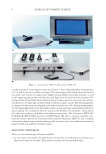
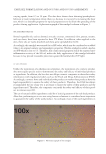
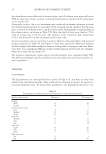
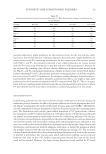
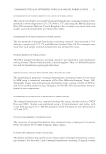
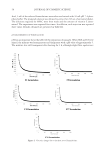
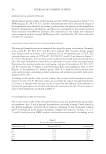
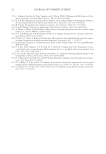
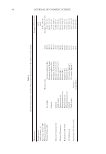
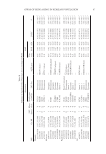
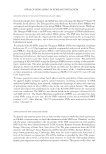
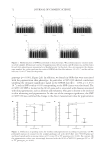
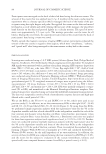
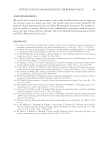
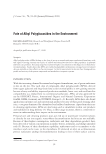
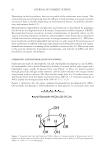
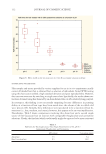
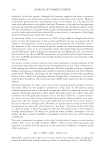
LUXURY CUES OF CREAM HEIGHTEN THE REWARD VALUE 85 RESULTS In the fi rst session, with the conditions for cream A (before showing the product informa- tion), there was a signifi cant correlation between the VS and the right SII (p = 0.012 R2 = 0.279), whereas there were no signifi cant correlations between the VS and the other three regions. On the other hand, there were no signifi cant correlations in the fi rst session with the conditions for cream B. In the third session, with the conditions for cream A (after showing product information), there were signifi cant correlations between the VS and the right SI (p = 0.007), SII (p = 0.006), and DLPFC (p = 0.000), whereas there was no signifi cant correlation between the VS and the left SII region. As with the fi rst, there were no signifi cant correlations in the third session with the conditions for cream B (Fig- ure 3, Table I). In addit ion, in the fi rst session, the stepwise multiple regression analysis showed that the VS correlated positively with the right SII with the conditions for cream A (β = 0.582 t = 2.779 p 0.012 adjusted R2 = 0.279 D-W statistic = 1.700), whereas there was no signifi cant correlation with the conditions for cream B. In the third session, the VS showed a signifi cantly positive correlation with the DLPFC (β = 0.710 t = 4.509 p 0.000 adjusted R2 = 0.504 D-W statistic = 2.045) with the conditions for cream A, whereas there was no signifi cant correlation with the conditions for cream B. Moreover, to investigate how much the right SII contributed to the VS with the conditions for cream A in the third session, we conducted an additional stepwise multiple regression analysis with the eigenvariate value for the VS activity as the dependent variable and the other three ROIs, except the DLPFC, as the independent variables (p 0.05). As a result, the right SII was then positively correlated with the VS (β = 0.568 t = 3.083 p 0.006 adjusted R2 = 0.322 D-W statistic = 1.559). The ANOVA a nalysis of the activation of each region showed no signifi cant differences between the conditions and sessions (Figure 4), and the scores for the subjective scales showed signifi cant differences between creams A and B for all items (“smoothness”: t = 7.29 p 0.000 “softness”: t = 8.34 p 0.000 “spread well”: t = 7.74 p 0.000) (Figure 5). DISCUSSION Activity in the VS, which plays a critical role in the reward system, has been shown to correlate with the subjective pleasantness score in an fMRI study in which participants F igure 2. The locations of the ROIs. SI: primary somatosensory cortex, SII: secondary somatosensory cortex, DLPFC, VS.

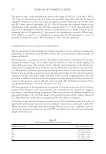
JOURNAL OF COSMETIC SCIENCE 86 applied a cream while being visually provided with information about its richness (6). Regarding the effects of product information, it has been reported that observing the logo of a favorite brand of car can activate the VS (7) and the DMPFC, which is associated with self-relevant processing (8). The value of brand image appears to be related to the cogni- tion of social dominance because the possession of goods from luxury brands represents a superior social status that distinguishes the owners from others (9). In addition, the DMPFC is also associated with information processing related to images of “social com- petence” and may be related to cognitive values (10). Moreover, activity in the right DLPFC has been correlated with activity in both the DMPFC and VS, suggesting that this region serves as an integrative hub linking rule (luxury represents social dominance) and reward (social dominance is rewarding) (1). In the present analysis, the DLPFC showed a positive correlation with the VS with the conditions for cream A after providing F i gure 3. Correlations between the VS and the other regions. SI, SII, DLPFC.
Purchased for the exclusive use of nofirst nolast (unknown)
From: SCC Media Library & Resource Center (library.scconline.org)