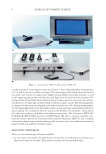
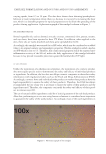
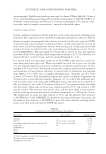
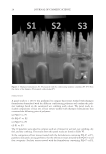
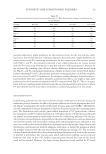
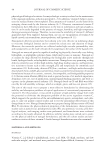
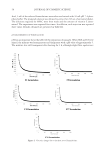
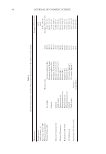
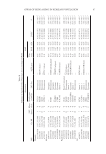
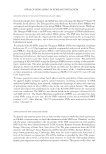
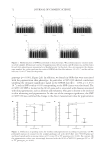
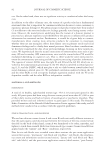
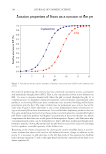
SYNTHETIC HAIR CONDITIONING POLYMERS 27 and wet feel score (0). It is remarkable that the two polymers, one with the DMEAMA amine-functional monomer and the other with an amide-functional monomer, performed similarly in hair conditioning. HIGH-PERFORMANCE CONDITIONING POLYMER CANDIDATES Three polymers (the polymers with the best performance from each library in DOE- 3), P1, P2, and P3, were selected for further evaluation. The compositions and prop- erties of these polymers and the shampoos derived from them are shown in Tables IV and V. To obtain additional material for further testing, each of these polymers was synthesized in a separate library with 24 identical reaction mixtures, and the resulting polymers were combined. Shampoos were prepared, and the evaluation results for these shampoo formu- lations are summarized in Table V. The reference shampoo formulation containing PQ-67 (S0) exhibited a wet combing work value of 5,740 N-mm and a wet feel score of 2.5. The formulation S1 prepared with poly- mer P1 showed the same properties within the limits of experimental error but was very hazy. The shampoo formulation S2 prepared with polymer P2 showed lower wet combing work and a better wet feel score than the formulation S0 with PQ-67 but was also hazy. The best performance in this scale-up study was observed for shampoo S3 prepared with polymer P3. It yielded a shampoo formulation that was almost clear and which showed substantially lower wet combing work and a better wet feel score than the reference shampoo S0 with PQ-67. Figure 3 shows the appearance of shampoo formulations pre- pared with the scale-up samples of polymers P1, P2, and P3. Table IV The Composition and Properties of High Performing Conditioning Polymer Candidates Polymer APTAC amount DMAEMA amount DMAAm amount AAm amount Mw, KDa PDI Viscosity, Pa-s P1 0.53 0.16 0.31 720 1.7 0.37 P2 0.567 0.144 0.289 735 1.7 0.52 P3 0.5 0.333 0.167 669 n.d.a 7.56 a Not determined. Table V Evaluation of Shampoo Formulations Prepared with High-Performing Conditioning Polymer Candidates. Polymer sample Shampoo sample Shampoo appearance Shampoo viscosity (Pa-s) Wet combing worka Wet feel scoreb PQ-67 S0 Clear 30.5 5,740 2.5 P1 S1 Very hazy 21.0 5,000 2.5 P2 S2 Hazy 27.5 3,089 1.5 P3 S3 Almost clear 36.5 1,823 1 a Automated wet combing work, N-mm. b Subjective wet feel score (0: best 5: worst).

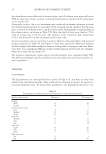
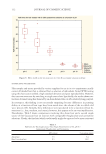
JOURNAL OF COSMETIC SCIENCE 28 PANEL STUDY A panel study (n = 10) (3) was performed to compare hair tresses washed with shampoo formulations formulated with the different conditioning polymers and confi rm the poly- mer rankings based on the automated wet combing work values. The panel study in- cluded comparisons of four sets of hair tresses washed with shampoo formulations that contained the following pairs of polymers: (a) PQ-67 vs. P1 (b) PQ-67 vs. P2 (c) PQ-67 vs. P3 (d) P1 vs. P3 The 10 panelists were asked to compare each set of tresses for wet feel, wet combing, dry feel, and dry combing. The results from this panel study are listed in Table VI . In the comparison of hair tresses treated with the formulations containing PQ-67 or P1, panelists indicated a strong preference for the reference tresses (treated with PQ-67) in all four categories. For hair tresses treated with the formulations containing PQ-67 or P2, Figure 3. Shampoo formulations S1–S3 prepared with the conditioning polymer candidates P1–P3. Note the clarity of the shampoo S3 prepared with polymer P3.
Purchased for the exclusive use of nofirst nolast (unknown)
From: SCC Media Library & Resource Center (library.scconline.org)