J. Cosmet. Sci., 72, 33–45 (January/February 2021) 33 Skin Penetration of Hazardous Air Pollutants in Presence of Antipollution Cosmetics SORAYA PONTES-LÓPEZ, ANA GONZÁLVEZ, FRANCESC A. ESTEVE-TURRILLAS, and SERGIO ARMENTA, Department of Analyt ical Chemistry, University of Valencia, Burjassot 46100, Spai n (S.P.-L., F.A.E.-T, S.A.), RNB, Cosmetic Laboratory, Industrial Estate La Pobla-L’Eliana, La Pobla de Vallbona 46185, Spain (A.G.) Accepted for publication September 29, 2020. Synopsis Different a n tipolluti on products have recently irrupted the market to answer current health concerns related to air contamination. Thus, the development of methodologies for the appropriate evaluation of the effi cacy of these products is needed. In this study, an appropriate analytical methodology has been developed and validated for the evaluation of the effectiveness of antipollution cosmetic products against the dermal absorption of different hazardous air pollutants (HAPs). In vitro vertical Franz diffusion cells and Strat-M® as human skin simulants have been used to assess the effectivity of antipollution cosmetic products. An exposition chamber, with a fi xed and constant concentration of HAPs, including benzene, toluene, ethylbenzene, and xylene isomers, chlorobenzene, nitrobenzene, haloalkanes, and polycyclic aromatic hydrocarbons, has been designed and made to simulate contaminated atmospheres. The effi cacy of antipollution cosmetic products has been evaluated using a multi-pollutant approach, representing a more stringent situation. Diffusion parameters, including fl ux and lag time, have been calculated for HAPs in the presence of cosmetic samples, using 2 mg product per cm2, and in control tests. The behavior of HAPs followed Fick’s fi rst law, allowing the calculation of diffusion parameters. Antipollution effectiveness is demonstrated by statistical evaluation of the diffusion parameters obtained for controls and cosmetics samples. So, a reduction in fl ux values and an increase in lag times imply an appropriate antipollution effectiveness. INTRODUCTION Air poll ution is one of the major concerns of 21st century society because of the risk- associated adverse effects on human health (1). Air pollutants can be classifi ed in two main types: (i) criteria air pollutants, which include ozone, carbon monoxide, particulate mat- ter, lead, sulfur, and nitrogen dioxides and (ii) hazardous air pollutants (HAPs), related to source-specifi c emissions, which include more than 150 compounds (2). HAPs are Address all correspondence to Sergio Armenta at sergio.armenta@uv.es.

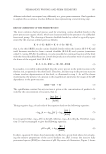
JOURNAL OF COSMETIC SCIENCE 34 those pollutants that cause serious health effects such as cancer and reproductive effects, among others. HAP contamination of air typically derives from anthropogenic sources, including mobile and stationary sources. As a result of this h ealth concern, different antipollution products have recently irrupted in the cosmetic market (3). Cosmetic companies have adopted three main strategies to develop antipollution products based on (i) prevention (fi lm-forming ingredients), (ii) protection (antioxidants), and (iii) repair (4). Generally, a combined strategy including several ingredients with different complementary mechanisms of action is preferred. However, the development of antipollution cosmetics and the evaluation of its effi cacy is still a complex challenge for the cosmetic industry. To date, recently pub lished in vitro effi cacy tests of antipollution cosmetics are based on the effect of air pollutants on the skin structure using human epidermal keratinocytes and reconstructed skin models (5,6) and human fi broblasts (7). Those procedures address modifi cation suffered by the skin in the presence or absence of cosmetic products how- ever, those procedures do not evaluate the possible dermal absorption, penetration, or assimilation of air pollutants through the skin. In this sense, the Organization for the Cooperation and Economic Development has published a series of guidelines for the in vivo (n. 427) and in vitro (N. 428) evaluation of dermal absorption of chemicals (8). In vitro techniques are based on the determination of absorption rates by passive diffusion through skin or skin simulants, using Franz diffusion cells with two chambers (donor and acceptor ones) separated by a human or synthetic membrane. One of the main advantages of in vitro methods is based on the determination of reproducible data of percutaneous absorption parameters and the possibility to evaluate potential risks from dermal expo- sure to chemicals. Permeation of a subst ance through the skin is mainly a diffusion process. Mathemat- ically, absorption of an organic compound can be described by Fick’s laws of diffu- sion. Fick’s fi rst law relates the fl ux of compound (J) per unit area (g cm-2 h-1) with the concentration gradient of substance (δC) (g cm-3), the linear distance diffused (δx) (cm), and the diffusion coeffi cient (D) (cm2 h-1) in infi nite dose conditions equa- tion (1) (9). EC Ex = – J D (1) Absorption parameters such as J and lag time (τ) can be obtained from Fick’s law and calculated from the slope and linear extrapolation back to x-axis of the linear trend of the absorption profi le, respectively (9). Thus, the present study is focused on the development of an appropriate analytical meth- odology for the evaluation of dermal absorption of different HAPs, using in vitro vertical Franz diffusion cells and simulant human skin membranes, to assess the effectivity of antipollution cosmetic products. Moreover, in contrast to previously published single- pollutant approaches, aimed at estimating the absorption of or exposure to a single air pollutant, a multi-pollutant approach representing a situation with more stringent con- ditions has been used. HAPs used to generate controlled contaminated atmospheres in- cluded benzene, toluene, ethylbenzene, and xylene isomers (BTEX), chlorobenzene, nitrobenzene, haloalkanes, and polycyclic aromatic hydrocarbons.
Purchased for the exclusive use of nofirst nolast (unknown)
From: SCC Media Library & Resource Center (library.scconline.org)