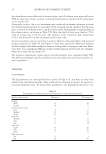
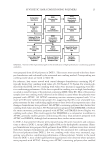
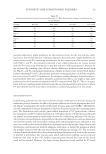
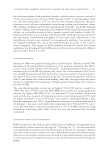
PHARMACEUTICALLY OPTIMIZED TOPICAL NANOGEL FORMULATION 49 was purchased from Merck KGaA (Darmstadt, Germany) and all other chemicals used were of analytical grade. PREPARATION OF NANOGEL FORMULATIONS To prepare nanogel form ulations, low–, medium–, and high–molecular weight CS dif- ferent concentrations of acetic acid solution and BSA were used. Based on the different rates determined as a result of the literature studies (1:4), (1:5), (1:6) and (13:10) determined with different rates of CS/BSA, 39 formulations were pre- pared (15). CS was dissolved in 0.75% or 1% acetic acid solution at concentrations of 1%, 0.75%, or 0.5% and allowed to swell overnight. The CS/BSA weight ratio was calculated, and BSA solutions were prepared at 0.02–0.5%. BSA solution was added dropwise to the prepared CS solution and stirred for 1 h at 300 rpm at room temperature. Formulations were prepared using two methods in which pH adjustments of the formulations were carried out at different stages. Method A. The mixture w as then he ld with high-speed stirring in a water bath set at 80°C for 1 h. It was then cooled to room temperature. It was then adjusted to the desired pH with 0.1 M NaOH solution. Then, 10 mL of each formulation was taken, and 0.1 g of ascorbic acid was added. The formulations were then allowed to stir for a further 3 h. Method B. The pH of the formulatio ns was adjusted with 0.1 M NaOH solution. The mixture was then held with high-speed stirring in a water bath set at 80°C for 1 h. It was then cooled to room temperature. Prepared nanogel formulations are shown in Table I. ADDITION OF ACTIVE INGRED IENT TO SELECTED FORMULATIONS As a result of the charac terization studies, 10 mg/mL concentration of vitamin C was added to the optimum formulations. After blank nanogel formulations were prepared, vitamin C was added to the formulations and then stirred for 3 h at 300 rpm for loading. CONTENT QUANTITY DETERMIN ATION One milliliter of the sel ected formulation was taken and mixed with 10 mL pH 7.4 phosphate buffer. The prepared solution was allowed to extract for 24 h on a horizontal shaker. The dilu- tions required for HPLC (Accela, Thermo Fisher Scientifi c, Waltham, MA) were then made, and the amount of vitamin C determined. The experiment was repeated fi ve times. The amount of vitamin C i n samples was analyzed by HPLC using a C18 column (5 μm, 4.6 × 250 mm), a DAD detector set at 245 nm, and methanol/0.05% H3PO4 solution (15:85, volume/volume) as mobile phase with a fl ow rate of 1.0 mL/min. PHYSICAL APPEARANCE OF FORMUL ATIONS The physical appearance of na nogel formulations containing vitamin C at room tempera- ture (25 ± 2°C) was evaluated.

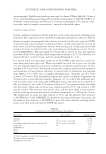
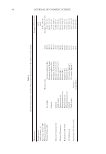
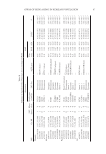
JOURNAL OF COSMETIC SCIENCE 50 CHARACTERIZATION OF NANOGEL FORMU LATIONS All prepared nanogel formulations were fi rst visually examined to see if there is any precipita- tion or turbidity. It was decided that the formulations with turbidity and precipitation were not suitable and would not be used in future studies. Studies were carried out to determine the physicochemical properties of clear formulations which were found to have a constant pH. Particle size, zeta potential, and PI parameters were examined in the pre- pared nanogel formulations. Table I Contents of Nanogel Formulations Formulation code CS solution ratio (%) BSA solution ratio (%) CS molecular weight CS: BSA pH F1 0.75 0.02 Low 1:5 5.4 F2 0.5 0.02 Low 1:5 5.4 F3 1 0.02 Low 1:5 5.4 F4 0.75 0.02 Medium 1:5 5.4 F5 0.5 0.02 Medium 1:5 5.4 F6 1 0.02 Medium 1:5 5.4 F7 0.75 0.02 High 1:5 5.4 F8 0.5 0.02 High 1:5 5.4 F9 1 0.02 High 1:5 5.4 F10 0.75 0.02 Low 1:4 5.4 F11 0.5 0.02 Low 1:4 5.4 F12 0.5 0.5 Low 1:4 5.95 F13 1 0.02 Low 1:4 5.4 F14 0.75 0.02 Medium 1:4 5.4 F15 0.5 0.02 Medium 1:4 5.4 F16 1 0.02 Medium 1:4 5.4 F17 0.75 0.02 High 1:4 5.4 F18 0.5 0.02 High 1:4 5.4 F19 1 0.02 High 1:4 5.4 F20 0.75 0.02 Low 1:6 5.4 F21 0.5 0.02 Low 1:6 5.4 F22 0.5 0.5 Low 1:6 5.95 F23 1 0.02 Low 1:6 5.4 F24 0.75 0.02 Medium 1:6 5.4 F25 0.5 0.02 Medium 1:6 5.4 F26 1 0.02 Medium 1:6 5.4 F27 0.75 0.02 High 1:6 5.4 F28 0.5 0.02 High 1:6 5.4 F29 1 0.02 High 1:6 5.4 F30 0.75 0.02 Low 13:10 5.4 F31 0.5 0.02 Low 13:10 5.4 F32 0.5 0.5 Low 13:10 5.95 F33 1 0.02 Low 13:10 5.4 F34 0.75 0.02 Medium 13:10 5.4 F35 0.5 0.02 Medium 13:10 5.4 F36 1 0.02 Medium 13:10 5.4 F37 0.75 0.02 High 13:10 5.4 F38 0.5 0.02 High 13:10 5.4 F39 1 0.02 High 13:10 5.4 * In all the formulations prepared, the ratio of acetic acid solution was tested both 0.75 and 1%.
Purchased for the exclusive use of nofirst nolast (unknown)
From: SCC Media Library & Resource Center (library.scconline.org)