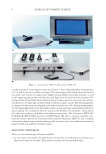
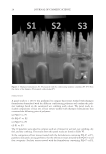
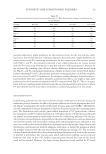
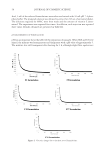
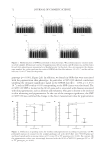
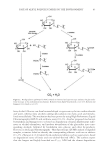
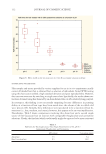
JOURNAL OF COSMETIC SCIENCE 14 deal in vivo quality. It showed a signifi cantly higher sensorial effect on human skin than the same emulgel without LG. However, further investigations should be considered for enhancing the shelf stability of the formulation. Moreover, the application of LG emulgel on human skin provides a moderate sunscreen effect, which may be benefi cial during the daily exposure to sunlight. ACKNOWLEDGMENTS Many thanks for the assistance of the technicians Mohamad Arar and Linda Esa. We also would like to thank Mr. Jonathan E. Wright from the language center, An-Najah National University, for English language editing of this manuscript. REFERENCES (1) T. Igarashi, K. Nishino, and S. K. Nayar, The appearance of human skin: a survey, Found. Trends® Com- put. Graph. Vis., 3(1), 1–95 (2007). (2) E. Xhaufl aire-Uhoda, E. Maca r enko, R. Denooz, C. Charlier, and G. E. Piérard, Skin protection creams in medical settings: successful or evil, J. Occup. Med. Toxicol, 3, 15 (2008). (3) A. Alexander, A. Khichariya, S . Gupta, R. J. Patel, T. K. Giri, and D. K. Tripathi, Recent expansions in an emergent novel drug delivery technology: emulgel, J. Controlled Release, 171 (2), 122–132 (2013). Figure 7. Relative contributions of the visc oelastic plus viscous and the elastic distension to the total deformation.

EMULGEL FORMULATION AND IN VITRO AND IN VIVO ASSESSMENT 15 (4) S. Tyagi, A. K. Gupta, P. Sha r ma, P. M. Prajapati, and M. B. Potdar, Emulgel: a combination of emulsion and gel, J. Drug Discov. Ther., 1(6), 72–76 (2013). (5) A. Panwar, N. Upadhyay, M. Ba i ragi, S. Gujar, G. Darwhekar, and D. Jain, Emulgel: a review, Asian J. Pharm. Life Sci., 2231, 4423 (2011). (6) A. Hardenia, S. Jayronia, and S. Jain, Emulgel: an emergent tool in topica l drug delivery, Int. J. Pharm. Sci. Res., 5(5), 1653–1660 (2014). (7) A. A. Shah, K. Kamdar, R. Sha h , and R. A. Keraliya, Emulgel: a topical preparation fo r hydrophobic drugs, PharmTechMedica, 2, 370–376 (2013). (8) R. Wolf, D. Wolf, P. Morganti , and V. Ruocco, Sunscreens, Clin. Dermatol., 19, 452–459 (2001). (9) J. Cheel, C. Theoduloz, J. Ro d ríguez, and G. Schmeda-Hirschmann, Free radical scavengers and antioxidants from Lemongrass (Cymbopogon citratus (DC.) Stapf.), J. Agric. Food Chem., 53(7), 2511– 2517 (2005). (10) C. Herkenne, I. Alberti, A. N a ik, Y. N. Kalia, F.-X. Mathy, V. Préat, and R. H. Guy, In vivo methods for the assessment of topical drug bioavailability, Pharm. Res., 25(1), 87–103 (2008). (11) L. H. C. Carlson, R. A. F. Mac h ado, C. B. Spricigo, L. K. Pereira, and A. Bolzan, Extraction of lemon- grass essential oil with dense carbon dioxide, J. Supercrit. Fluids, 21(1), 33–39 (2001). (12) E. Ajayi, A. Sadimenko, and A. Afolayan, GC–MS evaluation of cymbopogon citratus (DC) Stapf oil obtained using modifi ed hydrodistillation and microwave extraction methods, Food Chem., 209, 262– 266 (2016). (13) J. Campos, G. Schmeda-Hirschma n n, E. Leiva, L. Guzman, R. Orrego, P. Fernandez, M. González, C. Radojkovic, F. Zuñiga, and L. Lamperti, Lemon grass (Cymbopogon citratus (DC) Stapf) polyphe- nols protect human umbilical vein endothelial cell (HUVECs) from oxidative damage induced by high glucose, hydrogen peroxide and oxidised low-density lipoprotein, Food Chem., 151, 175–181 (2014). (14) M. I. Naik, B. A. Fomda, E. Jayk u mar, and J. A. Bhat, Antibacterial activity of lemongrass (Cym- bopogon citratus) oil against some selected pathogenic bacterias, Asian Pac. J. Trop. Med., 3(7), 535– 538 (2010). (15) M. Blanco, C. Costa, A. Freire, J . Santos, and M. Costa, Neurobehavioral effect of essential oil of Cymbopogon citratus in mice, Phytomedicine 16(2), 265–270 (2009). (16) B. T. Schaneberg and I. A. Khan, Comparison of extraction methods for marker compounds in the essential oil of lemon grass by GC, J. Agric. Food Chem., 50(6), 1345–1349 (2002). (17) M. N. Boukhatem, M. A. Ferhat, A . Kameli, F. Saidi, and H. T. Kebir, Lemon grass (Cymbopogon citratus) essential oil as a potent anti-infl ammatory and antifungal drugs, Libyan J. Med., 9(1), 25431 (2014). (18) B. B. Lorenzetti, G. E. Souza, S . J. Sarti, D. Santos Filho, and S. H. Ferreira, Myrcene mimics the peripheral analgesic activity of lemongrass tea, J. Ethnopharmacol., 34(1), 43–48 (1991). (19) H. M. Aldawsari, S. M. Badr-Eldi n , G. S. Labib, and A. H. El-Kamel, Design and formulation of a topical hydrogel integrating lemongrass-loaded nanosponges with an enhanced antifungal effect: in vitro/in vivo evaluation, Int. J. Nanomed., 10, 893–902 (2015). (20) M. E. Aulton, Pharmaceutics: the Science of Dosage Form Design (Churchill Livingstone, London, UK 2002). (21) D. M. Khunt, A. D. Mishra, and D. R. Shah, Formulation design & development of piroxicam emulgel, Int. J. Pharm.Tech. Res., 4(3), 1332–1344 (2012). (22) M. KP Haneefa, R. Saraswathi, G. P. Mohanta, and C. Nayar, Formulation and evaluation of herbal gel of Pothos scandens Linn, Asian Pac. J. Trop. Med., 3(12), 988–992 (2010). (23) M. Abdassah, R. Aryani, E. Surac h man, and M. Muchtaridi, In-vitro assessment of effectiveness and photostability avobenzone in cream formulations by combination ethyl ascorbic acid and alpha tocopherol acetate, J. Appl. Pharm. Sci., 5(06), 70–74 (2015). (24) H. Gonzalez, N. Tarras-Wahlberg, B. Strömdahl, A. Juzeniene, J. Moan, O. Larkö, A. Rosén, and A.-M. Wennberg, Photostability of commercial sunscreens upon sun exposure and irradiation by ultraviolet lamps, BMC Dermatol., 7(1), 1 (2007). (25) R. M. Sayre, P. P. Agin, D. L. Desr o chers, and E. Marlowe, Sunscreen testing methods: in vitro predictions of effectiveness, J. Soc. Cosmet. Chem., 31(133), 43 (1980). (26) WHO, WHO Guidelines for Assessing Q u ality of Herbal Medicines with Reference to Contaminants and Residues (2007), World Health Organization, Geneva. (27) Yapar, E. A., Ö. Ýnal, and M. S. Erd al, Design and in vivo evaluation of emulgel formulations including green tea ext ract and rose oil, Acta Pharm. 63(4), 531–544 (2013).
Purchased for the exclusive use of nofirst nolast (unknown)
From: SCC Media Library & Resource Center (library.scconline.org)