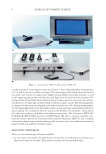
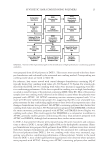
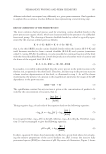
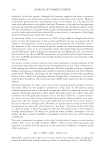
JOURNAL OF COSMETIC SCIENCE 52 C were placed into the dialysis membrane, and the end of the dialysis membrane was closed with a sealer. Then, 200 mL of buffer solution with a pH of 7.4 was prepared. Dialysis membranes were placed in 10 mL of solution placed on a multi-heater mixer set at 37 ± 1°C and set at 150 rpm. In the in vitro release study, 1 mL sample was taken at 30 min, 1, 2, 3, 4, 5, and 6 h. After the sample was taken, 1 mL of buffer solution was added to the medium. The samples were evaluated by HPLC, and the concentration of vitamin C in the medium was determined (n = 3). IN VITRO 2,2-DIPHENYL-1-PICRYLHYDRAZYL (DPPH) ASSAY FOR ANTIOXIDANT ACTIVITY OF VITAMIN C–LOADED NANOGELS The antioxidant activity of vitamin C–loaded n anogels was assessed by evaluating its ability to scavenge DPPH (18). DPPH was dissolved in methanol to yield a 200 μM concentration. Then, 100 μL of DPPH solution was mixed with 100 μL of vitamin C solution (10 μg/mL and 1 mg/mL in methanol) or vitamin C–loaded nanogels (1 mg/mL in methanol) or empty nanogels (1 mg/mL in methanol). A control sample was prepared by mixing 100 μL of DPPH solution with 100 μL of methanol. All the samples were stored at room temperature for 30 min. Then, the absorbance was measured at 517 nm against blank (methanol). All the experiments were performed in triplicate. The percent inhibition (or antioxidant activ- ity) was calculated according to the following formula: ¯ ¡ ° q100 ¡ °, ¡ ° DPPH Sample A A % Inhibition ADPPH where ADPPH is the absorbance of DPPH control and ASample is the absorbance of the sample. Data were analyzed using analysis of variance (ANOVA) . In the case of a signifi cant ANOVA, post hoc analysis was performed using Tukey’s test. Values were expressed as mean ± standard error (SE). The level of p 0.05 was considered to be statistically sig- nifi cant. Statistical analyses were performed with Statistical Package for the Social Sci- ences for Windows (SPSS, version 15.0). STABILITY TESTS The selected nanogel formulations were evaluated in a s tability cabinet containing 60% relative humidity at room temperature at 25°C and 75% relative humidity at 40°C. The parameters used in characterization studies (particle size, PI, zeta potential, and pH) were evaluated at certain time intervals. RESULTS AND DISCUSSION After the nanogel formulations mad e as described in the M ethod section were examined visually, studies were continued with the selected formulations. Because of turbidity and precipitation in the formulations prepared by Method B, this method was not continued. In the formulations made with Method A and prepared using medium–molecular weight

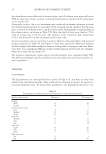
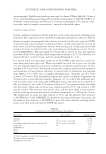
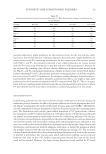
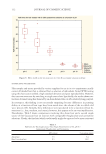
PHARMACEUTICALLY OPTIMIZED TOPICAL NANOGEL FORMULATION 53 CS, it was found appropriate to continue working with these formulations because tur- bidity was observed even if they were clear at the time they were prepared. Gel formulations are preferred for topical applications b ecause of their ability to release drug active ingredients from systems and because they are absorbed faster than creams and oint- ments. In addition to this, nanogels have the characteristics of high stability, high drug loading capacities, targeting of active substances, and reducing the side effects with the potential for controlled release (19). In this direction the aim of our study was to develop nanogel formulations containing vitamin C for topical use to carry out in vitro characteriza- tion studies and to investigate the antioxidant activity of selected formulations in vitro (20). VITAMIN C LOADING TO THE OPTIMUM FORMULATIONS One of the most important effects of oxidative stress is that reactive oxygen species, that is, free radicals, can cause DNA damage and infl ammation because of lipid peroxidation, re- sulting in aging. Antioxidants can prevent these events by reducing free radicals and their effects (21). Vitamin C is a well-known antioxidant and anti-infl ammatory, anti-aging, and anticarcinogenic agent. Vitamin C has been used in various formulations because of its an- tioxidant properties, and its effectiveness has been proven. The reason why we use vitamin C as an active substance in our study is to prepare a stable and high–penetration rate formu- lation with this substance, which is widely used in commercially available products (22). The dose information regarding the antioxidant use of vit amin C in topical application is 10 mg/mL in the literature (23). The active substance is in the form of a light white crystal. There was no change in color and appearance of the formulations after the ac- tive ingredient was added. CHARACTERIZATION STUDIES Characterization studies were pe rformed to determine the physicochemical properties of the formulations as presented next. DETERMINATION OF PARTICLE/DROPLET SIZE AND PI OF FORMULAT IONS The vitamin C active substance was charged, and the parti cle size of the loaded formula- tions was made as described in the Method section. The particle size results of the nano- gels are shown in Table II. Table II Particle Size PDI and Zeta Potentials of the Nanogel Formulations Formulation code Particle size (nm) ± SD PI Zeta potential (mV) ± SD F1 211.3 ± 68.45 0.732 ± 0.274 -16.1 ± 3.05 F9 551.0 ± 10.74 0.179 ± 0.013 23 ± 1.84 F19 119.9 ± 13.71 0.191 ± 0.006 15.6 ± 0.541 F27 148.9 ± 1.019 0.208 ± 0.006 22 ± 1.36 F31 1.688 ± 223.5 0.762 ± 0.172 20.82 ± 0.965
Purchased for the exclusive use of nofirst nolast (unknown)
From: SCC Media Library & Resource Center (library.scconline.org)