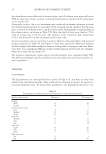
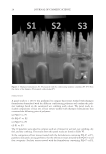
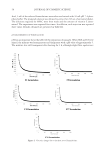
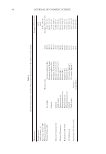
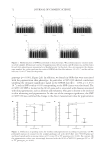
JOURNAL OF COSMETIC SCIENCE 56 Figure 2. Viscosity change due to the shear rate of formulations. And, 1 mL of the selected formulations were taken and mixed with 10 mL pH 7.4 phos- phate buffer. The prepared solution was allowed to extract for 24 h on a horizontal shaker. The dilutions required for HPLC were then made and the amount of vitamin C deter- mined. The experiment was repeated fi ve times. In addition, each injection was repeated three times. Results obtained are presented in Table III. pH MEASUREMENTS OF FORMULATIONS pH was an important factor that affected the preparation of nanogels. When BSA and CS were mixed, the mixture was homogeneous and transparent with a pH value of approximately 5. The mixture was still transparent after heating for 1 h, although slight blue opalescence

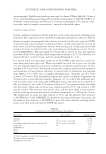
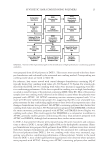
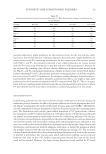
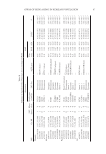
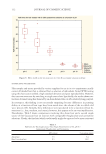
PHARMACEUTICALLY OPTIMIZED TOPICAL NANOGEL FORMULATION 57 appeared when the pH of mixture was adjusted to 5.4–5.95. This was because when the pH was below 4.7, which is the isoelectric point of BSA (28), there was electrostatic re- pulsion between positively charged BSA and well-protonated CS, preventing the aggre- gation of denatured BSA. When the pH was adjusted within the range of 5.0–5.6, negatively charged BSA combined with the protonated CS. With the pH continuing to increase, the positive charge of CS decreased and the negative charge of BSA increased so that electrostatic attraction occurred between CS and BSA and the chain of CS clustered, leading to the formation of NPs. Taking into particle size distribution, the PI, and scat- tering light intensity into consideration, the optimal pH for the formation of NPs was between 5 and 6. The pH measurement results of the formulations without vitamin C active substance loading are shown in Table IV. Figure 3. Flow curves of the formulations at 25°C.
Purchased for the exclusive use of nofirst nolast (unknown)
From: SCC Media Library & Resource Center (library.scconline.org)