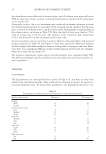
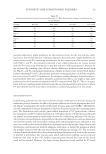
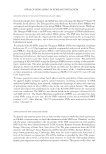
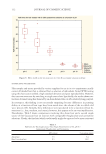
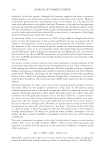
JOURNAL OF COSMETIC SCIENCE 88 stimulation, suggesting that pleasant touch opens the gate to the SI (15). Here, the SI showed a positive correlation with the VS during the application of cream A only after providing the visual information, but not before it. This result suggests that SI activity is involved in a top-down regulation of ascending somatosensory information. Although the same process would have been observed in the fi rst session as shown in the SII, the effect only from the tactile stimuli in SI was not signifi cant probably because of such a small effect size from the difference of the textures for the SI, which is primarily in charge of discriminative processes to induce the feedback regulation. The aforeme ntioned results suggest that the emotional value based on texture is mainly processed in the connection between the contralateral SII and the VS, and luxury cues further facilitate this connection and the additional connection between the VS and the SI, which is involved in discriminating the physical aspects of creams. That is, somato- sensory information processing in the human brain may also be modulated by luxury cues as the social dominance–related process is. In the pres ent study, we observed neural processes that indicate the association between somatosensory areas (SI and SII) whose activities are affected not only by texture but also by product information and the reward-related area (VS) that was observed to have a con- nection to the social dominance–related area (DMPFC) indirectly via the DLPFC in our previous study (1), suggesting that the consumer experience of the textures of skincare products can be amplifi ed by appropriate information on the products. The consumer experience accompanying emotional satisfaction not only of pleasantness simply from the texture but also of feelings of social dominance is induced in the interaction between these brain regions in top-down and bottom-up processes. Further investigation of the process in which consumers are satisfi ed with the texture of a skincare product interacting with product information may be helpful for developing more attractive products based on emotional values. Fi g u re 5. The values of the averaged score for the sensory evaluation. Participants evaluated the texture of creams for each item from -3 (do not feel at all) to +3 (feel very much).

LUXURY CUES OF CREAM HEIGHTEN THE REWARD VALUE 89 ACKNOWLEDGM ENTS We would li ke to thank the participants in this study and Mika Nakayama for applying the skincare cream as a beauty specialist. The present work was entirely funded by the Shiseido Global Innovation Center and Tokyo Metropolitan University. The authors re- port no confl icts of interest. Because of the confi dentiality agreements with the partici- pants, the data in this study are available only at the Shiseido Global Innovation Center and Tokyo Metropolitan University. REFERENCES (1) N. Hirao , M. Noriuchi, H. Isobe, and Y. Kikuchi, Luxury cues facilitate the connection between social dominance and reward mediated by the lateral prefrontal cortex, J. Cosmet. Sci., 71(1), 37–45 (2020). (2) P. Tanej a , H. Olausson, M. Trulsson, P. Svensson, and L. Baad-Hansen, Defi ning pleasant touch stimuli: a systematic review and meta-analysis. Psychol. Res. (2019). doi: 10.1007/s00426-019-01253-8. (3) A. Tai, R . Bianchini, and J. Jachowicz, Texture analysis of cosmetic/pharmaceutical raw materials and formulations, Int. J. Cosmet. Sci., 36(4), 291–304 (2004). (4) I. Morri s on, ALE meta-analysis reveals dissociable networks for affective and discriminative aspects of touch, Hum. Brain Mapp., 37, 1308–1320 (2016). (5) N. Apaydı n , S. Üstün, E. H. Kale, İ. Çelikağ, H. D. Özgüven, B. Baskak, and M. Çiçek, Neural mech- anisms underlying time perception and reward anticipation, Front. Hum. Neurosci., 12, 115 (2018). (6) C. McCabe, E. T. Rolls , A. Bilderbeck, and F. McGlone, Cognitive infl uences on the affective represen- tation of touch and the sight of touch in the human brain, Soc. Cognit. Affect Neurosci., 3, 97–108 (2008). (7) M. Schaefer, H. Berens , H. J. Heinze, and M. Rotte, Neural correlates of culturally familiar brands of car manufacturers. Neuroimage, 31, 861–865 (2006). (8) M. Schaefer and M. Rot t e, Thinking on luxury or pragmatic brand products: brain responses to different categories of culturally based brands, Brain Res, 1165, 98–104 (2007). (9) M. Schaefer, Neuroecon o mics: in search of the neural representation of brands, Prog. Brain Res., 178, 241–252 (2009). (10) M. Schaefer and M. Ro t te, Combining a semantic differential with fMRI to investigate brands as cul- tural symbols, Soc. Cognit. Affect Neurosci., 5, 274–281 (2010). (11) B. Deen, N. B. Pitske l , and K. A. Pelphrey, Three systems of insular functional connectivity identifi ed with cluster analysis, Cerebr. Cortex, 7, 1498–1506 (2011). (12) F. Kurth, K. Zilles, P . T. Fox, A. R. Laird, and S. B. Eickhoff, A link between the systems: functional differentiation and integration within the human insula revealed by meta-analysis, Brain Struct. Funct., 214, 519–534 (2010). (13) P. Wei and R. Bao, The role of insula-associated brain network in touch. BioMed Res. Int., 2013, 734346 (2013). (14) D. M. Ellingsen, J. Wessberg, M. Eikemo, J. Liljencrantz, T. Endestad, H. Olausson, and S. Leknes, Placebo improves pleasure and pain through opposite modulation of sensory processing. Proc. Natl. Acad. Sci. U.S.A., 110, 17993–17998 (2013). (15) M. Shirato, Y. Kikuchi, A. Machida, T. Inoue, and M. Noriuchi, Gentle touch opens the gate to the primary somatosensory cortex, Neuropsychiatry, 8, 1696–1707 (2018).
Purchased for the exclusive use of nofirst nolast (unknown)
From: SCC Media Library & Resource Center (library.scconline.org)