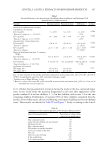
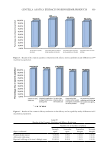
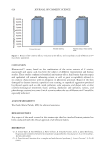
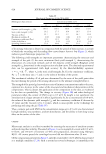
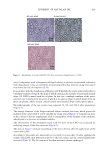
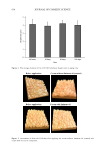
609 FATIGUE STRENGTH OF PANELIST HAIR protein differences may also be contributors. More work is required to confirm this hypothesis. No correlation is seen for lipid levels at tips, likely due to additional damage that contributed to fatigue breakage. ASIAN PANELIST RESULTS The Asian panelist’s hair samples were all between 30 and 45 cm long and all very straight. Table I shows the cysteic acid and fatigue resuts for root and tip hair as well as the coloring/ bleaching and perming details. In general, there were similarities between the Asian and Caucasian panelists. As oxidative damage increased, either by coloring or powder bleaching, fatigue cycles to break decreased, especially panelists using powder bleaches. The oxidative damage was much higher for a powder bleach as compared to the oxidant in a Level 3 permanent colorant and, with the exception of panelist S09, the α-values were 1,000 or less at tips. S09 had a relativly high α-value although she had a powder bleach and she also had a much higher α-value at tip than at the roots. This was also seen in S73 and S79, but there was nothing obvious in the given habits and practices information that would explain this. Additional fatigue fibers were run to ensure this difference was significant and not a sampling issue. As with the Caucasian panelists, the α- and β-values mostly decreased from root to tip, meaning the probability of breakage and chance of premature failure of fibers increased at tips. The wide variation of α- and β-values was also similar. CONCLUSION Breakage is a concern for many consumers, especially those with long hair. In this study, analysis of panelist hair indicated that regular use of permanent coloring or powder bleaching products can lead to increased breakage, as measured using a fatigue protocol where hair was subjected to repeated low-level stress. Fatigue breakage was also found to correlate closely with measured damage by two methods: FTIR cysteic acid and SEM cuticle damage score at hair tips where damage is at its most advanced. As expected, fatigue breakage also Table I Panelist FTIR and Fatigue Values Root and Tip Panelist number Coloring habits Perming habits FTIR cysteic acid Fatigue α-value (63.2% cycles to break) Fatigue β-value Root Tip Root Tip Root Tip S71 Uncolored No 0.15 0.26 3,783 3,381 2.68 0.71 S78 Uncolored No 0.15 0.19 7,050 5,909 1.43 1.46 S79 Uncolored No 0.19 0.20 4,432 16,867 1.66 1.39 S52 Level 3 Colorant Yes 0.19 0.24 9,111 5,835 0.61 0.81 S35 Level 3 Colorant Yes 0.43 0.67 12,694 11,201 1.93 0.62 S73 Level 3 Colorant No 0.35 0.57 8,846 25,616 1.83 0.67 S07 Powder Bleach No 0.21 1.03 2,173 773 1.92 0.81 S09 Powder Bleach No 0.80 0.78 5,490 16,266 2.07 0.83 S25 Powder Bleach No 0.17 1.19 2,929 798 1.73 1.45 S100 Powder Bleach Yes 1.27 1.29 403 150 0.72 0.84 S107 Powder Bleach No 1.27 1.19 512 1,067 0.65 0.63 S112 Powder Bleach No 1.34 1.35 1,025 420 0.86 0.60

610 JOURNAL OF COSMETIC SCIENCE increased from root to tips, but there was significant variation between panelists, even at roots where damage was lowest. This variability was shown in part to be driven by internal lipid levels, but it is proposed other differences (i.e., curl level, protein composition, etc.) may be driving this variability. ACKNOWLEDGMENTS The authors would like to thank The Procter & Gamble Company for support of this work. REFERENCES (1) M. Feughelman, Natural protein fibers, J. Appl. Polym. Sci., 83(3), 489–507 (2002). (2) T. Evans, “Hair Breakage,” in Practical Modern Hair Science, T. Evans and R. R. Wickett. Eds. (Allured Business Media, Carol Stream, IL, 2002), pp. 251–294. (3) C. Robbins, Chemical and Physical Behavior of Human Hair, 5th Ed. (Springer-Verlag, Berlin, 2012), pp. 537–562. (4) T. A. Evans and K. A. Park, Statistical analysis of hair breakage. II. Repeated grooming experiments, J. Cosmet. Sci., 61(6), 439–455 (2010). (5) J. M. Marsh, S. Whitaker, T. Felts, W. Shearouse, M. Vatter, A. Määttä, M. Thompson, and T. J. Hawkins, Role of internal lipids in hair health, J. Cosmet. Sci., 69(5), 347–356 (2018). (6) V. Signori and D. M. Lewis, FTIR investigation of the damage produced on human hair by weathering and bleaching processes: implementation of different sampling techniques and data processing, Int. J. Cosmet. Sci., 19(1), 1–14 (1997). (7) G. Loussouarn, A. L. Garcel, I. Lozano, C. Collaudin, C. Porter, S. Panhard, D. Saint-Léger, and R. de La Mettrie, Worldwide diversity of hair curliness: a new method of assessment, Int. J. Dermatol., 46(Suppl. 1), 2–6 (2007). (8) K. Watanabe, K. Nagami, K. I. Suzuta, T. Maeda, and L. Ito, Cysteic acid formation behaviors in bleached hair of southeast Asian characterized by infrared spectroscopy, Adv. Life Sci., 5(4), 85–89 (2015). (9) K. Kizawa, T. Inoue, M. Yamaguchi, P. Kleinert, H. Troxler, C. W. Heizmann, and Y. Iwamoto, Dissimilar effect of perming and bleaching treatments on cuticles: advanced hair damage model based on elution and oxidation of S100A3 protein, J. Cosmet. Sci., 56(4), 219–226 (2005). (10) G. A. Camacho-Bragado, G. Balooch, F. Dixon-Parks, C. Porter, and H. Bryant, Understanding breakage in curly hair. Br. J. Dermatol. 173(Suppl. 2), 10–16 (2015). (11) C. R. Robbins, The cell membrane complex: three related but different cellular cohesion components of mammalian hair fibers, J. Cosmet. Sci., 60(4), 437–465 (2009).
Purchased for the exclusive use of nofirst nolast (unknown)
From: SCC Media Library & Resource Center (library.scconline.org)