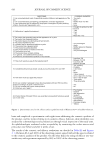
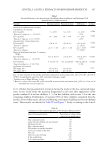
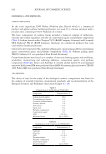
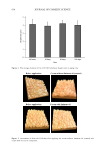
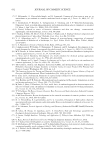
624 JOURNAL OF COSMETIC SCIENCE MATERIALS AND METHODS SAMPLE COMPOSITION As the active ingredient, LNO Naftin (Naftalan plus, Russia) which is a commercial product and applies without further purification, was used. It is a brown emulsion with a peculiar odor, containing 10 wt% Naftalan oil in water. The basic composition of cosmetic foams included a balanced complex of surfactants, viscosity and acidity regulators, avocado oil, conservation agent, and perfume composition (Table I). Sodium laureth sulfate Texapon® N70 (BASF Company, Germany) and Cocamide DEA Dehyton® PK 45 (BASF Company, Germany) are commercial products that were used without further purification. Gel systems were represented by a polymer gelling agent, moisturizing additive, neutralizing agent, conservation agent, and perfume composition (Table II). Polymer gelling agent TEGO Carbomer 141 was purchased from Evonik (Germany). Cream formulations were based on a complex of structure-forming agents and emollients, emulsifiers, moisturizing and softening additives, conservation agents, and perfume composition (Table III). Stearic acid Kolliwax S, cetearyl alcohol Lanette O, and isopropyl myristate Kollicream IPM were purchased from BASF (Germany) glyceryl stearate TEGIN 4100 Pellets MB were purchased from Evonik (Germany). TEST METHODS The choice of tests for the study of the developed cosmetic compositions was based on the analysis of scientific literature, international standards, and recommendations of the European Cosmetic and Perfumery Association (Colipa) (13–18). Table I Formulation of the Bath Foam With LNO Component Concentration, % Sodium laureth sulfate 20.0 Cocamidopropyl betaine 6.0 Cocamide diethanolamine 3.0 Sodium chloride 2.0 Avocado oil 0.5 Citric acid 0.1 Perfume composition 0.2 Conservation agent 0.1 LNO 0.2–0.9 Deionized water Up to 100.0 Table II Formulation of the Cosmetic Gel With LNO Component Concentration, % Carbomer 0.4 Glycerin 5.0 LNO 0.2–0.9 Triethanolamine 0.2 Perfume composition 0.2 Conservation agent 0.1 Deionized water Up to 100.0

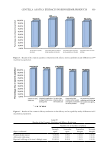
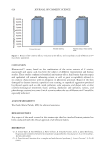
625 LINIMENT OF NAFTALAN OIL Developed cosmetic compositions were tested for stability in accordance with the Colipa 2004 guidelines (17). Their pH of the bath foam, gel, and cream was determined by the method described in ASTM D1172-95 (reapproved in 2001) using a SevenEasy S20 pH meter equipped with an InLab 410 glass electrode (both from Mettler Toledo, Columbus, Ohio) (18). Bath foam. Foaming ability and stability were evaluated in accordance with the standardized Ross-Miles method, which consisted in measuring the height of a column of foam formed when a water solution of the composition with a concentration of 1 wt% under study was dropped onto a surface of the same solution from a fixed height (19). Foam stability was defined as the ratio of the height of the column after 5 min and at the initial moment of time. Determination of the viscosity of the compositions was carried out at a temperature of 22 ± 2°C on a sinusoidal vibration viscometer SV-10 (A&D Instruments, Japan). Gels. The rheological properties and strengths of the gels were investigated dynamically using a Reotron rotational viscometer, consisting of two coaxial cylinders. The range of revolutions of the inner cylinder was from 0 to 550 s–1. The spreadability of gel systems was evaluated by the method proposed by Bachhav and Patravale (20). It consisted of measuring the diameter of the spreading of the gel after placing it between two glass plates and loading them with a weight of 100 g at a temperature of 37 ± 2°C. Creams. The microstructure of the creams in the concentration range 0.2 to 0.9 wt% was studied by optical microscopy using Olympus BX 51 (Olympus Optical Co., Ltd., Japan). The sample was placed on a microscope slide, pressed on top with a coverslip. A magnification of ×1,000 was used. The droplet size was measured using software Microimage version 4.0 (Olympus). The type of emulsion was determined by the dilution method. The determination of emulsion stability was measured in the centrifugal machine (Nahita Centrifuges Model 2652, Auxilab S.L., Spain) at 1,008 relative centrifugal force. Test tubes were filled with 15 to 20 mL of the emulsion and then centrifuged for 30 min, with the state of emulsion checked every 10 min. If the emulsion remained homogeneous after 30 min, it was considered to have proper stability. Table III Formulation of the Cream With LNO Component Concentration, % A. Oil phase Isopropyl myristate 4.0 Almond oil 6.0 Mineral oil 10.0 Steareth-20 5.0 Cetearyl alcohol 2.0 Cyclomethicone 1.0 Stearic acid 4.0 Glyceryl stearate 2.0 LNO 0.2–0.9 Perfume composition 0.2 B. Water phase Glycerin 5.0 Conservation agent 0.1 Deionized water Up to 100.0
Purchased for the exclusive use of nofirst nolast (unknown)
From: SCC Media Library & Resource Center (library.scconline.org)