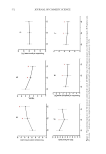
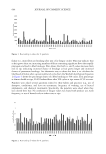
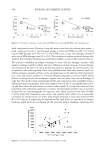
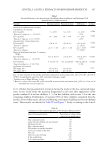
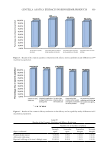
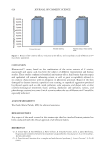
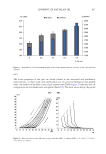
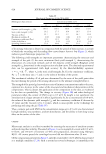
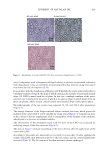
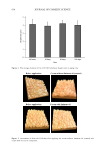
626 JOURNAL OF COSMETIC SCIENCE To assess the effectiveness of the developed creams, skin topography was evaluated: the stratum corneum hydration (SCH) and fat content were measured. The study involved 10 healthy volunteers (average age 26 ± 3 y) without episodes of dermatologic diseases with normal skin type. These studies do not contradict the ethical principles of the Helsinki Declaration all volunteers gave their informed written consent. The sample was applied after 30 min of the acclimatization period on the back side of the nondominant hand on the medial side, and a cream without liniment was placed on the lateral side as a control (21). Short-term measurements were carried out in vivo 60 and 120 min after application of the composition to the skin surface using an EH-900U multifunction analyzer (Sunwin Technology Co., Ltd., China) under conditions of controlled temperature (22 ± 2°C) and humidity (35 ± 5%). STATISTICAL ANALYSIS The measurement results of the pH of cosmetic compositions, foaming ability and viscosity of bath foam, size of drops of the cream, and skin parameters after its application were processed using STATISTICA 6.0 software (Version 6-Index, Stat-Soft Inc., Tulsa, Oklahoma). The confidence level p 0.5 was considered statistically significant. DISCUSSION AND CONCLUSIONS When developing compositions with LNO oil, we were guided by the recommendations and standard formulations used in cosmetics technologies (22,23). It was possible to obtain sedimentation, aggregative and thermally stable (creams), optically transparent (gels, bath foam) compositions in the concentration ranges of LNO from 0.2 to 0.9 wt%. The pH values of the systems in this range of liniment concentrations are 5.3–5.9 ± 0.01–0.02, which is close to the physiologic value of the skin’s hydrogen index (approximately 5.5) and corresponds to the optimal range for each type of product (18). All cosmetics are characterized by high thermal and colloidal stability. BATH FOAM Foam formation and its stability are important criteria for consumers when choosing a detergent. The nature of the change in the main parameter of foaming H 0 depending on the concentration of LNO was determined by the Ross-Miles method (Figure 1). Figure 1 shows that the LNO makes a significant contribution to the process of foaming—an increase in the maximum volume of foam is observed compared with the base composition. Obviously, this is because of the presence of surface-active components in the LNO. A correlation was found between the results and viscometric data (Figure 1). Apparently, the observed effects are associated with the encapsulation of oil droplets in the foam (24), which causes the rate of fluid outflow from the Plateau-Gibbs channels to slow and the mechanical strength of the foam film to increase. The highest height of the foam column and the optimal viscosity are observed with a liniment content 0.9 wt%. Foam stability of all compositions had high, close to 1, values.

627 LINIMENT OF NAFTALAN OIL GELS The active properties of the gels are closely related to the structural and mechanical characteristics, so their study and optimization are of crucial technological and applied value. An analysis of the flow curves of gel systems with LNO (Figure 2) indicates that all compositions are non-Newtonian viscoplastic fluids (25). The shear stress during the period Figure 1. Dependence of the maximum height of the foam column and the viscosity on the concentration of LNO. Figure 2. Flow (A) and viscosity (B) curves of gel with the LNO: 1: without LNO 2: 0.2 wt% 3: 0.5 wt% 4: 0.7 wt% 5: 0.9 wt%.
Purchased for the exclusive use of nofirst nolast (unknown)
From: SCC Media Library & Resource Center (library.scconline.org)