All scientists, academicians, policy makers and other stakeholders in the cosmetic and personal care community are invited to submit an abstract of original work, lab demonstration or case study for consideration as a podium lecturer. ABSTRACT SUBMISSION DEADLINE: APRIL 4, 2022 We are seeking abstracts covering the following topics: Claims / Regulations Indie Beauty Diversity in Beauty Looking to the Future / Biotech Fragrance and Sensory Makeup & Sunscreen Functional Skincare Sustainability Hair & Scalp For more information, visit the SCC website at www.scconline.org/SCC76 Accepted speakers shall receive one (1) complimentary daily access registration to the Annual Meeting for their use the day of their presentation. A full access registration upgrade for speakers is available at a discount if they wish to attend the entire meeting. Additional registrations may be purchased at the then-current rate.

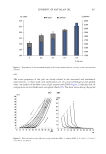
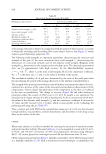
568 Address all correspondence to Liping Du, duliping@osm.com.cn Clinical Study on Anti-Acne Performance of Cosmetic Skincare Products LIPING DU, PING MA, YING ZHOU, XINFEN CAI, LINGYAN SHEN AND GANG HUO Zhejiang Osmum Biological Co., Ltd, Huzhou, China (L.D., P.M., Y.Z., X.C., L.S., G.H.) Accepted for publication August 10, 2021. Synopsis As a milder form of clinical acne, physiological acne is very common in adults. The safety and effectiveness of the present anti-acne agents put an increasing demand on the development of the desired anti-acne cosmetic products. This study was conducted to clinically investigate the effectiveness of a topical anti-acne skincare cosmetic treatment for adult acne-prone skin. In the study, the volunteers’ acne condition on their skin surface, the moisture content, the transepidermal water loss, the proportion of pore area, and the skin surface lipids were all tested. Objective and clinical evaluation methods were used to evaluate the ability to improve the clinical signs of physiological acne present in adult subjects, and self-evaluation questionnaires conducted by the subjects themselves were also used. Thirty healthy volunteers with acne lesions were recruited for the study and treated with an “anti-acne cream” for 4 weeks. The product was applied on thoroughly cleansed skin twice a day. The results were evaluated after 14 and 28 d. Within 4 weeks of the test period, the product effectively improved the moisture content of the cuticle, repaired the skin barrier function, and then enhanced the ability of the skin to resist external stimulation. It also regulated the skin oil secretion, reduced the proportion of pore and porphyrin areas, and reduced the a value. The clinical evaluation showed that the number of acne lesions (including open acne, closed acne, papules, and pustules) decreased, and the pores, greasiness, and moisture all improved. The current study suggests that the product is suitable for the cosmetic care of adult acne-prone skin. INTRODUCTION Acne vulgaris is a common dermatological disorder with about 85% of the world’s population suffering to some degree (1–3). Young people are not the only age group prone to acne, as other groups including children and the middle-aged are also affected (4,5). Acne is a disease of the pilosebaceous unit and results from three possible main pathogenetic factors: seborrhea, abnormal keratinocyte proliferation, or follicular colonization with Propionibacterium acnes (P acnes) (4,6). It is well known that some significant psychosocial morbidities are caused by acne (7). Studies show that acne affects the general quality of life of patients, including their self-esteem, self-image, and emotions (8–10). Lasek and Chren (11) determined that the most troubling factor for acne vulgaris patients was the appearance of the skin. Antibiotics are one of the great discoveries of the modern era. However, the abuse of antibiotics can cause immune responses, such as fever and skin rashes. Benzoyl J. Cosmet. Sci., 72, 568–579 (November/December 2021)
Purchased for the exclusive use of nofirst nolast (unknown)
From: SCC Media Library & Resource Center (library.scconline.org)